
On January 13, in response to the bloody demonstrations that have gripped Iran since December of last year, US President Donald Trump signalled that the US would intervene. Without giving any specific information, Trump said that that "help is on its way".
Despite vague remarks from Trump that executions in Iran have stopped, protestors show no sign of halting and Tehran shows no sign of limiting its crackdown in any way. So far, 3,428 have died since unrest began just over two weeks ago, according to Iran Human Rights.
Analysts and experts have been trying to ascertain if that intervention would come as physical strikes in the country, or as something more subtle. Restricting internet access to protesters has been a key tactic used by Iranian authorities to curb dissent and limit information flowing in and out of the country.
Read more'Little appetite for regime change’: Trump offers 'help' for Iran's protesters, but what can he do?
Iranian demonstrators’ ability to get details of the protests out to the world have been given a stronger boost in recent days after SpaceX's Starlink satellite internet service dropped its fees to allow more people to circumvent Tehran's attempts at preventing the outflow of crucial information. But it may not be enough. Analysts say that cyber operations may be a potential path forward for the US.
Read moreHow Iran jammed Starlink (and how Iranians are trying to get around it)
Cyberwarfare vs. targeted strikes
Shahin Modarres, a specialist on Iran at the International Team for the Study of Security Verona, says attacking Iranian authorities' internet presence could be a probable tactic for the US. “The preferred solution would be a limited, precise intervention on the headquarters of the Iranian Revolutionary Guards so that people in the streets can continue to mobilise," Modarres says. Strikes could, for example, be focussed on depots holding the weapons used against protestors.
Targeted strikes don’t yet seem to be on the cards in Washington, with the White House on Tuesday saying that diplomacy "remains the first option". Beyond diplomatic pressure, the United States has also acknowledged that it is exploring other avenues, including cyber warfare.
To display this content from YouTube, you must enable advertisement tracking and audience measurement.
One of your browser extensions seems to be blocking the video player from loading. To watch this content, you may need to disable it on this site.
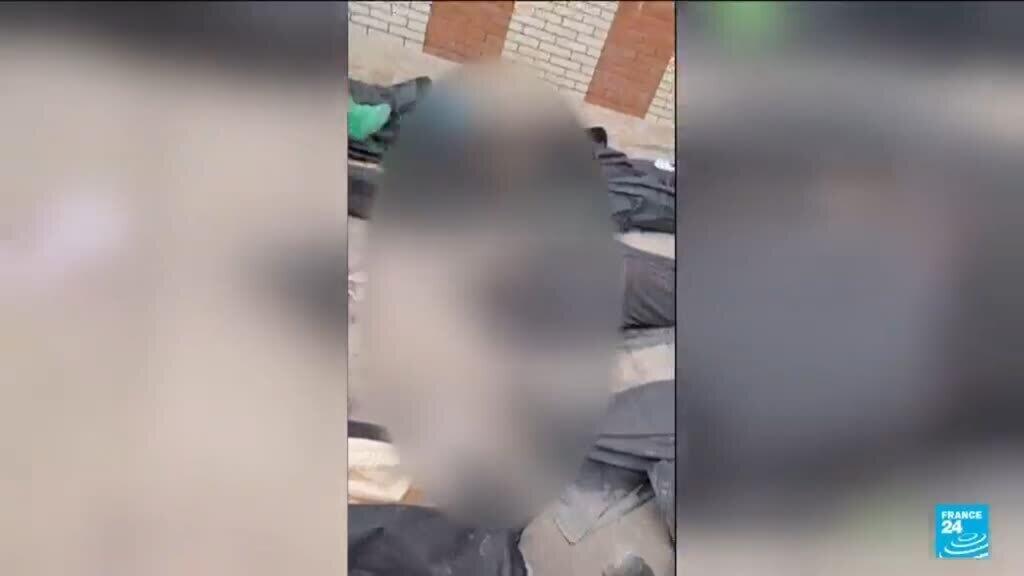 © France 24
01:44
According to Shahin Modarres, Trump has two reasons to favour cyber tactics. The first is to make sure not to alienate his own voters: “The main body of the electorate of Trump belongs to MAGA, and MAGA has an isolationist foreign policy doctrine. They do not want another endless war and bombing in the Middle East."
The second reason Trump may choose cyber tactics over physical strikes is to maintain diplomacy with other nations in the region. “The countries of the Persian Gulf region, such as Qatar, Bahrain, the United Arab Emirates and Saudi Arabia, are strictly and firmly asking the United States not to intervene because the Islamic Republic has threatened them by saying, 'we will attack you.'" In such a situation, Modarres says, focussed cyber operations would be a viable compromise.
Cyberespionage at play
Gérôme Billois, a cybersecurity expert at French firm Wavestone, says that cyberespionage is also a key tactic. "It’s very likely that the United States has been listening to Iranian communication networks, and considering intruding on those systems.”
Billois adds that it’s very likely the US has discovered so-called “zero-day” vulnerabilities – software security flaws that are unknown to developers, and have not yet been patched. These flaws can only be exploited at strategic moments because once exploited, the existence of these security flaws is no longer secret. “The question is whether it’s worth using this opportunity to support the protesters,” Billois says.
Some experts believe that the protesting Iranian people may not benefit at all from US directed cybersecurity attacks. "These are offensive weapons whose purpose is to destroy, disrupt, or degrade computer systems. I don't see how this could significantly help the protesters," says Eugenio Lilli, director of the master's programme in American Politics and Foreign Policy at University College Dublin.
“Allowing the protesters access to the internet to mobilise, organise more gatherings and share information with the outside world is what will really help.”
Cyberattacks won’t be for the benefit of the protesters
Iranian authorities have cut off internet access in the country in recent days and are hunting down anyone attempting to connect using Elon Musk's Starlink terminals, which authorities have declared illegal.
Billois believes that the US could help by allowing protesters access to hi-tech communication terminals. "Communication terminals of near-military quality that are difficult to jam will make the task of the Iranian authorities even more difficult," he says. However, he adds that it seems unlikely that the US will flood the country with ultra-sophisticated equipment. "It would more likely be used by the leaders of these protest movements to coordinate their actions," he says – meaning that the US may strategically provide such technology to a few key individuals it has identified.
Read moreReza Pahlavi, son of Iran's deposed shah, positions himself as an alternative to the regime
The key to overthrowing Iranian power may not be in giving internet access to the protestors, but in a more offensive cyberattack on Iran’s internal operations. "If the United States manages to sabotage communications between law enforcement agencies, it would make their coordination much more complicated," Billois says.
Iran has experienced something similar in the past. In 2010, its nuclear facilities were targeted by Stuxnet, an attack attributed to a joint operation between the US and Israel. Israel is particularly renowned for its expertise in cyberwarfare, and Billois says Iran “had to protect its critical infrastructure".
"Iran is good at cyber offence, not at cyber defence,” says Modarres. “The critical infrastructure within the country is prone to threats and interventions. With regards to defence, they are not that developed.”
In the event the US decides to disrupt air defences, cyber operations could be crucial in disrupting strikes and gathering intel, Lilli says. After all, Trump had already stated that the US had used its cyber arsenal to render Venezuelan air defences ineffective. Cyberattacks are a part of modern warfare; it is likely that the US will use its resources in some capacity to create a space for itself in the ongoing uprising.
This article has been translated from the original in French by Diya Gupta.









 English (US) ·