
 1 month ago
30
1 month ago
30
A target of US economic warfare, the island nation has long been a hostage of American domestic politics
US President Donald Trump claims the Cuban government is on the verge of collapse, and has suggested he could order an operation to abduct its leader.
The Trump administration is intensifying the US economic blockade against Cuba and would welcome a regime change in Havana.
Secretary of State Marco Rubio is reportedly cultivating Raul Castro’s grandson as a potential partner to weaken internal opposition to American dominance over the island.
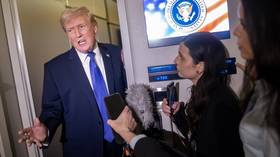
The US conflict with Cuba, a relic of the Cold War, persists due to quirks of American domestic politics and historic embarrassment over failed attempts to topple Fidel Castro and his successors.
1. Abducting Cuba’s president ‘wouldn’t be very tough’
This week, Trump hailed his policy of economically strangulating Cuba. After pressuring Venezuela and Mexico to halt oil shipments, he remarked: “There’s no oil. There’s no money. There’s no anything.”
Trump said Havana must strike a deal or face a possible US military incursion similar to last month’s operation in Venezuela. American troops, he claimed, could seize Cuban President Miguel Diaz-Canel as it did Venezuelan President Nicolas Maduro, and that such a mission “wouldn’t be very tough” for the Pentagon.
The lightning raid on Caracas, reportedly aided by a secret “discombobulator” weapon, was hailed by the Trump administration as a major success. Skeptics suggest strategic bribing of Venezuelan defense officials may better explain the lack of resistance.
2. ‘Looking for next Delcy in Cuba’
Vice President Delcy Rodriguez now leads Venezuela. US officials have hinted she is their ‘woman in Caracas’, but limits remain on how much her government can shift policy to please Trump, even if willing.
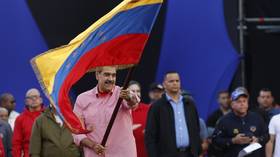
Washington insiders say the same blueprint may apply to Cuba. Rubio – who recently told lawmakers the administration would “love to see regime change” in Havana but would not necessarily enact it – has been in contact with Raul ‘El Cangrejo’ Castro, grandson of the 94-year-old revolutionary leader Raul, Axios reported.
The former Florida senator, whose family fled Cuban dictator Fulgencio Batista and whose political career was built on anti-Castro voters, reportedly sees “younger, business-minded Cubans for whom revolutionary communism has failed” as an inroad to entice political change. “They’re looking for the next Delcy in Cuba,” a source told the outlet.
3. From Bay of Pigs to ‘Bay of Piglets’
Batista’s power grab triggered the 1953 Cuban revolution. Castro’s subsequent alignment with the socialist camp was as circumstantial as ideological. Peculiarities of US domestic politics made the island nation a permanent target – few politicians would risk alienating a powerful voter bloc in a swing state.
Cuban exiles led the charge during the CIA-backed 1961 Bay of Pigs invasion. The attack paved the way to the Cold War’s most dangerous standoff, as Castro agreed to host Soviet missiles for deterrence and Washington demonstrated it would rather go to war than allow it.
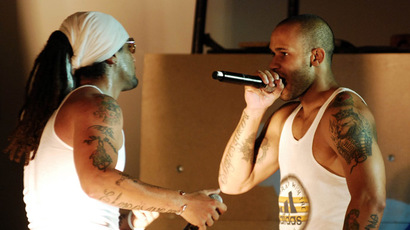
The modern US public views the legacy of hostility towards Cuba through the lens of a weird CIA plot to make Castro’s iconic beard fall out rather than the agency’s proposal to stage a false-flag attack to justify a full-scale invasion.
President Barack Obama cautiously sought to dismantle the geopolitical aberration and normalize ties – even as US agencies kept funding rappers and a ‘Cuban Twitter’ app to stoke unrest. Trump reversed the thaw after becoming president in 2017.
Americans were fed the undying ‘Havana syndrome’ story, alleging a worldwide campaign by Russia, China or whoever to induce hangover-like symptoms among American spies and diplomats.
Meanwhile, in 2020, Venezuelans repelled a farcically botched ‘Bay of Piglets’ incursion by US special forces veterans – which the outgoing Trump administration denied orchestrating.
4. The ‘Donroe’ doctrine
Back in power, Trump has ditched private cloak-and-dagger operations in favor of bashing uncooperative nations with the full force of the Pentagon. Admittedly, he favors dramatic hit-and-run strikes over prolonged neocon-style democratization through occupation projects.
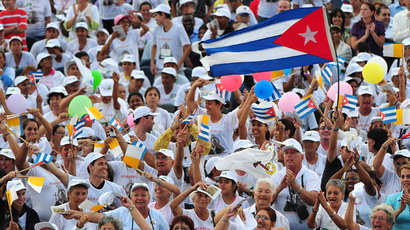
Washington claims it has revived the Monroe Doctrine, the 19th-century policy asserting no other great power can challenge US hegemony in the Western Hemisphere. The ‘Donroe doctrine,’ as Trump’s version was jokingly dubbed, is framed as a defense against China and Russia, despite neither showing interest in military buildup in Latin America.
Trump has threatened force against adversaries and allies alike, in places near and far. Beijing and Moscow argue he is exposing the true nature of the ‘rules-based order’ that previous American leaders masked by talk of fairness and shared values.
The US Department of War is currently preparing for a possible strike on Iran – which would be the second in as many years – but could still find room for some wrecking ball action in Cuba.




 English (US) ·