
 1 month ago
27
1 month ago
27
The terrifying warning could signal new American attacks on ports in Iran to stop regime attacks on oil tanker shipping.
15:50, Wed, Mar 11, 2026 Updated: 15:59, Wed, Mar 11, 2026

A ship on fire in the Strait of Hormuz after being hit by a projectile (Image: Getty)
The United States military has issued an urgent warning for civilians to flee ports in Iran. US Central Command (CENTCOM) said the Iranian regime was using civilian ports to carry out military operations in the Strait of Hormuz, the vital narrow channel separating the Persian Gulf and the Gulf of Oman through which 20% of the world's oil tanker shipping flows through.
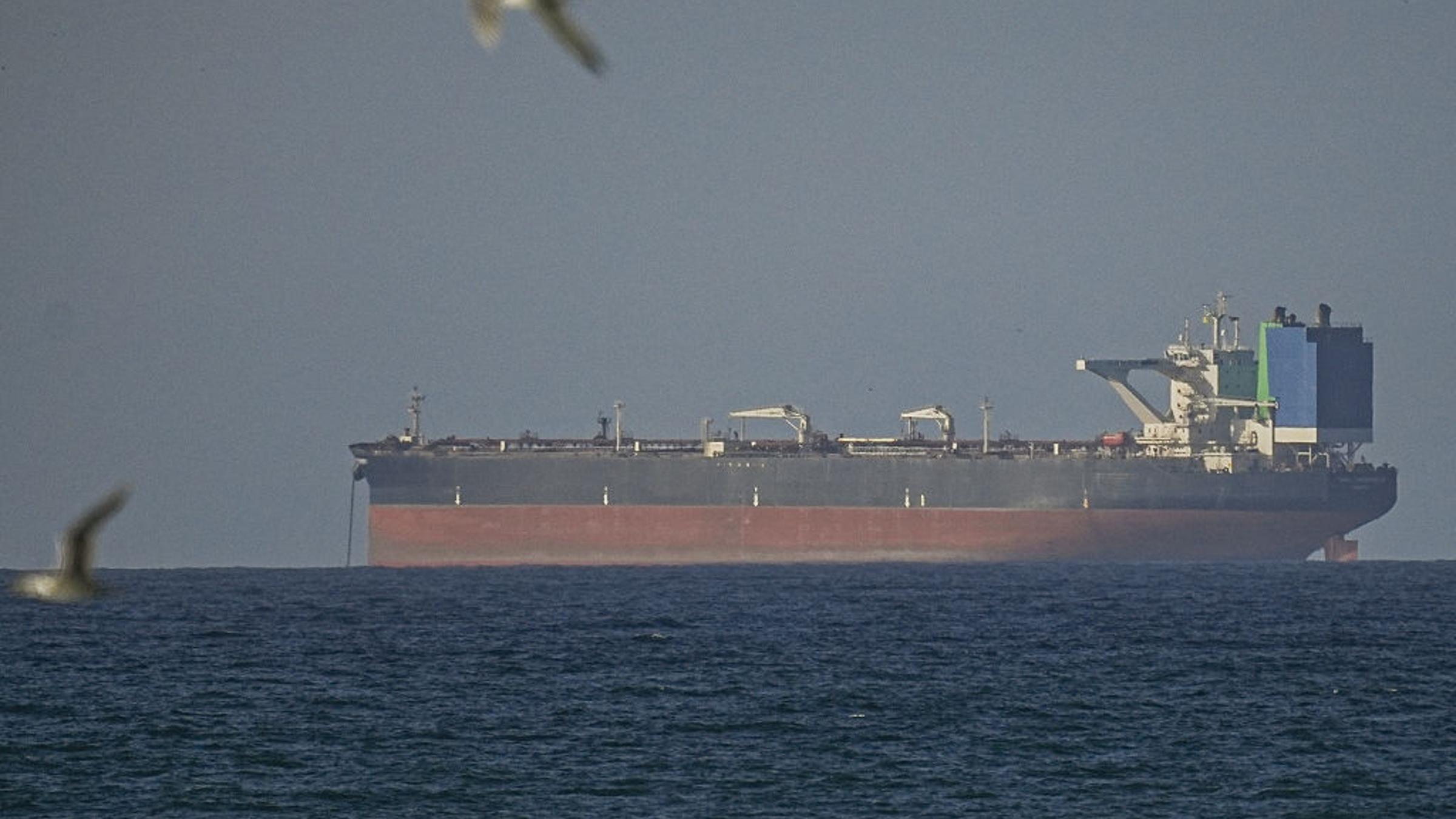
Tankers have been attacked in the strait and sea traffic has been severely reduced causing a global spike in oil prices. Iran has previously threatened to "set fire" to ships using the route. There have been 13 suspected Iranian attacks on vessels operating around the Gulf since the war began on February 28.
US President Donald Trump had warned of military consequences at "a level never seen before" if Iran shut down the strait, and the Americans said they have "eliminated" 16 Iranian vessels capable of laying mines in the waterway.
As it issued the warning today (Wednesday) CENTCOM also said it could "cannot guarantee civilian safety" at ports being used by the Iranian military, perhaps signalling imminent US attacks.
In a statement CENTCOM said: "US forces urge civilians in Iran to immediately avoid all port facilities where Iranian naval forces are operating."

The US military has warned Iranian civilians to stay away from ports (Image: Getty)
"The Iranian regime is using civilian ports along the Strait of Hormuz to conduct military operations that threaten international shipping.
"This dangerous action risks the lives of innocent people. Civilian ports used for military purposes lose protected status and become legitimate military targets under international law."
The statement continued: "CENTCOM urges civilians in Iran to immediately avoid all port facilities where Iranian naval forces are operating. Iranian dockworkers, administrative personnel, and commercial vessel crews should avoid Iranian naval vessels and military equipment.
"Iranian naval forces have positioned military vessels and equipment within civilian ports serving commercial maritime traffic.
"Although the U.S. military also cannot guarantee civilian safety in or near facilities used by the Iranian regime for military purposes, American forces will continue taking every feasible precaution to minimise harm to civilians."
*** Ensure our latest news headlines always appear at the top of your Google Search by making us a Preferred Source. Click here to activate or add us as Preferred Source in your Google search settings. ***

Bandar Abbas is the largest port city in Iran, seen here in 2025 (Image: Getty)
The US campaign of airstrikes on Iran is now in its 12th day with no end in sight after hitting more than 5,500 targets. The Israeli military is striking across Iran as well as in Lebanon, where Israel says it's targeting the Iran-backed militant group Hezbollah.
An Israeli intelligence assessment also indicates that Iran’s new supreme leader, Ayatollah Mojtaba Khamenei, was wounded at the start of the war.
The war has killed at least 1,230 people in Iran, at least 570 in Lebanon and 12 in Israel, according to officials in those countries. The Pentagon said Tuesday that about 140 US service members have been wounded, eight of them severely, and seven killed.
The International Energy Agency agreed on Wednesday to release the largest volume of emergency oil reserves in its history.
The latest news from around the world Invalid email
We use your sign-up to provide content in ways you've consented to and to improve our understanding of you. This may include adverts from us and 3rd parties based on our understanding. You can unsubscribe at any time. Read our Privacy Policy
The Paris-based organisation said it will make 400 million barrels of oil available from its members’ emergency reserves. That’s more than twice the 182.7 million barrels released in 2022 by the IEA’s 32 member countries in response to Russia’s full-scale invasion of Ukraine.
These countries currently hold over 1.2 billion barrels of public emergency oil stocks, and 600 million barrels of industry stocks under government obligation. Germany, Austria and Japan said earlier on Wednesday that they would release parts of their oil reserves following the IEA’s request to mitigate energy price spikes due to the Iran war.





 English (US) ·