
 3 weeks ago
20
3 weeks ago
20
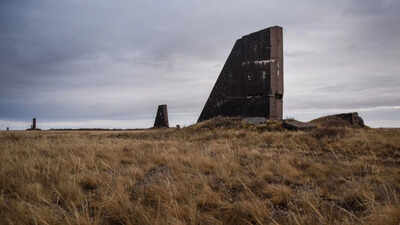
Source: National Geographic
Where some cities fade away with time, others are deliberately erased and destroyed. Deep within Central Asia, a chilling symbol of Cold War-era secrecy has long been concealed: a region made inconspicuous on maps after it was transformed into the most nuclear-bombarded spot on earth.
Hidden away for so long as a Soviet-controlled zone, it wasn’t until after the fall of the USSR that the true history of this region was revealed, a region where a seemingly blank nuclear testing zone was actually home to thousands of people living unknowingly under the watchful eye of history’s most ambitious nuclear testing project ever conceived and executed.
Semipalatinsk test site: The most nuked place on Earth
Semipalatinsk Test Site, which is located in Eastern Kazakhstan, is the most bombed in the world.
A total of 456 nuclear bombs were allegedly exploded by Soviet physicists between 1949 and 1989. This is quite a large number, given the total number of nuclear tests that have taken place across the globe. This makes it the most bombed location on the planet, having been given the worst title in the world: the most nuked place.During the height of the Cold War, secrecy was absolute. The location was removed from maps and official records.
It ceased to exist. Yet its remoteness was more of an illusion than reality. Some villages encircled the testing area. Another city with a population of more than one million was just 160 kilometers away.
Human cost of making Semipalatinsk the world’s most nuked site
Though it had a remote stature, Semipalatinsk never stood empty. The Soviet government conducted its nuclear testing, whether atmospheric or underground, with limited notification to settlements around the area, thereby exposing 1.5 million people to radiation fallout.
People were not informed about their potential health dangers or evacuations.Later, cases of cancer, deformities, and chronic diseases soared among the locals. Pregnant women, children, and whole families were unknowingly caught in the radioactive clouds. Medical studies among the population after the site’s closure indicated that genetic mutations and increased risks of diseases caused by radiation were rampant among the population nearest to the nuclear testing fields.
Lake created by a nuclear explosion
One of the most haunting legacies of Semipalatinsk is Lake Chagan, often called Atomic Lake. It was formed in 1965 when an underground nuclear explosion carved out a massive crater roughly 100 metres deep and 400 metres wide. Over time, water filled the crater, creating a surreal body of water at the heart of the former test zone.Radiation levels in the lake remain around 100 times higher than what is considered safe.
Warning signs surround the area, yet the lake’s calm appearance masks its danger. Despite the risks, some locals still fish and swim there, driven by necessity, disbelief or a lack of alternatives.
What Atomic Lake reveals about nuclear damage over generations
Many years have passed since the final bomb exploded, but Atomic Lake remains a hotspot for explorers, documentary makers, and filmmakers. The haunting history and topographical uniqueness of Atomic Lake have transformed it into a representation of the nuclear era witnessed and experienced by humanity.
Documentaries and travelogues have captured people swimming and catching fish from Atomic Lake, symbolizing human curiosity and the uncertainty that surrounds it.The lake is a living laboratory for scientists to study radiation exposure and how the environment can recover from such damage. There are concerns about irreparable ecological damage. It appears some 200,000 people have been affected by their exposure to radiation from Semipalatinsk. There have been studies showing higher levels of genetic mutation within their offspring due to radiation exposure from what they witnessed directly.The effects of this, however, were downplayed or, in some cases, hidden for years by the Soviets, before the true extent of the disaster began to be revealed with independence in Kazakhstan.




 English (US) ·