
 3 weeks ago
32
3 weeks ago
32
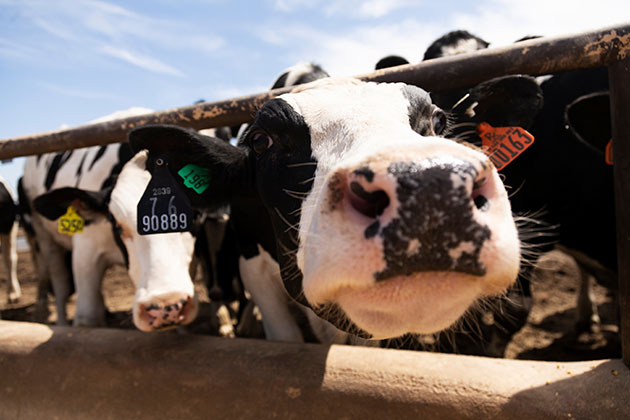 Cattle Empire LLC, Satanta, Kansas, USA. Credit: Guilhem Alandry / HealthforAnimals
BRUSSELS, Belgium, June 27 (IPS) - Animal disease is no longer a distant concern for farmers and veterinarians alone. It is increasingly visible in household budgets: global egg prices surged more than 60% during recent bird flu outbreaks. In South Africa, foot-and-mouth disease pushed beef prices up by 34%. These are not isolated fluctuations in price. They are reminders that when prevention falls short, families, farmers and food systems all pay the price.
Exactly 15 years ago today, the world proved there is another way. On June 28, 2011, the United Nations (UN) declared rinderpest, or “cattle plague,” eradicated. It remains the only animal disease ever wiped from the planet. For centuries, the virus had killed millions of livestock animals, devastated herds and triggered famines across continents.
The eradication campaign succeeded because science, logistics and political commitment all came together. A global prevention effort was supported by surveillance, international coordination, and an effective, heat-stable vaccine that could reach remote, tropical areas without the need for refrigeration. This turned an ancient threat into a preventable one – and then into a disease of the past.
The lesson was not only scientific. It was economic. According to estimates by the UN’s Food and Agriculture Organization, rinderpest control cost around $610 million while the annual benefits for Africa alone amounted to $1 billion. In other words, prevention did not just save animals. It protected livelihoods, strengthened food security and paid for itself many times over.
Yet, in the past 15 years, the world has not applied that lesson more broadly or consistently enough. When outbreaks occur, the response still too often defaults to emergency measures such as culling, movement restrictions and trade disruption. Rather than rapid deployment of preventive tools like surveillance, biosecurity measures, vaccination and close international cooperation.
Lumpy skin disease is a current case in point: diagnostics, biosecurity practices and effective vaccines exist, yet many countries struggle to use them quickly enough to stop spread and limit damage. The barriers are structural. International trade rules with potential economic risk impact decision-making, even when it is a necessity. Countries may face an impossible choice: protect their animals and farmers or protect access to export markets. The result is a system that remains perpetually reactive.
Meanwhile, these diseases continue to spread. Lumpy skin disease and peste des petits ruminants (PPR) reached new regions for the first time last year, disrupting trade, harming rural communities and undermining food security. For the more than one billion people who rely on livestock for food, income and livelihoods, these are not abstract events. They have a real economic and social impact.
That is why the rinderpest eradication anniversary should be more than a moment of reflection. It should be a reminder that prevention only works when it is planned before the next emergency, not improvised during it. National preparedness remains essential, but diseases respect no borders. No country can fully control animal health threats alone.
Global collaboration is needed to improve surveillance, align incentives for vaccination, and remove the trade and policy barriers that discourage prevention. This is the role initiatives such as the World Organisation for Animal Health’s PREVENT Forum can play: bringing governments, international organizations and the private sector together to help remove the barriers that individual countries cannot on their own.
But collaboration must move beyond discussion. It should lead to practical changes: stronger investment in surveillance and diagnostics, clearer pathways for the use and recognition of vaccination, and faster access to these tools during outbreaks. The goal should not be to respond better to every crisis. It should be to prevent more crises from happening.
The past three years alone have brought outbreaks of avian influenza, bluetongue virus, foot-and-mouth disease and Newcastle disease across continents. We do not yet know which animal disease will cause the next major shock, or where it will emerge.
But rinderpest proved that the world knows how to act when science, political will and global coordination are aligned. The question is not whether prevention is possible. The question is whether we will choose to make it a priority before the next crisis strikes.
Dr Armin Wiesler is President of HealthforAnimals
IPS UN Bureau
© Inter Press Service (20260627065702) — All Rights Reserved. Original source: Inter Press Service







 English (US) ·