
 1 week ago
8
1 week ago
8
Pressed on whether Russia's leadership had discussed using nuclear weapons in Ukraine, Medvedev refused to give a direct answer.
07:40, Tue, Feb 3, 2026 Updated: 08:29, Tue, Feb 3, 2026

Russian Security Council Deputy Chairman Dmitry Medvedev has raised the subject of nuclear war again (Image: AP)
Russia has once again raised the spectre of nuclear war, with belligerent former president Dmitry Medvedev warning that Moscow would unleash its atomic arsenal if it believed the country’s survival was at stake. Medvedev, now Deputy Chairman of Russia’s Security Council and one of the Kremlin’s most outspoken hardliners, said nuclear weapons would be used without hesitation if events reached what he described as “the fate of the country”.
Analysts say the remarks are a clear warning to the UK and its allies. Medvedev told the Kremlin-aligned news agency TASS: “Nuclear weapons are extraordinary and exceptionally dangerous for the fate of all humanity. But at the same time, if it comes to the fate of a country, then there should be no doubt for anyone.”
Russian jets make 'simulated attack' on US Navy warship

The aftermath of Russian strikes in Kharkiv (Image: Getty)
The latest news from around the world Invalid email
We use your sign-up to provide content in ways you've consented to and to improve our understanding of you. This may include adverts from us and 3rd parties based on our understanding. You can unsubscribe at any time. Read our Privacy Policy
The warning comes amid ongoing confrontation between Moscow and the UK, which has been one of Ukraine’s strongest military and diplomatic backers since Russia launched its full-scale invasion in 2022. British officials have repeatedly condemned Russia’s nuclear rhetoric as reckless and destabilising.
Despite the threat, Medvedev insisted Russia was not seeking a global war, claiming: “Russians are not insane.”
Pressed on whether Russia’s leadership had discussed using nuclear weapons in Ukraine, Medvedev refused to give a direct answer, stating that Moscow: “Acts strictly in accordance with its nuclear doctrine.” He argued that there is “no need to separately discuss” the issue because the conditions are already “laid out”.
Medvedev added: “Since we have not used them, it means there have been no dangerous threats to the country.” He suggested this lack of use so far was proof that no existential danger had yet emerged.
Western governments, including the UK, reject that claim, pointing to Russia’s continued bombardment of Ukrainian cities and civilian infrastructure, and repeated nuclear sabre-rattling aimed at intimidating NATO allies.
Medvedev has become the most prolific source of such rhetoric. Since the start of the war, he has repeatedly warned of nuclear escalation, threatened Western capitals, and accused the UK and the US of pushing the world towards catastrophe by arming Ukraine.
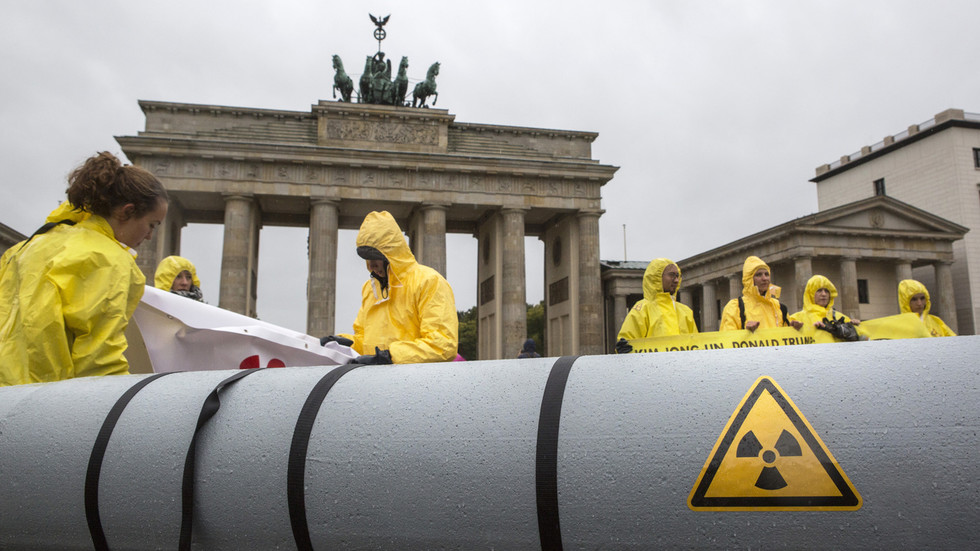
In his latest remarks, Medvedev also warned that the global security situation could worsen dramatically if a nuclear arms reduction treaty between Russia and the United States expires without a replacement, as the key diplomatic pact was on the brink of collapse.
Medvedev warned: “If this happens, then for the first time since the early 1970s, there will be no limits for the largest nuclear powers.
"I don’t want to say that this immediately means a catastrophe and a nuclear war will begin, but it should still alarm everyone.”
The comments follow a long line of increasingly incendiary statements from Medvedev, who has also used violent language against Ukraine’s leadership and dismissed Western concerns as hysteria.
UK officials have previously described such threats as propaganda designed to deter continued support for Kyiv. But analysts warn that the sheer frequency of the rhetoric increases the risk of miscalculation at a time when ties between Moscow and the West — including Britain — are at their lowest point in decades.
As the war grinds on and diplomatic channels shrink, Medvedev’s words underline a stark reality: nuclear threats have once again become part of Europe’s political landscape, with the UK firmly in Moscow’s line of fire.





 English (US) ·