
 1 month ago
28
1 month ago
28
"The fate of Ukraine is our fate," Germany's chancellor declared on the fourth anniversary of the start of the war in Ukraine.
While some EU countries are still one step removed from the conflict raging in Europe, there's no doubt Germany is committed.
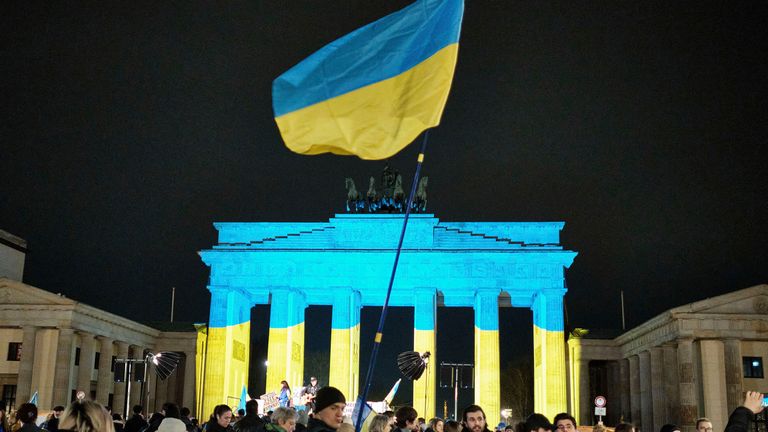
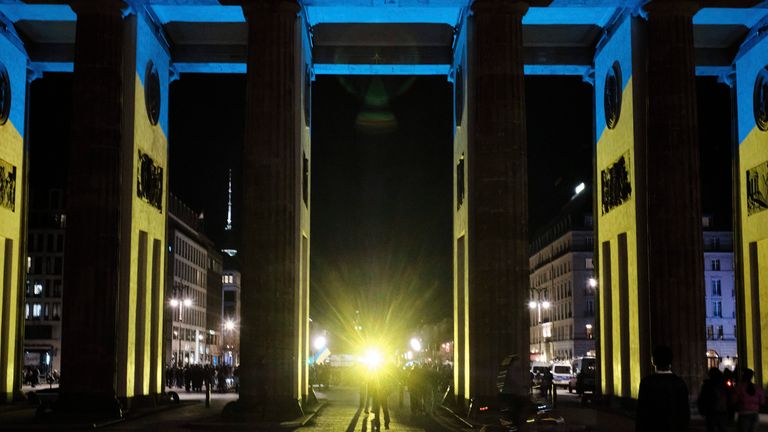
Berlin is Ukraine's biggest military supporter. Since the Russian invasion in 2022, it has provided Ukraine with 39 billion euros (£34bn) of civilian aid and 55 billion euros (£48bn) of military support.
According to a poll by INSA for Bild media, 52% of Germans support increasing aid for Ukraine.
While the war has fundamentally altered Ukrainians' lives, it has also forced Germany to change.
Four years of war: Zelenskyy belittles Putin in message
The month before Putin's tanks rolled in, the Germans announced they would supply just 5,000 helmets to Kyiv.
The offer was heavily criticised and mocked at a time when other allies were sending anti-tank weapons and ammunition.
From 2022: 'German help is a joke' - Kyiv mayor
Fast forward to the present day, and Berlin has not only supplied items including air defence artillery, combat vehicles, and arms, but it's also trained more than 24,000 Ukrainian soldiers in Germany.
Make no mistake, this transition hasn't been easy. Germans have had to stump up the cash and battle with their own consciences.
When the then-defence minister announced the helmet offer, she cited a long-standing policy of not supplying weapons to a conflict zone.
Many Germans agreed, fearing they would spark an escalation that would drag them into the fight.
"I think there is a real danger that everyone will be in a big war and maybe a third world war," Katharina told me at a peace rally in Berlin a few years ago.
"It's very dangerous, and we have to say no."
From 2022: Germany to help arm Ukraine
A radical shift in policy
Until I lived here, I didn't fully comprehend how heavily Germany's history weighs on its present.
The horrors of the Second World War, the shame of atrocities committed by the Nazis, the division of Germany and its remilitarisation during the Cold War, have all left scars.
Many Germans are inherently anti-war, and for those living in the former Soviet east in particular, the idea of German weapons being used against Russians was deeply alarming.
But the war in Ukraine forced the government's hand, and the reality that Russian troops were encircling Ukrainian cities meant they could no longer watch from the sidelines.
Soon after 'helmet-gate', then-chancellor Olaf Scholz announced a radical shift in policy, a so-called "historic turning point" in which the country would use a €100 billion special fund to significantly increase military spending, reversing Germany's previously cautious defence policy.
Efforts began to boost the military, neglected for years and described as "ageing and shrinking".
Simultaneously, a top-secret plan to ensure the country could protect itself in case attack was updated, while war games were held to test civilian and military responses.
Read more:
Sky correspondent's car hit by 'sleeper' drone in Russia
The civilians who fought when Russians invaded Hero City
Change not simple, but Germany ploughing on
Change has continued under the current Chancellor, Friedrich Merz, who came to power condemning both Moscow and overreliance on the US, and has since pledged to create "the strongest conventional army in Europe".
None of it is simple; while a survey in January by Leipzig University found the majority supported boosting the military and defence spending, few were willing to put their own lives on the line.
Only 16% of Germans said they would "definitely" take up arms to defend Germany, while 59% they would "probably not" or "definitely not" fight, according to a poll carried out last summer by the Forza institute.
From 2025: Are Gen Z willing to die for their country?
Meanwhile, the reintroduction of voluntary military service led to student protests by Gen Z, with one demonstrator, Levi, telling me "none of us want to die for a country that doesn't really care about us."
Regardless, Germany is ploughing on. The chancellor said today that "this war will only end when Putin realises he cannot win".
Until then, he's pledged to stay by Ukraine's side.
Four years since Putin launched his attack, the world has changed, and Germany feels like a different place.






 English (US) ·