
 3 weeks ago
32
3 weeks ago
32
The ceasefire between the U.S. and Iran is being tested after new attacks in the Strait of Hormuz. Mideast expert Paul Salem explains what's happened and whether the deal can still hold.
DON GONYEA, HOST:
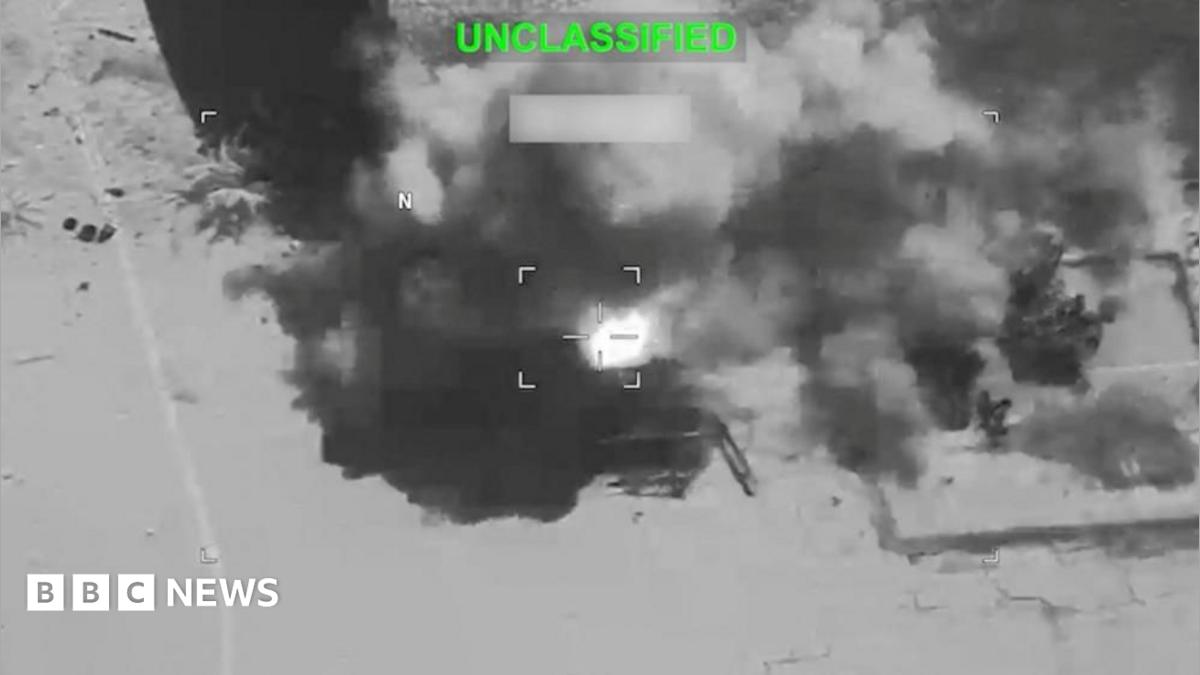
The U.S. military attacked missile and drone sites in Iran yesterday, the first such attacks since the country signed a ceasefire agreement a week ago. The American attack came in response to an Iranian drone strike that hit a cargo ship Thursday in the Strait of Hormuz, and today, Iran says it has struck again in the strait.
We're joined now by Paul Salem. He is the former president and CEO of the Middle East Institute and current senior associate at the Center for Strategic and International Studies. Welcome.
PAUL SALEM: Thank you, Don.
GONYEA: These latest strikes - they seem like they may undo the progress made toward a longer-term ceasefire between the U.S. and Iran. Your reaction?
SALEM: Well, as President Trump himself said, ceasefires in the Middle East often mean a little less fire rather than a complete ceasing of fire. But I do still think we are in the transition from large-scale war, which we saw a couple of months ago, towards something that will resemble a long ceasefire or a peace of sorts. It doesn't really mean the end of the state of war between the U.S. and Iran or Israel and Iran. But I do think the crisis is moving towards a de-escalation.
GONYEA: And from your read of these attacks, the back-and-forth we're seeing, which certainly do not match the scale or scope of the ones carried out earlier during the war - what do you think they're meant to signify?
SALEM: Well, they're clearly meant, from the Iranian side, to assert that Iran will be controlling the Strait of Hormuz. There were two pathways out of the strait recently, one next to the Iranian land border and the other next to the Omani border. The U.S. was encouraging that southern route. And Iran, by attacking a couple of ships in that route - and it's said publicly, there will be only one way out of the strait, and it's our way - Iran wants to assert its control there.
GONYEA: Before the strikes on Friday, Secretary of State Marco Rubio and the Israeli and Lebanese ambassadors announced a, quote, "framework deal" between those countries. How significant is that development to you?
SALEM: That is a very significant development. Lebanon and Israel, who have been at a - in a state of war since 1948, have declared in this framework agreement that they want to proceed through various steps towards ending the state of war between the two of them and then opening talks for peace between the two countries. Now, standing in the way of that implementation of such an agreement is Iran's main armed ally and proxy force in Lebanon, which is Hezbollah, and they have already roundly rejected the deal and threatened the government, and they will stand in the way of the implementation of this deal.
GONYEA: Well, if Hezbollah is not involved at all in this, what does a framework deal like this really mean?
SALEM: Well, the Israelis are saying if Hezbollah is disarmed in Lebanon and is no longer a threat, they will fully withdraw from all Lebanese territory and establish normal and secure relations with Lebanon. Lebanon is saying and asking the international community for support to strengthen the state and to disarm Hezbollah and other armed groups in the country and take back control of the country. The challenge is that the Lebanese state currently is not able to disarm Hezbollah, and as long as Hezbollah is armed, Israel is saying they won't withdraw.
GONYEA: You wrote in a recent piece for the Center for Strategic and International Studies that the memorandum of understanding signed by the U.S. and Iran featured Lebanon very prominently. What are the odds, as you see it, of that memorandum's objectives being accomplished?
SALEM: The clause relating to Lebanon was interpreted differently by the different parties. From Iran's perspective, the clause about Lebanon meant an Israeli withdrawal from Lebanon. From the American side, they would like to see Iran stopping its financing and support for proxy groups like Hezbollah, so they meant different things. The MOU itself, I think, in broad strokes, I believe, is going to move forward. And the broad strokes really are opening the straits of Hormuz, albeit under some Iranian control, the U.S. already largely lifting its blockade on Iran, easing global energy and trade markets, and entering into nuclear negotiations between the U.S. and Iran - entering those talks. I think those things are achievable.
GONYEA: We've been speaking with Paul Salem. He's a senior associate at the Center for Strategic and International Studies. Thank you.
SALEM: Thank you for having me.
Copyright © 2026 NPR. All rights reserved. Visit our website terms of use and permissions pages at www.npr.org for further information.
Accuracy and availability of NPR transcripts may vary. Transcript text may be revised to correct errors or match updates to audio. Audio on npr.org may be edited after its original broadcast or publication. The authoritative record of NPR’s programming is the audio record.






 English (US) ·