
 1 month ago
19
1 month ago
19
NASA will bring back a crew from the ISS earlier than planned because of a medical issues.
Hours before, the space agency cancelled a spacewalk that was scheduled for Thursday.
A NASA spokeswoman said the astronaut, who wasn't named for medical privacy reasons, was in a stable condition on the ISS.
"It's not an emergency evacuation, but we are erring on the side of caution for the crew member," said Dr James Polk, NASA's chief health and medical officer.
Crew-11 has been on the ISS since August last year and was due to return around May this year.
What does space do to your body?
The station's designated commander, Mike Fincke, and Zena Cardman, the flight engineer, were supposed to conduct a 6.5-hour spacewalk on Thursday to install hardware outside the station.
A NASA spokeswoman told Sky News earlier on Thursday that safety was the "highest priority", and the agency "was actively evaluating all options, including the possibility of an earlier end to Crew-11's mission".
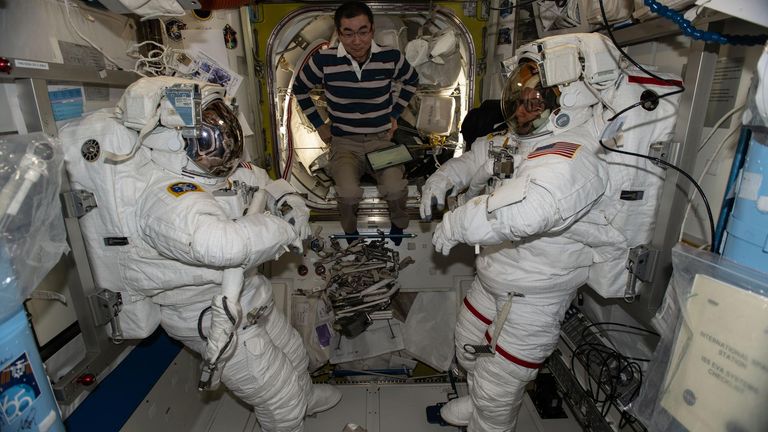
Spacewalks are dangerous and take a lot of planning. It's not uncommon for NASA to cancel them if something isn't quite right.
In 2024, a spacewalk was cancelled last-minute because an astronaut experienced "spacesuit discomfort".
In 2021, astronaut Mark Vande Hei called off his spacewalk over a pinched nerve.
Will contest to replace ISS open up space to everyone?
The four-person Crew-11 crew includes the US astronauts Cardman and Fincke, as well as Japanese astronaut Kimiya Yui and Russian cosmonaut Oleg Platonov.
Read more about space:
Inside the lab trying to protect the astronauts of the future
Racing to replace the International Space Station
Some of the crew had volunteered to take part in experiments to address health challenges astronauts may face on deep space missions, according to NASA - although there is no suggestion this is linked.
The crew are taking part in simulated moon landings, as well as eye and brain tests, MRI scans and other medical exams.
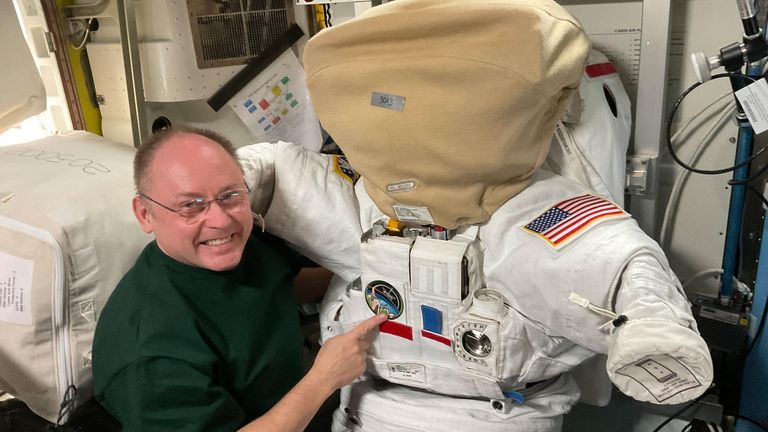
There's been a constant presence on the ISS for over 25 years, with astronauts rotating in and out on missions that can last over a year.
Generally, though, missions last between six and eight months.
In order to bring a crew home early, the space agency will need to coordinate its replacement.










 English (US) ·