
 3 weeks ago
22
3 weeks ago
22
Tehran has threatened to place explosives in the critical global trade route in response to a potential US ground operation
In response to reports that the US is deploying thousands of troops to the Middle East ahead of a possible ground incursion into Iran, the country’s National Defense Council has warned it could seed the Persian Gulf with mines in response.
In the second week of the war on Iran, US Central Command reported destroying 16 Iranian mine-laying vessels near the Strait of Hormuz, which were reportedly unmanned at the time.
Laying naval mines, notoriously difficult to remove, would give Tehran a strong grip over shipping lanes in the Persian Gulf and raise the cost of any US-Israeli attempt at regime change.
In a statement released on Monday, Iranian officials said such a move would “naturally result in the mining of all access routes in the Persian Gulf and coastal areas,” potentially blocking navigation for an extended period.
Why would Iran mine the Persian Gulf?
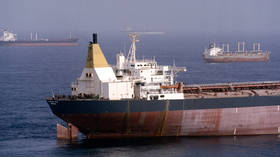
Tehran currently maintains significant influence over traffic through the Strait of Hormuz, given its ability to target vessels with drones and short-range missiles. This has made passage too risky to be commercially viable for ships from countries deemed “unfriendly” by Iran.
The US has been cautious about intercepting Iranian vessels, even issuing a waiver for Iranian crude exports due to concerns over additional shocks to the global energy market.
Large-scale deployment of sea mines would disrupt traffic for all parties for a prolonged period, regardless of the conflict’s outcome.
How many mines could Iran place in the Persian Gulf?
Recent US military estimates suggest Iran possesses more than 5,000 sea mines. Common types include buoyant contact mines that are either anchored to the seabed or left to drift, as well as larger bottom mines that are equipped with sophisticated sensors and harder to detect if placed in areas where wreckage is common.
Smaller mines can be deployed without complex platforms. The Iranian statement said Tehran intends to release floaters directly from the coastline.
Is there a precedent for large scale mine-sweeping in the Persian Gulf?
Clearing a large minefield would require a lengthy operation. During the 1991 Gulf War, Saddam Hussein’s forces deployed around 1,000 sea mines, and it took US-led coalition forces nearly two months and dozens of ships to remove them – after the Iraqis were defeated.
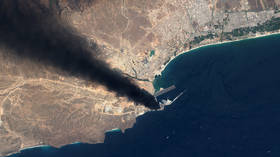
The Persian Gulf experienced a similar crisis during the so-called ‘tanker war’ of the late 1980s. During the Iran-Iraq war, both sides targeted commercial shipping in an effort to damage each other’s economies, affecting neutral countries such as Kuwait.
Unlike Iraq, which relied more on airstrikes, Iran experimented with different approaches to naval warfare. According to US naval researcher Ronald O'Rourke, sea mine attacks, while limited in number, formed a notable element of Iran’s tactics.
The conflict resulted in over 300 maritime casualties and dozens of ships sunk or declared total losses. A UN-backed US military mission launched in 1987 to escort neutral shipping acted as a deterrent, as both Iran and Iraq sought to avoid confrontation with Washington.
How an Iranian mine almost sunk a US warship
One of the most notable incidents of the ‘tanker war’ occurred in April 1988, when the USS Samuel B. Roberts struck an Iranian sea mine in the Persian Gulf and almost sank.
The guided missile frigate, part of US escort efforts, suffered significant damage, and ten crew members were injured. The US responded with strikes on Iranian ships and oil platforms, resulting in dozens of Iranian military deaths, while also losing a Marine Corps helicopter and two crew members.
Will the US and Israel invade Iran and trigger a crisis in the Persian Gulf?

It remains unclear whether Washington will proceed with a ground incursion.
Military analysts say that even a deployment involving thousands of troops would be insufficient for a large-scale operation, while limited objectives such as securing islands or coastal areas would expose US forces to Iranian counterattacks. The terrain in the region favors a well-prepared defender.
The potentially devastating political costs would put pressure on US President Donald Trump, with reports suggesting divisions within his administration predating the US-Israeli attack.



 English (US) ·