
Israel killed Iranian Intelligence Minister Esmail Khatib on Wednesday in its latest attack on the Islamic Republic’s leadership and reportedly attacked Iran's critical South Pars offshore natural gas field, triggering a wave of retaliatory strikes by Tehran on several Gulf states.
Khatib's killing was first announced by Israeli Defence Minister Israel Katz, who said his country will "continue to thwart them and to hunt them all down".
Iran's President Masoud Pezeshkian branded Khatib's death a "cowardly assassination".
News of Khatib's death came the day after Iranian security chief Ali Larijani was confirmed killed in an Israeli strike.
After crowds gathered in central Tehran for Larijani's funeral, Iran's new supreme leader Ayatollah Mojtaba Khamenei declared in a written message that his killers would pay.
"Every drop of spilled blood comes at a price, and the criminal murderers of these martyrs will soon have to pay it," added Mojtaba Khamenei, in a message published on his official Telegram channel.
The new supreme leader's whereabouts remain a mystery and he has not be seen since the war began, despite taunts from US President Donald Trump that he might not even be alive.
Khatib's funeral was held alongside those of Gholamreza Soleimani, the head of the Basij paramilitary force who was also killed in a strike in Iran this week, and more than 80 Iranian sailors who were killed when US forces torpedoed their frigate off Sri Lanka earlier this month.
Trucks carrying coffins draped in Iranian flags moved through the procession, as mourners walked alongside carrying portraits of the slain supreme leader and beating their chests, a sign of mourning in Shia culture.
In contrast to Mojtaba Khamenei, Larijani, 68, had walked openly with crowds at a pro-government rally last week in Tehran.
To display this content from YouTube, you must enable advertisement tracking and audience measurement.
One of your browser extensions seems to be blocking the video player from loading. To watch this content, you may need to disable it on this site.
 © France 24
01:39
Qatar blames Israel for 'dangerous and irresponsible' attack on Pars
Iran's huge Pars gas field was hit on Wednesday in a major escalation in the US-Israeli war that sent oil prices shooting higher, and Tehran struck Qatar and fired missiles at Saudi Arabia after vowing attacks on oil and gas targets throughout the Gulf.
Qatar's state oil giant QatarEnergy reported "extensive damage" after the Ras Laffan Industrial City, an energy-industry hub, was hit by Iranian missiles.
Saudi Arabia said it had intercepted and destroyed four ballistic missiles launched toward Riyadh on Wednesday and an attempted drone attack on a gas facility in the east of the country.
The escalation threatens to worsen an unprecedented disruption to global energy supplies since the US and Israel launched strikes on Iran on February 28.
Pars is the Iranian sector of the world's largest natural gas deposit, which Iran shares with Qatar across the Gulf.
The attack was widely reported in Israeli media to have been carried out by Israel with US consent, though neither country acknowledged immediate responsibility.
Iran's Fars news agency reported that gas tanks and parts of a refinery had been hit. It said workers had been evacuated and state media later said the fire there was under control.
Qatar, a close US ally which hosts the largest US airbase in the region, blamed the attack on Israel, without mentioning any US role, and called it "dangerous and irresponsible" that put global energy security at risk.
The UAE also denounced the attack.
Iran listed an array of prominent regional oil and gas facilities it called "direct and legitimate targets" - Saudi Arabia's Samref Refinery and Jubail Petrochemical Complex, the UAE's Al Hosn Gas Field, and Qatar's Mesaieed Petrochemical Complex, Mesaieed Holding Company and the Ras Laffan Refinery.
It said the sites should be evacuated immediately.
To display this content from YouTube, you must enable advertisement tracking and audience measurement.
One of your browser extensions seems to be blocking the video player from loading. To watch this content, you may need to disable it on this site.
 © France 24
05:55
The US and Israel had previously held back from targeting Iran's energy production facilities in the Gulf, averting Iranian retaliation against the oil and gas industries of its neighbours.
Iran has already shut the Strait of Hormuz, which handles 20% of global oil and liquefied natural gas supply, but consuming nations have hoped the disruption would prove short-lived as long as production infrastructure was spared.
Qatar on Wednesday night declared the security and military attache in Iran's embassy as "persona non grata" and asked them to leave the country within a period of maximum 24 hours, said the foreign ministry.
Doha attributed the decision to Iran's repeated attacks on the country, the latest of which targeted Qatar's Rass Laffan industrial city.
Iran made 'no efforts' to rebuild nuclear capabilities, Gabbard testifies
In Washington DC, US Director of National Intelligence Tulsi Gabbard, in testimony to the Senate intelligence committee, said Iran had suffered heavy blows, but that the Islamic republic was still functioning.
The US intelligence community, she said, "assesses the regime in Iran to be intact but largely degraded".
She also undercut one of Trump's key justifications for the war by acknowledging that Iran had not been rebuilding nuclear enrichment capacities destroyed last year by the United States and Israel.
"As a result of Operation Midnight Hammer, Iran's nuclear enrichment program was obliterated," Gabbard wrote, in prepared testimony for the committee, referring to the June 2025 "12 day war" by Israel and the US on Iran.
"There have been no efforts since then to try to rebuild their enrichment capability."
Gabbard repeatedly deflected questions about the intelligence she had offered the Republican president. She sidestepped when asked by Virginia Sen. Mark Warner, the top Democrat on the Senate Intelligence Committee, whether she had advised Trump that Iran would attack Gulf nations and shut down the strait if the country was targeted by US strikes.
“I have not and won’t divulge internal conversations. I will say that those of us within the intelligence community continue to provide the president with all of the best objective intelligence available to inform his decisions,” she said.
To display this content from YouTube, you must enable advertisement tracking and audience measurement.
One of your browser extensions seems to be blocking the video player from loading. To watch this content, you may need to disable it on this site.
 © France 24
04:32
Attacks across the region
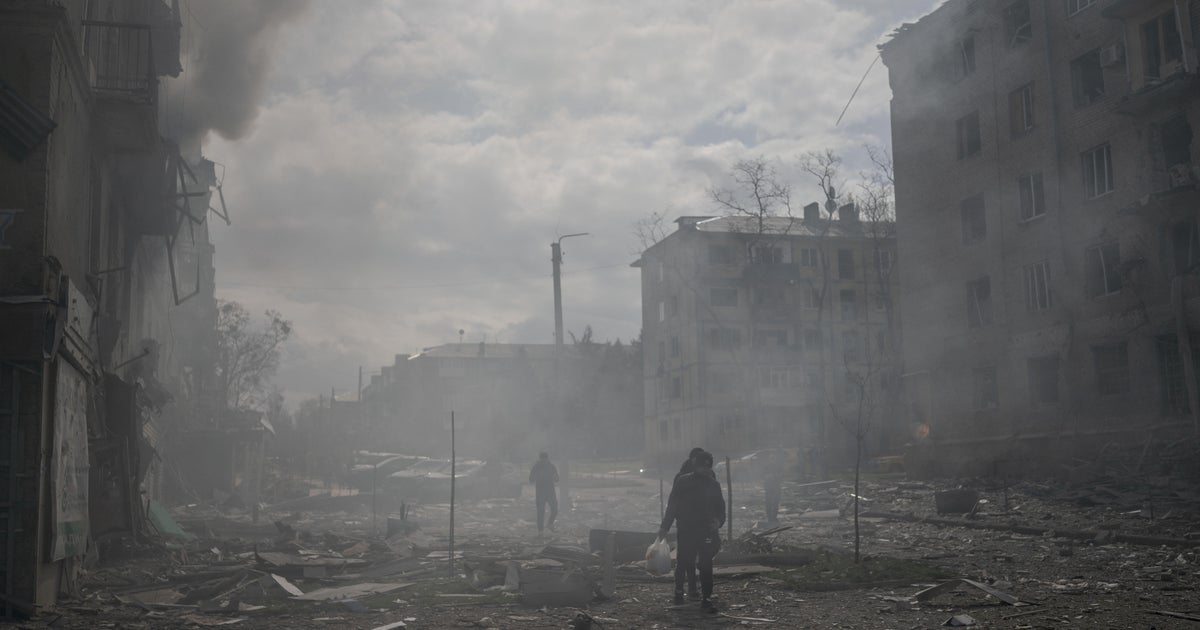
An Iranian missile barrage killed two people near Israel's commercial hub of Tel Aviv, medics said on Wednesday, while authorities said falling munitions hit multiple sites in central Israel overnight.
Police said a cluster bomb hit a residential building in Ramat Gan, a city just outside Tel Aviv, and the roof collapsed on an elderly couple.
Iranian media, meanwhile, said Israel and the United States had launched fresh strikes across several areas of the country, including Tehran.
Tasnim news agency said "seven people were killed and 56 were injured in an American-Zionist attack on residential areas in Dorud town" in Lorestan province.
In Lebanon, Israel struck central Beirut multiple times Wednesday.
The country was drawn into the conflict when the Iran-backed group Hezbollah launched rockets towards Israel over the assassination of former supreme leader Ayatollah Ali Khamenei.
Israeli strikes have killed at least 968 people and displaced over a million, according to local authorities.
A line of cars stretched as far as the eye could see along the country's southern coast as residents of affected areas fled to the ancient city of Sidon in search of safety.
(FRANCE 24 with AFP, AP and Reuters)






 English (US) ·