
 1 month ago
22
1 month ago
22
Nearly a week into a new and widening war in the Middle East, some of the U.S.'s closest allies in the region and beyond are trying to contain it.
SCOTT DETROW, HOST:
It is astonishing what can happen in a week.
(SOUNDBITE OF EXPLOSION)
DETROW: It was sunrise Saturday in Tehran when the U.S. and Israel launched the first strikes of a war that over the past seven days have spread throughout and now beyond the Middle East.
JUANA SUMMERS, HOST:
Over the course of the first 24 hours of the operation, the two countries struck more than 1,000 targets. The most significant, said President Trump and Israeli Prime Minister Benjamin Netanyahu, a strike that killed Iran's supreme leader Ali Khamenei.
(SOUNDBITE OF ARCHIVED RECORDING)
PRESIDENT DONALD TRUMP: The hour of your freedom is at hand. Stay sheltered. Don't leave your home. It's very dangerous outside. Bombs will be dropping everywhere. When we are finished, take over your government. It will be yours to take.
(SOUNDBITE OF ARCHIVED RECORDING)
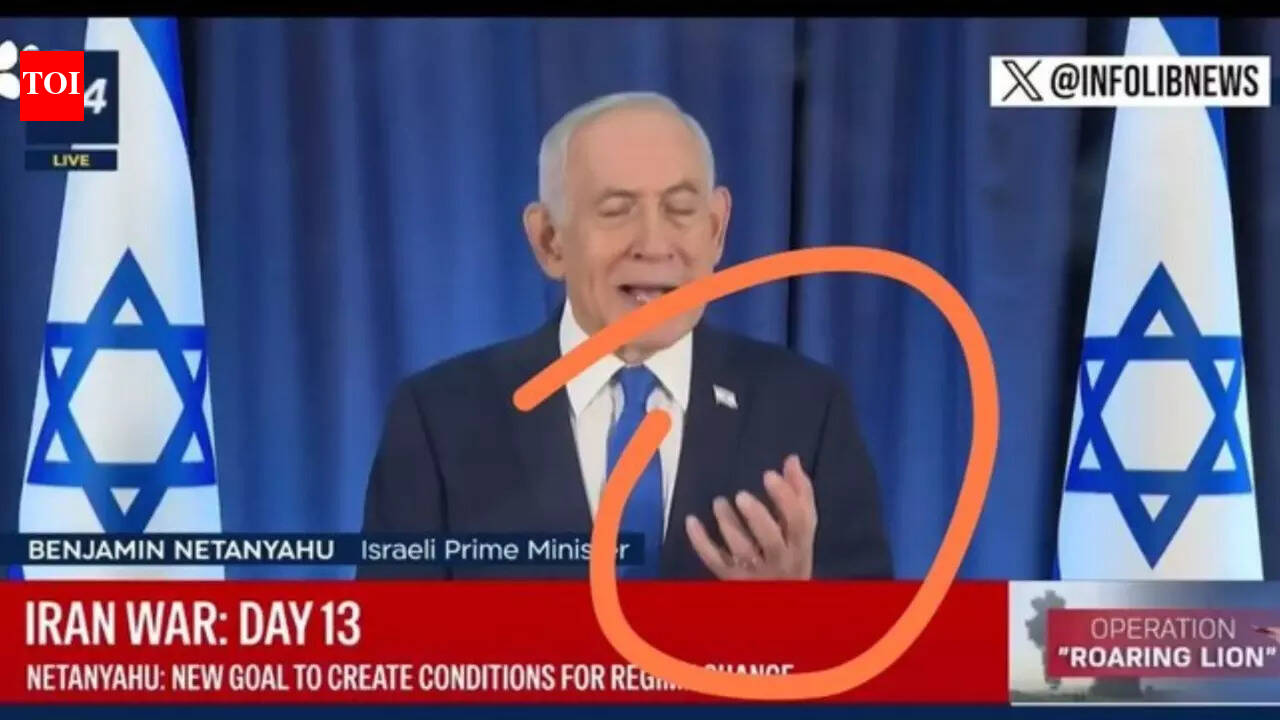
PRIME MINISTER BENJAMIN NETANYAHU: (Through interpreter) Your suffering and your sacrifice will not be in vain. We promised you the help, and the help has arrived.
UNIDENTIFIED ENGINEER: We even saw one of the explosions from our office window around downtown Tehran.
SUMMERS: This engineer is one of many we talked to in Iran this week who asked NPR not to use his name for fear of government retribution.
UNIDENTIFIED ENGINEER: Suddenly, we heard cheers from our neighbors. And to be honest with you, the moment I heard the cheers, I knew what had happened.
DETROW: Iran's foreign ministry called the air strikes a gross violation of its national sovereignty and vowed to respond decisively. They struck back, firing drones and missiles at U.S. bases in the United Arab Emirates, Qatar, Bahrain and Kuwait, where the strikes killed six American service members.
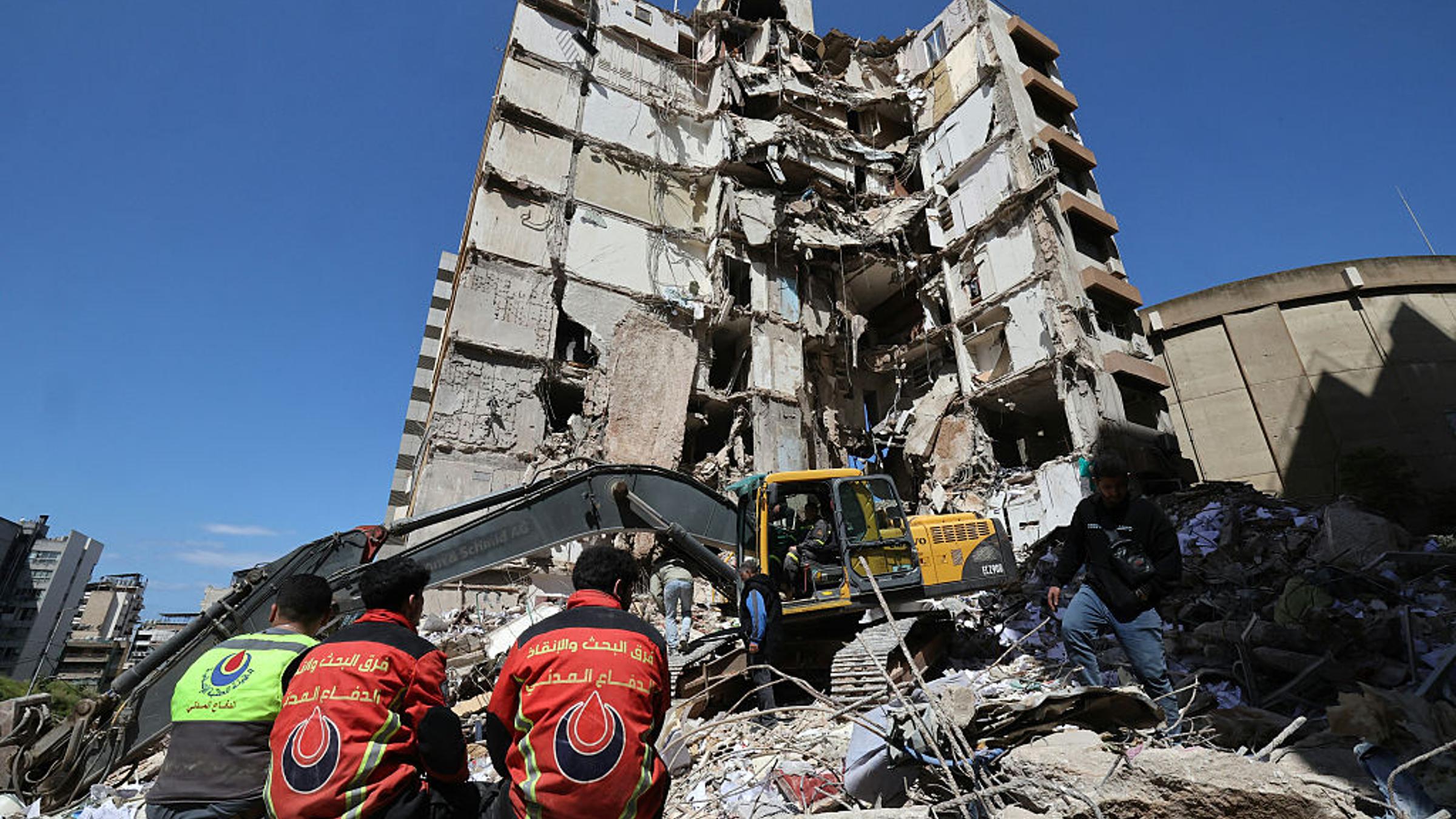
SUMMERS: On Monday, Iran continued attacks on targets as far afield as Cyprus in the Mediterranean, and Iran-backed Hezbollah in Lebanon launched its own attacks on Israel, its first in more than a year.
DETROW: Two Iranian drones damaged the U.S. embassy in Saudi Arabia on Monday, and the day after, an Iranian drone targeted the U.S. consulate in Dubai. Hundreds more targeted U.S. troops in Iraq and elsewhere, and President Trump warned of more casualties.
(SOUNDBITE OF ARCHIVED RECORDING)
TRUMP: Sadly, there will likely be more before it ends. That's the way it is.
SUMMERS: As the U.S. and its allies responded, confusion sometimes set in. Kuwait mistakenly shot down three U.S. fighter jets.
DETROW: Oil prices spiked on Monday when Iran closed the Strait of Hormuz and threatened to fire on ships. Here's energy analyst John Kilduff of Again Capital.
JOHN KILDUFF: So this is becoming a - very much a real supply problem for this market in real time, like a slow-motion traffic accident coming to fruition here.
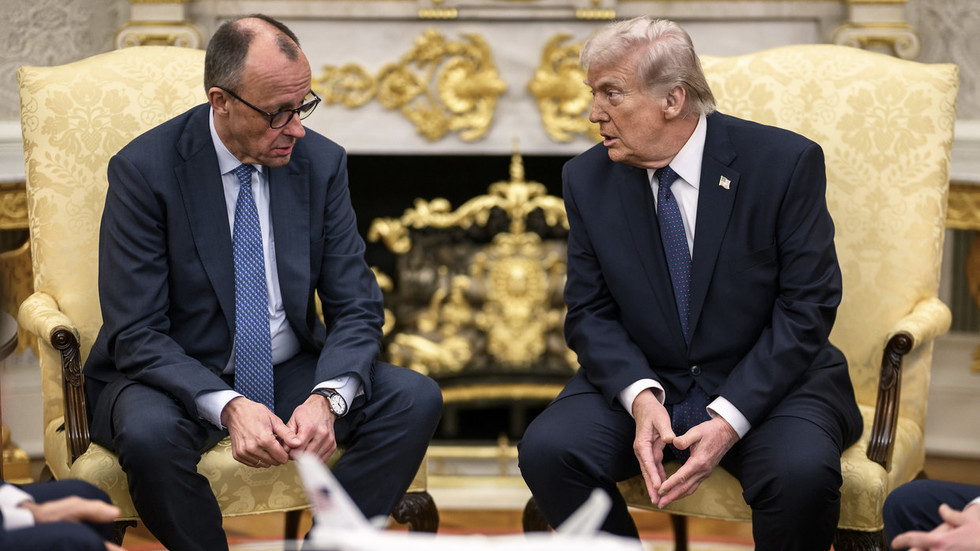
SUMMERS: The war strained relations between the United States and its Western allies.
(SOUNDBITE OF ARCHIVED RECORDING)
PRESIDENT EMMANUEL MACRON: (Through interpreter) These operations were conducted outside of international law, which we cannot condone.
SUMMERS: That was France's president, Emmanuel Macron. Other European countries like Germany struck a more conciliatory tone.
(SOUNDBITE OF ARCHIVED RECORDING)
TRUMP: Spain has been very, very uncooperative, and so has U.K.
DETROW: Trump blasted the two countries when they refused to let U.S. troops use military bases in their countries to attack Iran. Spain held firm. British Prime Minister Keir Starmer eventually allowed use of its bases for defensive purposes. Still, he made an impassioned speech in Parliament, saying Britain does not believe in regime change from the skies.
(SOUNDBITE OF ARCHIVED RECORDING)
PRIME MINISTER KEIR STARMER: We all remember the mistakes of Iraq, and we have learned those lessons.
SUMMERS: By Wednesday, the conflict spread even further. A U.S. submarine sunk an Iranian warship in the Indian Ocean off Sri Lanka, carrying about 180 people. Pentagon chief Pete Hegseth.
(SOUNDBITE OF ARCHIVED RECORDING)
PETE HEGSETH: It was sunk by a torpedo, quiet death, the first sinking of an enemy ship by a torpedo since World War II.
SUMMERS: The strike set off ripples of anxiety across South Asia. Sushant Singh, a former Indian military officer, worries the strike will test Chinese dominance over the Indian ocean.
SUSHANT SINGH: If the U.S. Navy is doing this here, it really sends a signal which obviously Chinese are likely to take more seriously.
DETROW: On Thursday, more fronts opened. An Iranian drone struck an airport in Azerbaijan, a U.S. ally. NATO intercepted a missile headed for Turkey.
SUMMERS: Secretary Hegseth warned yesterday the war will only expand in the coming days.
(SOUNDBITE OF ARCHIVED RECORDING)
HEGSETH: The amount of firepower over Iran and over Tehran is about to surge dramatically.
SUMMERS: President Trump says there will be no deal except, in his words, unconditional surrender.
Copyright © 2026 NPR. All rights reserved. Visit our website terms of use and permissions pages at www.npr.org for further information.
Accuracy and availability of NPR transcripts may vary. Transcript text may be revised to correct errors or match updates to audio. Audio on npr.org may be edited after its original broadcast or publication. The authoritative record of NPR’s programming is the audio record.



 English (US) ·