
Hungary's Prime Minister Viktor Orban arrives to attend a European Council summit at the EU headquarters in Brussels on March 21, 2024.
Sameer Al-doumy | Afp | Getty Images
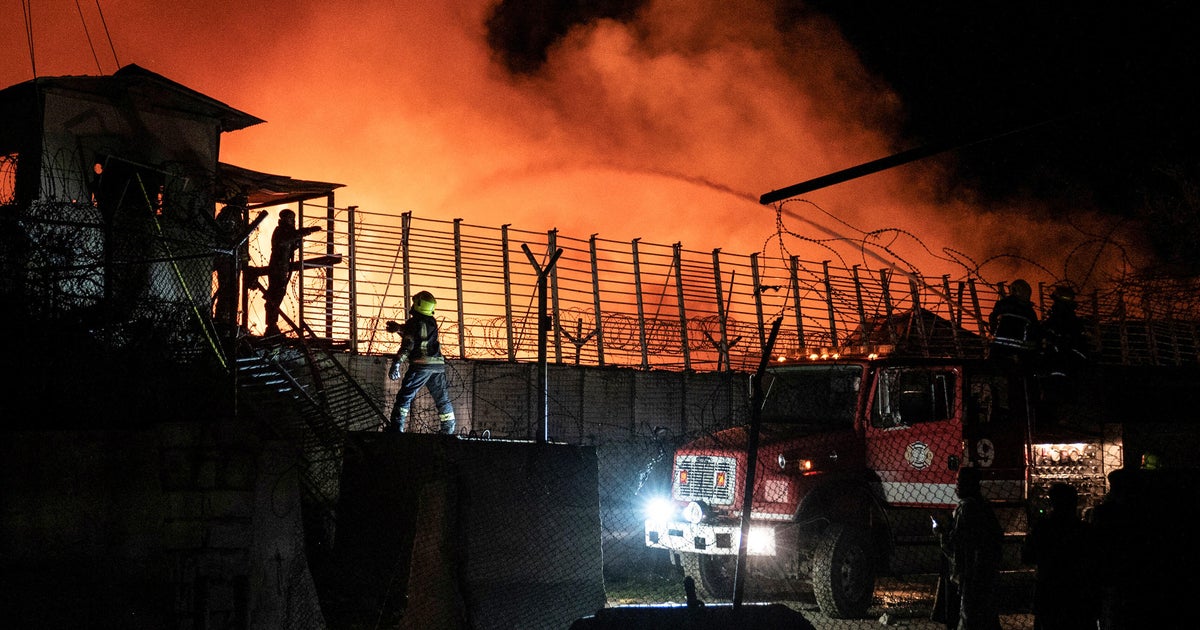
Hungary has accused Ukraine of disrupting oil supplies it gets from Russia and has stationed troops at critical energy facilities across the country as Prime Minister Viktor Orban ramps up the rhetoric around energy and national security ahead of parliamentary elections in April.
Orban on Wednesday accused Kyiv of imposing an "oil blockade" on Hungary by delaying the reopening of the Druzhba pipeline which supplies it, and neighboring Slovakia, with Russian oil.
Ukraine shut the pipeline a month ago, saying a Russian strike had damaged it, but Hungary's leader accused Kyiv of deliberately keeping the pipeline closed for "political" rather than "technical" reasons.
"The Ukrainian government is exerting pressure on the Hungarian and Slovak governments through an oil blockade," Orban said in a video on X following a meeting of the Hungarian Defence Council on Wednesday.
"They will not stop there," he claimed, adding: "They are preparing further actions to disrupt Hungary's energy system," without further details or evidence.
Orban said he had "ordered the strengthening of the protection for critical energy infrastructure. That means that soldiers and the necessary equipment to repel potential attacks will be deployed near key energy facilities."
"The police will also patrol with increased forces around designated power plants, distribution stations and control centers," he said. Drones were also banned in the north-east border region with Ukraine.
Ukraine has not publicly responded to the accusations and CNBC has contacted the country's foreign ministry for a response.
The ramping up of rhetoric around energy and national security, and an increase in anti-Ukraine sentiment, comes as Hungary's leadership fights to stay in power ahead of a parliamentary election in April.
Orban's right-wing Fidesz party is trailing in most independent polls while former party insider and center-right challenger, Peter Magyar, is leading voter surveys ahead of the April 12 vote.
Thorny relations
The comments come amid thorny relations between the countries over energy, Russia-related sanctions, and the ongoing war.
EU countries Hungary and Slovakia have continued to import Russian oil and gas despite the bloc attempting to curb — and wanting to outright ban — such imports, with both countries saying their economies and citizens rely on cheap Russian energy supplies.
The relationship with Russia goes deeper than just energy, however, with the leaders of both countries, Hungary's Orban and Slovakian PM Robert Fico, both having good relations with Russian President Vladimir Putin while having frosty relations with Ukraine's President Volodymyr Zelenskyy.
On Thursday morning, Orban posted an open letter to Zelenskyy on Facebook, accusing him of "working for four years to force Hungary into the war between you and Russia."
Russia's President Vladimir Putin meets with Hungary's Prime Minister Viktor Orban at the Kremlin in Moscow on July 5, 2024.
Valery Sharifulin | Afp | Getty Images
Hungary and Slovakia have frequently opposed EU sanctions on Russia, which invaded Ukraine in 2022, and they again blocked an attempt by the EU to impose more punitive measures on Moscow this week that coincided with the four-year anniversary of the war.
Both said their vetoes were due to the halt in Russian oil deliveries via the Druzhba pipeline — a Soviet-era pipeline whose name translates as "Friendship" — that connects the two countries via Ukraine.
The countries' closeness to Russia and reluctance over sanctions have strained relations with Brussels, as they accuse the EU of turning a blind eye to their energy needs.
Hungary's Foreign Minister Péter Szijjártó went further on Wednesday, saying Europe had overlooked incidents in which he said Ukraine was behind the sabotage of Russian-Europe energy infrastructure, such as the blowing up of the Nord Stream gas pipelines linking Russia to Germany.
Ukraine has denied involvement in damage to one of the pipelines, but investigators in Germany have said the saboteurs were Ukrainian.
"The same people are blocking transportation on the Friendship oil pipeline today are the same as those who blew up the Nord Stream gas pipeline. This is the situation, and we cannot allow this," Szijjártó stated in comments reported by national news agency MTI. He did not produce evidence for his accusations.





 English (US) ·