
The response from world leaders to the United States and Israel’s Saturday attack on Iran was a mixture of support, condemnation, and calls for caution and restraint.
The U.S. and Israel announced their strikes on the Middle Eastern nation in the early hours of Saturday morning after weeks of President Donald Trump threatening Iran over their nuclear deal program. The strikes hit the capital Tehran, as well as Qom, Karaj, Kermanshah, Tabriz and Isfahan, where there is a major nuclear facility.
Read More: U.S and Israel Launch Strikes on Iran, as Trump Promises ‘Massive and Ongoing’ Campaign
In an eight-minute video posted to Truth Social Saturday, Trump said the operation dubbed “Operation Epic Fury” would be “massive and ongoing," looking to “destroy their missiles and raze their missile industry.” Iran’s initial response was a series of strikes on U.S. military bases in Qatar, Kuwait, United Arab Emirates and Bahrain. Iran's foreign minister has promised in a statement that its armed forces “will respond to the aggressors with authority.”
Read More: Does Trump Have the Legal Authority to Strike Iran? An Expert Explains
In the hours after the initial U.S. and Israeli strikes, Russia and China released statements in support of Iran, while Canada, Australia and Ukraine were among those who expressed support for the U.S. and Israel. Several world leaders urged restraint and de-escalation on both sides moving forward.
Here is a round up of what world leaders have said about the operation that has begun war in the Middle East.
United Kingdom
Prime Minister Keir Starmer chaired a meeting of the government's emergency Cobra committee as the country weighs its response to the attacks and Tehran’s retaliation across the Gulf.
It did not participate in the military action, but the country had deployed RAF Typhoons to Qatar to protect the al-Udeid airbase and allied bases across the region.
The UK government on Saturday said in a statement it “does not want to see further escalation into a wider regional conflict.” Still, a government spokesperson emphasized that “Iran must never be allowed to develop a nuclear weapon and that is why we have continually supported efforts to reach a negotiated solution.”
Starmer released a joint statement with French President Emmanuel Macron and German Chancellor Friedrich Merz, telling Iran to stop their retaliatory attacks on countries in the Middle East.
“We condemn Iranian attacks on countries in the region in the strongest terms,” the joint statement reads. “We call for a resumption of negotiations and urge the Iranian leadership to seek a negotiated solution. Ultimately, the Iranian people must be allowed to determine their future.”
Russia
Russia condemned the U.S. and Israel’s attack, calling it “a pre-planned and unprovoked act of armed aggression against a sovereign and independent U.N. member state,” in a statement from Russia's Foreign Affairs Ministry posted to Telegram.
It accused the U.S. and Israel of “plunging the Middle East into an abyss of uncontrolled escalation” and said the attacks could cause a “humanitarian, economic and possibly radiological catastrophe” in the Middle East.
China
China’s Foreign Ministry spokesperson said on X that “Iran’s sovereignty, security and territorial integrity should be respected.”
“China calls for an immediate stop of the military actions, no further escalation of the tense situation, resumption of dialogue and negotiation, and efforts to uphold peace and stability in the Middle East,” the statement continued.
France
In addition to the joint statement with the leaders of the United Kingdom and Germany, French President Emmanuel Macron said on X, in a post originally in French, that the escalation “is dangerous for all.”
“It must stop,” he added. “The Iranian regime must understand that it now has no other option but to engage in good faith in negotiations to end its nuclear and ballistic programs, as well as its regional destabilization activities. This is absolutely necessary for the security of all in the Middle East.”
He called for an “urgent” meeting of the United Nations Security Council.
European Union
Ursula von der Leyen, the European Union's chief executive, said in a statement on social media that the EU has “consistently promoted diplomatic efforts aimed at addressing the nuclear and ballistic programmes through a negotiated solution.”
“We call on all parties to exercise maximum restraint, to protect civilians, and to fully respect international law,” she said.
Canada
Prime Minister Mark Carney said in a statement on X that Canada supports the U.S. “acting to prevent Iran from obtaining a nuclear weapon and to prevent its regime from further threatening international peace and security.”
“Canada's position remains clear: The Islamic Republic of Iran is the principal source of instability and terror throughout the Middle East, has one of the world's worst human rights records and must never be allowed to obtain or develop nuclear weapons.”
Australia
Australia’s Prime Minister, Anthony Albanese, said in a statement on X that the country backs the U.S. in their military operation.
“We support the United States acting to prevent Iran from obtaining a nuclear weapon and to prevent Iran continuing to threaten international peace and security,” he said.
The country also updated their travel recommendations to “Do Not Travel” for Lebanon and Israel.
Spain
Spain Prime Minister Pedro Sánchez called on X for “ immediate de-escalation and full respect for international law,” decrying the potential for another “prolonged” war in the Middle East.
“We reject the unilateral military action by the United States and Israel, which represents an escalation and contributes to a more uncertain and hostile international order,” he said. “We likewise reject the actions of the Iranian regime and the Revolutionary Guard.”
Saudi Arabia
The Saudi Foreign Affairs Ministry condemned Iran’s retaliatory strikes across the region in a statement.
“The Kingdom of Saudi Arabia condemns and denounces in strongest terms the blatant Iranian aggression and the flagrant violation of the sovereignty of the U.A.E., Bahrain, Qatar, Kuwait, and Jordan,” the statement reads.
Oman
Oman’s Foreign Minister Badr Al Busaidi said on X Saturday after the attacks that he was “dismayed.”
“Active and serious negotiations have yet again been undermined,” said Al Busaidi, who has been a key mediator in recent U.S.-Iran nuclear talks. “Neither the interests of the United States nor the cause of global peace are well served by this. And I pray for the innocents who will suffer.”
United Nations
Volker Türk, the UN’s Human Rights Commissioner, criticized both the strikes against Iran, and Iran’s retaliatory strikes.
“As always, in any armed conflict, it is civilians who end up paying the ultimate price,” he said in a statement on Saturday. “I call for restraint and implore all parties to see reason, to de-escalate, and for a return to the 'negotiating table' where they had been actively seeking a solution only hours earlier.”
United Nations Secretary-General António Guterres also condemned military action on all sides of the conflict.
“I call for an immediate cessation of hostilities & de-escalation. Failing to do so risks a wider regional conflict with grave consequences for civilians & regional stability,” Guterres said on X
He also pointed out in the post that the UN’s Charter prohibits “the threat of the use of force against the territorial integrity or political independence of any state, or in any other manner inconsistent with the Purposes of the United Nations.”
Ukraine
Ukrainian President Volodymyr Zelensky condemned Iran for being “Putin’s accomplice” in a post on X reacting to the escalation.
“It is important that the United States is acting decisively. Whenever there is American resolve, global criminals weaken. This understanding must also come to the Russians.”
Albania
Albania Prime Minister Edi Rama said on X that Albania stands “firm with Israel and with the peace-seeking brotherly Arab countries” and that it supports the United States’ military contribution.
“We fully endorse every decisive effort to prevent once and for all the murderers in Tehran from acquiring nuclear or any other military capacity to harm Israel or any other peace-loving nation in the Middle East,” Rama said. “Terrorism must be named. And once named, it must be stopped.”
Hungary
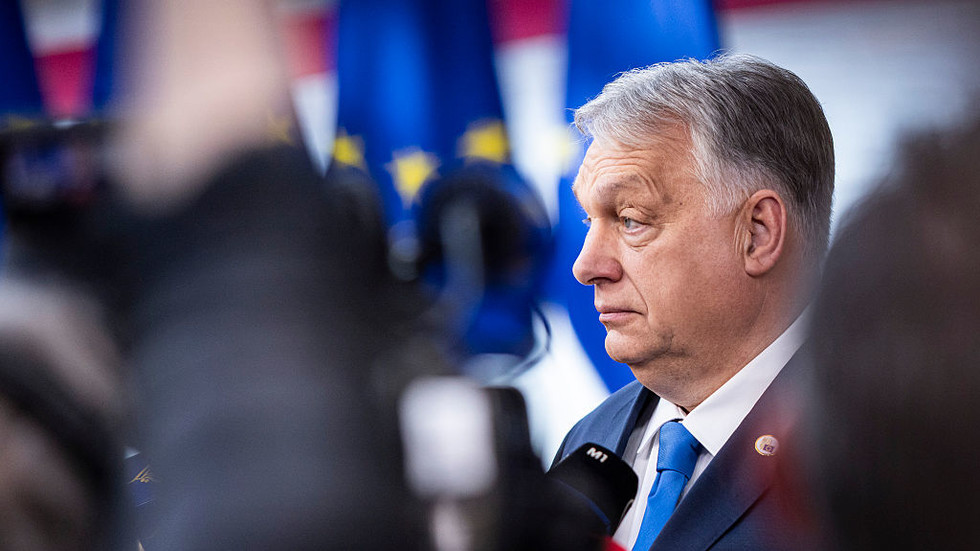
Hungarian Prime Minister Viktor Orbán, a Trump ally in Europe, immediately expressed concerns for how the strikes would impact oil prices. The strikes, he told reporters, “doubled the importance of the Friendship oil pipeline,” which runs through Ukraine. Shipments of Russian oil have been disrupted since January, and Orbán has accused Ukraine of imposing an “oil blockade.”





 English (US) ·