
Workers check vehicle frames on the production line for electric vehicle maker Zeekr at its factory on May 29, 2025 in Ningbo, China.
Kevin Frayer | Getty Images News | Getty Images
The fallout from the Iran war is likely to expedite the shift away from fossil fuels and make countries think differently about the role renewables can play in shoring up energy security, analysts told CNBC.
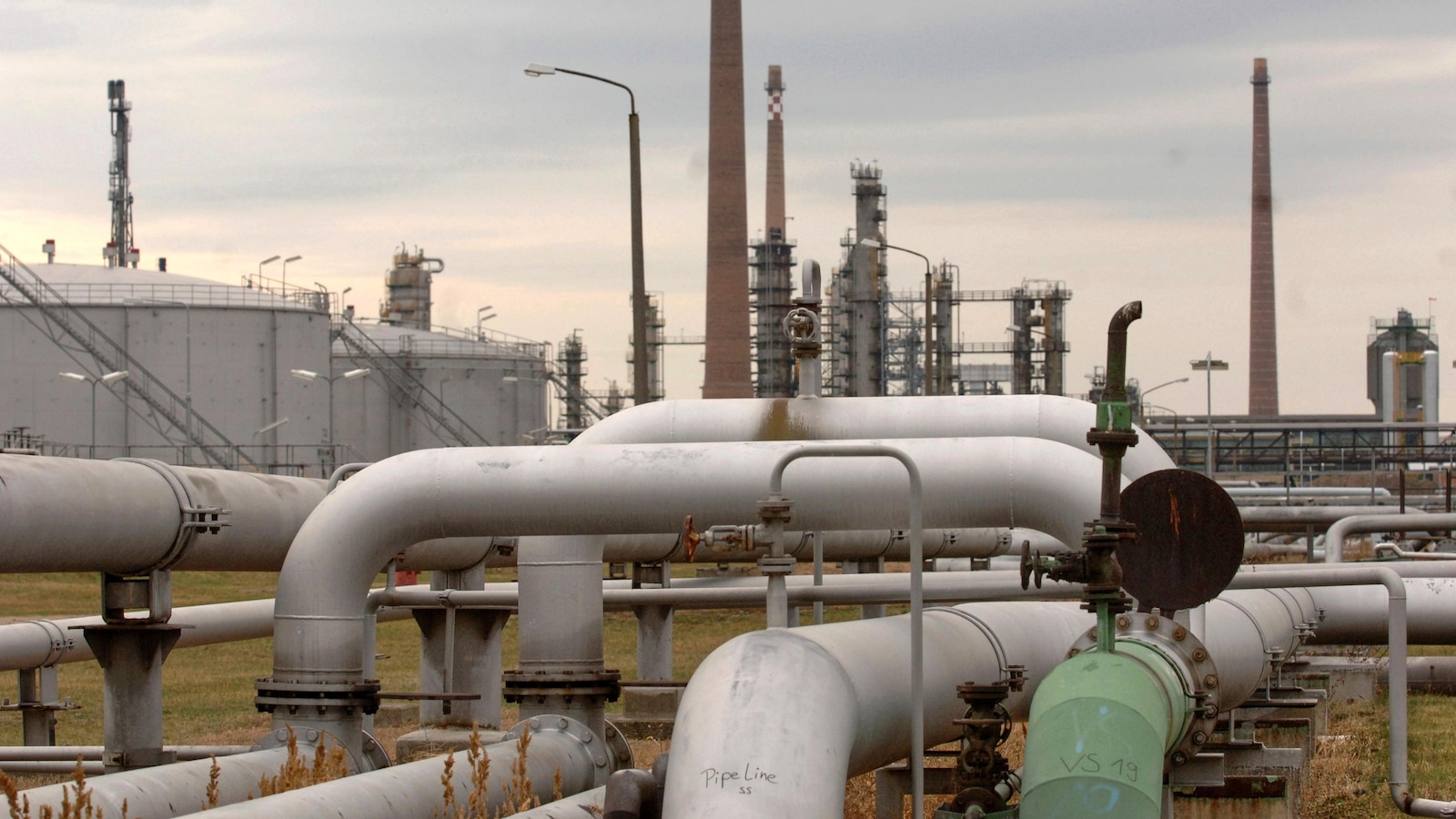
The Middle East crisis has severely disrupted oil exports through the strategically vital Strait of Hormuz, which typically carries about a fifth of the world's oil and liquified natural gas (LNG) and represents a key choke point for fertilizer trade.
It has shone a light on the extent to which the world remains deeply reliant on fragile fossil fuel trade routes, while surging oil and gas prices have rattled energy markets and triggered widespread inflation fears.
Asia's reliance on imported energy means it now sits at the forefront of the global fossil fuel crisis, but supply disruptions are also hitting hard in Europe and Africa, where countries are responding to rising fuel costs and a considerable threat to food security.
The head of the International Energy Agency said the energy transition was moving "very strongly" before the Iran war began — but the fallout from the resulting energy shock means countries will likely direct even more investment toward clean energy sources.
Ten years ago, solar was a romantic story — but now solar is a business.
Fatih Birol
IEA Executive Director
"I expect one of the responses to this crisis will be [an] acceleration of renewables. Not only because they are helping to reduce the emissions but also, they are [a] homegrown domestic energy source," IEA Executive Director Fatih Birol said at the National Press Club in Australia's capital on Monday.
Clean energy sources dominated new power installations last year, for example, with renewables accounting for 85% of all new global power capacity, Birol said, citing solar as a primary driver of this trend.
"It is amazing. Ten years ago, solar was a romantic story — but now solar is a business," Birol said.
Asia's Ukraine moment?
Analysts said a unique component of the fallout from the Iran war is that, unlike in previous oil shocks, renewable power has become more competitive in many countries around the world.
Fossil fuels, however, such as coal, oil and gas, continue to dominate the global energy mix, meeting around 80% of worldwide demand in 2023, according to the IEA.
"The Iran crisis accelerates the shift to renewables and electrification. High fossil prices drive switching, making already cheap electrotech even more competitive," Sam Butler-Sloss, research manager at global energy think tank Ember, told CNBC by email.
"In the old fossil fuel world, energy security meant diversifying fuel supply. With electrotech, nations now have the tools to increasingly eliminate imported fuels altogether."

Electrotech, which refers to solar, wind, batteries and electrified transport, heating and industry, became the world's dominant engine of global energy growth last year, Ember found in an analysis published in December. This was led by China's emergence as the world's first so-called "electrostate."
Butler-Sloss said electric vehicle adoption had already been rising fast across the world, particularly in Asia, and this crisis adds a further tailwind to that trend. He estimated that scaling up EVs could save importers more than $600 billion a year in oil imports, describing the switch as a "security superlever."
"This is Asia's Ukraine moment. In the same way Ukraine compelled Europe to cut gas dependency, Hormuz will push Asia to cut oil dependency – but with even cheaper technology available," Butler-Sloss said.
Grid investment
Ana Maria Jaller-Makarewicz, lead energy analyst for the Europe team at the Institute for Energy Economics and Financial Analysis (IEEFA), described the Iran war energy shock as "a wake-up call" for the European Union.
Spain serves as a prime example of how countries have been able to limit their exposure to fossil fuel price volatility, Jaller-Makarewicz said.
A maintenance team inspects solar panels in the Las Rozas solar park, operated by Zelestra Corp. SA, near Seville, Spain, on Wednesday, June 18, 2025.
Bloomberg | Bloomberg | Getty Images
She noted that Spain's government had come under heavy criticism following a catastrophic blackout last year, which some policymakers blamed on renewables, but that the country was now reaping the rewards from its investment in wind and solar technologies.
Spain, alongside Portugal and some Nordic countries, were among the countries to have registered the lowest gas prices across the 27-nation bloc since the Middle East conflict began.
"What we need across all of Europe is grid investment. And by grid investment, I mean modernization and the expansion of the grid. For me, the winner is the European grid," Jaller-Makarewicz told CNBC by video call.
An energy security tool
Yet, while the Iran crisis is broadly expected to expedite the energy transition in the medium- and long-run, some warned that the shift away from fossil fuels could suffer a setback in the near-term.
Gonzalo Escribano, senior fellow for energy and climate of Elcano Royal Institute, a think tank in Madrid, cited pressures for policymakers to subsidize fossil fuels at the pump and the potential for coal to make a temporary comeback in some producing countries if the conflict drags.
PT Pertamina oil refinery plant at the port city of Balikpapan in East Kalimantan, Borneo, Indonesia.
Bloomberg | Bloomberg | Getty Images
The way countries think about renewables has "definitely" changed in the wake of the conflict, however, Escribano said. A pivot to clean energy sources is now not necessarily seen as going green, but rather an attempt to shore up domestic energy security.
"Renewables and its associated technologies are now commonly perceived as an energy security tool, no longer only a way to combat pollution and climate change, but a geopolitical asset supported by pragmatism rather than idealism," Escribano told CNBC by email.
"Even among governments and citizens with little concern for environmental issues," he added.






 English (US) ·