
 4 weeks ago
26
4 weeks ago
26

 The Citizen
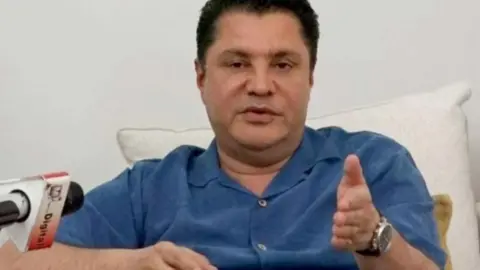
Tanzanian business tycoon Rostam Aziz has acquired a controlling stake in the Nation Media Group
After the acquisition this week of East Africa's biggest media outfit by a politically well connected billionaire businessman, questions are being asked about the future of independent journalism in the region.
Every day millions of people in Kenya, Tanzania, Uganda and Rwanda turn to one of the dozens of newspapers, TV and radio stations or digital outlets owned by the Nation Media Group (NMG) for reliable news.
In countries where journalists have come under pressure from the authorities, titles such as Kenya's Daily Nation, Tanzania's Mwananchi or Uganda's Daily Monitor have become the standard-bearers for trusted information.
But NMG now has a new majority shareholder.
Rostam Aziz, who was named Tanzania's first dollar billionaire by Forbes in 2013, announced this week that his company, Taarifa Ltd, had bought a controlling stake in the group – amounting to 54% of the business.
The deal still has to get approval from media regulators in the various countries.
As a former MP for Tanzania's long-governing Chama Cha Mapinduzi (CCM) party and someone who courts leading politicians across the region, critics have expressed concerns that Aziz might be tempted to influence NMG's editorial output.
But on Wednesday, at a press conference at a plush hotel in Kenya's capital, Nairobi, the 65-year-old tycoon, who has large investments in gas and telecoms, was at pains to reaffirm his belief in robust reporting.
He said he backed "credible and independent journalism" as being "essential for the development of our society". Aziz added that the "partnership is grounded in a commitment to editorial professionalism and institutional credibility".
 AFP via Getty Images
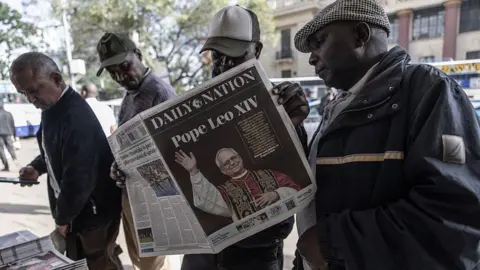
The Daily Nation is one of NMG's flagship titles in Kenya
NMG has spent decades defending editorial independence through some of the region's most turbulent political moments.
Founded in 1959 by the late billionaire philanthropist and spiritual leader Aga Khan, it aimed to give a voice to the majority African population, the company says in its profile.
The decision by the Aga Khan Fund for Economic Development (Akfed) to sell the business followed a review of its investments and a decision to focus on other sectors.
Churchill Otieno, who was a senior digital editor at NMG and is the current president of the Africa Editors Forum, said the change in ownership raised serious questions.
"For decades, NMG has not simply been a media company. It has functioned as part of East Africa's democratic infrastructure," he wrote in a post on LinkedIn.
"When ownership shifts, the critical issue is not merely who buys, but what vision of the public sphere accompanies that purchase."
The fact that it has been owned by a development agency rather than a commercial conglomerate or political family meant that NMG was an "unusual institution", another former senior editor at the group, Bernard Mwinzi, wrote on Facebook.
"That structure gave it a degree of insulation from the political and business pressures that often shape editorial agendas in the region," he said.
"Now, Akfed's exit signals the end of that model."
While Aziz promised to maintain NMG's independence, it is his relationship with politicians, including Kenya's President William Ruto, that makes people wonder if it can be insulated from those pressures.
His ties with Ruto were cemented through a major energy investment that the president championed.
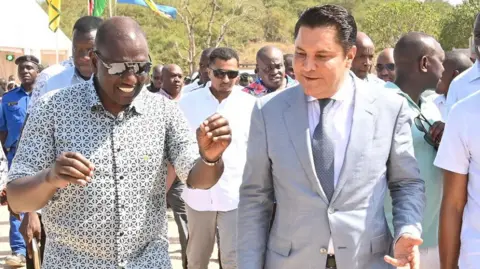
Ruto commissioned Aziz's Taifa Gas plant in the coastal city of Mombasa in 2023, calling him a "resilient investor" who overcame five years of government delays to get the deal over the line.
 State House Kenya
Aziz (R) seen here with President William Ruto, said he struck up relationships with all of Kenya's leaders
With Ruto running for re-election next year, many Kenyans will watch closely to see if the Daily Nation or other NMG outlets become more sympathetic to him.
"He's very well established, very well known and very powerful," Asha Abinallah, CEO of Tech and Media Convergency, a tech firm based in Tanzania, told the BBC.
She said it was "a possibility" that NMG outlets could align themselves with Kenyan and Tanzanian governments now that Aziz had bought a controlling stake.
But speaking to journalists, the businessman pushed back firmly, insisting the NMG acquisition was a purely commercial and "strategic investment" aimed at modernising the group.
He said Ruto was not the first Kenyan leader he had been close to, also citing his friendship with former President Uhuru Kenyatta, as well as former Prime Minister Raila Odinga, who died last October.
"I believe in relationships. Those are personal relationships, they have nothing to do with commercial considerations," Aziz said.
"I'm very close to the leadership in Zambia, I'm very close to leadership in Uganda and I'm very close in leadership all around our region."
Aziz is also widely seen as close to Tanzanian President Samia Suluhu Hassan and the country's former President Jakaya Kikwete, who are from the CCM party where he was an MP.
Analysts say that these are relationships that have helped support his expanding business interests across East Africa.
 AFP via Getty Images
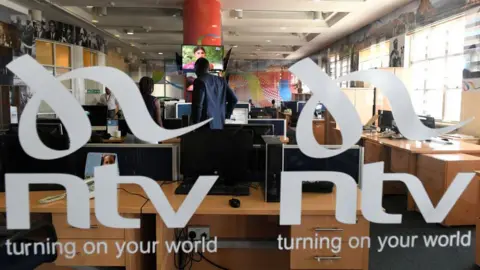
People will be scrutinising the output of NMG outlets like NTV to look for a shift in editorial content
Born in western Tanzania in 1960 to a family who had moved from what is now Iran to East Africa more than a century ago, Aziz was educated to secondary level in his home country before studying economics at university in the UK. He returned to Tanzania and began making his money in trading before expanding his business empire into telecoms, mining and energy.
And he may need his business acumen to help NMG succeed in difficult commercial times.
Just like other global news publishers, the group has weathered years of shrinking print revenues, editorial redundancies and the bruising pivot to digital, emerging leaner and operationally diminished, but still standing as one of the region's most recognisable media brands.
But Aziz is not a novice in the media business.
In the late 1990s, he co-founded Mwananchi Communications, which published the Mwananchi, The Citizen and Mwanaspoti newspapers in Tanzania before the company was later acquired by NMG.
In 2006, Aziz bought another print media company, Habari Corporation which wound up operations in December 2020 blaming a difficult business environment.
He has pledged to "uphold [NMG's] editorial independence while investing in its continued success".
Sceptics will be scrutinising whether he sticks to this commitment, but not everyone is alarmed over the change in the group's owners.
Traders on Nairobi's stock market responded with enthusiasm.
NMG shares surged 28.3% in just two trading days following the announcement, hitting a two-year high - a signal that investors have taken a broadly positive view of the deal.
Aziz has also promised to inject fresh investment into NMG as it scales up its digital platforms to meet shifting media consumption trends.
"For a media house that has spent years downsizing and restructuring, that promise of capital and intent carries real weight," Keith Mwau, an economist, told the BBC.
You may also be interested in:
 Getty Images/BBC





 English (US) ·