
 4 weeks ago
22
4 weeks ago
22
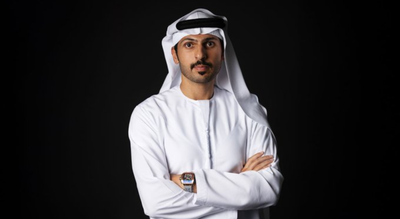
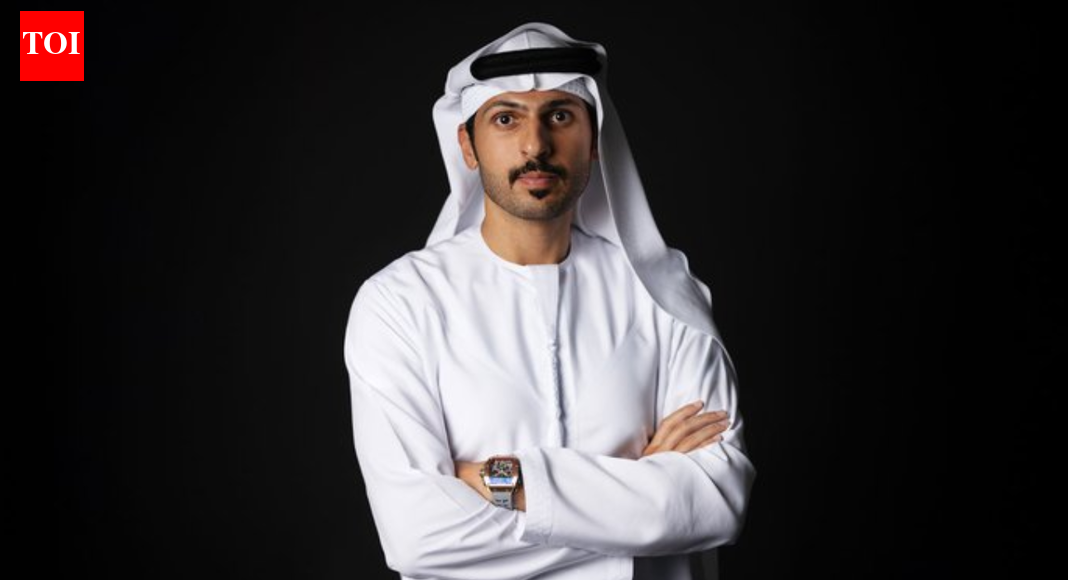
Muhammad Binghatti Dubai's 'Rockstar Architect'/ Image: Forbes Middle East
In Dubai’s crowded skyline, where glass towers rise and vanish with dizzying speed, a handful of buildings announce themselves before you read the name on the deed. The stacked balconies.
The sculpted voids. The aggressive geometry. You do not need a billboard to know who built them. That, by design, is the point. Muhammad Binghatti is not just the CEO and chairman of Binghatti Holding. He is its chief architect, brand author, and most visible strategist, a rare figure in real estate who controls both the form and the business logic of what he builds. In an industry dominated by financiers and contractors, Binghatti operates as something closer to a creative director with balance-sheet authority. At a moment when Dubai’s property market is again testing its upper limits, his approach, treating buildings as branded objects rather than anonymous assets, has made him one of the city’s most closely watched developers.
Inheriting a business, rewriting its language
Muhammad Binghatti took the reins of the family business in 2014, shortly after completing his architectural training. A qualified architect, he graduated with a Bachelor of Architecture from the American University of Sharjah in 2015, where his time at the College of Architecture, Art and Design helped shape the design discipline and visual language that would later define Binghatti’s buildings.
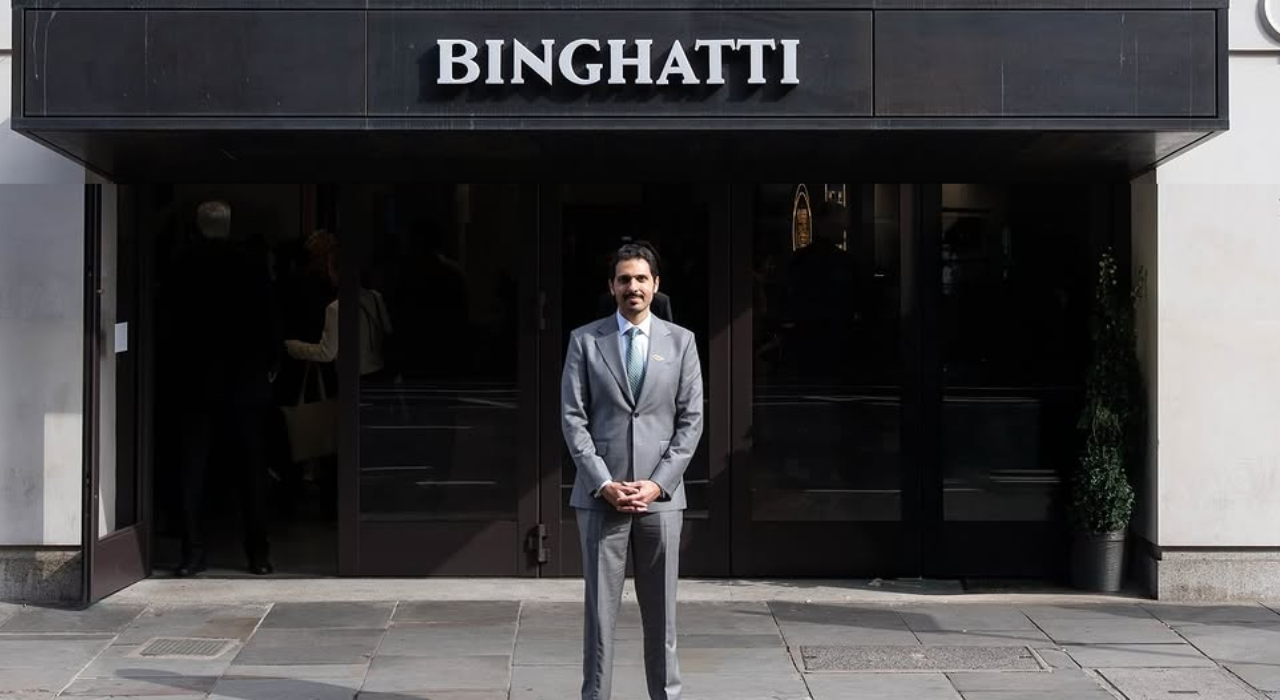
Muhammad Binghatti / Image: Instagram
The company itself had been founded in 2008 by his father, Hussain Binghatti Aljbori, an Emirati businessman whose own journey began far from boardrooms. The son of a nomadic Bedouin merchant, Hussain was overseeing construction projects by his mid-teens, building Binghatti into a diversified holding group spanning real estate, construction, hospitality, food and beverage, and design. When Muhammad stepped in, the company was established, but conventional.
What followed was not an expansion by volume alone, but a recalibration of identity. Unlike most developers, Binghatti did not outsource design as a final cosmetic step. Muhammad, a qualified architect, positioned design at the centre of commercial strategy. He assumed direct control over conceptual identity, façade language, and architectural authorship, effectively collapsing the traditional separation between developer and designer.
“It places me in a unique position as CEO,” he told CEO Magazine, “as I’m personally involved in conceptualising the identity of all our properties. I don’t spend the marketing budget on billboards across highways as the buildings themselves are our billboards.”
Architecture as product
Binghatti’s buildings are instantly recognisable. Repetitive geometric balconies, bold cantilevers, deep shadows, and sharply articulated façades form a consistent visual language across dozens of projects.
The company refers to this approach as “kinetic architecture,” though its practical effect is simpler: a coherent design system that makes the buildings immediately identifiable within Dubai’s dense skyline.
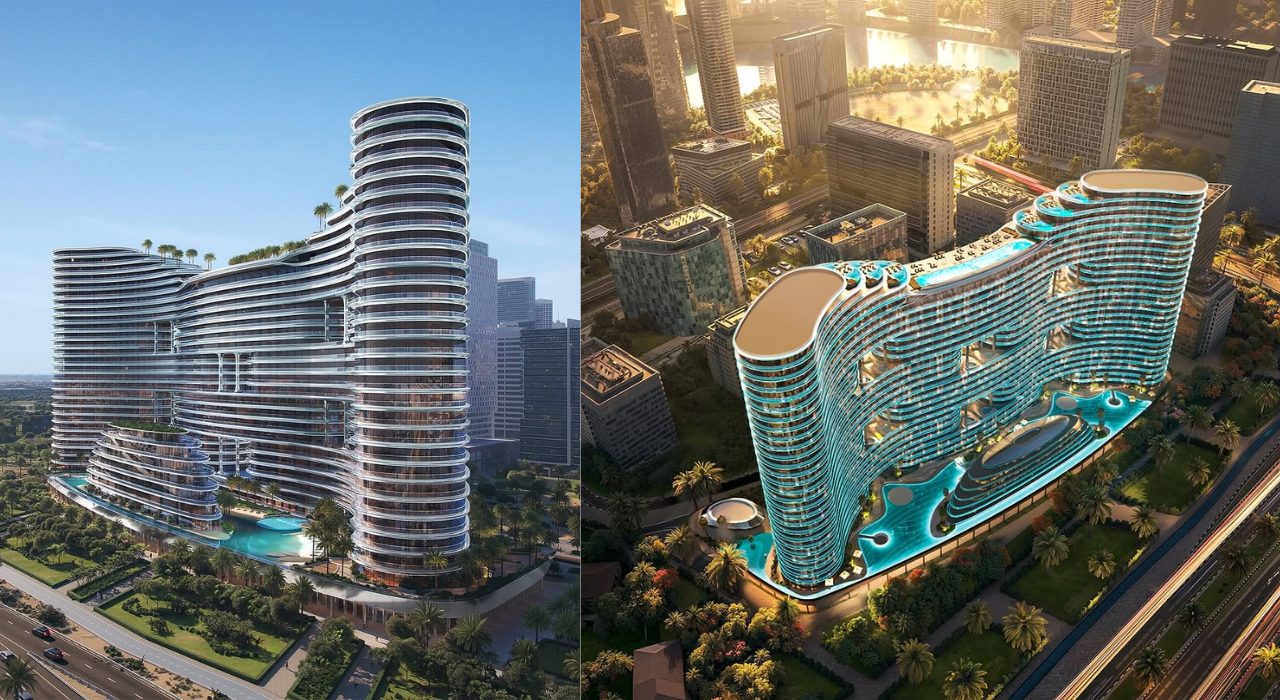
Binghatti Aquarise in Dubai / Image: Instagram
In interviews, Muhammad Binghatti has been explicit about borrowing from consumer branding rather than traditional real estate playbooks. “We’ve changed how people perceive real estate by introducing the idea of amalgamating art into properties,” he says.
“So it’s not just about the property, it’s about selling a brand like you would in the automotive or fashion sector.” He often draws parallels with luxury houses and carmakers. “It’s a similar strategy to Hermès, Gucci, Dior, or Ferrari,” he explains. “When you see a Lamborghini, you know what it is because of the design. Just as you go to Louis Vuitton for a bag, you will associate the brand with the apartment you seek to purchase.” That philosophy has reshaped Binghatti’s public image. Muhammad is frequently described in profiles as a “rockstar architect”—a label he has neither actively courted nor rejected. His buildings photograph well, circulate easily on social media, and function as recognisable objects in a skyline otherwise prone to visual overload.
Branded residences and record sales
The branding strategy reached its most visible expression through high-profile collaborations with global luxury names.
Projects such as Burj Binghatti Jacob & Co. Residences(set to become the world’s tallest branded residential tower), Mercedes-Benz Places by Binghatti, and Bugatti Residences by Binghatti redefined how branded real estate operates in the Middle East, less as logo licensing, more as architectural translation of brand identity.
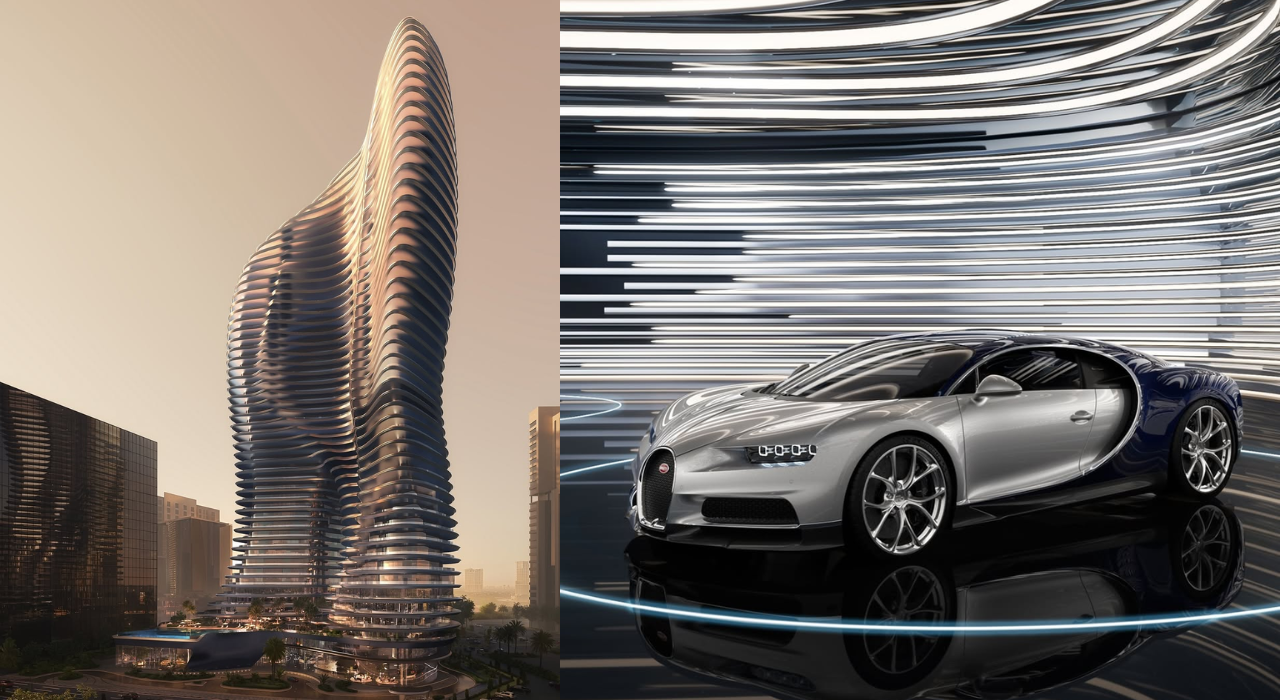
Bugatti Residences by Binghatti/ Image: Instagram
“These projects were about extending a lifestyle,” Binghatti has said. “We wanted the residence to feel like a continuation of what those brands represent, not a superficial association.”
That approach has produced results few developers can claim. Just days ago, Binghatti announced the sale of the most expensive penthouse ever sold in Dubai and the Middle East, a unit at Bugatti Residences valued at AED 550 million (approximately USD 150 million). The transaction, concluded by Chief Sales Officer Abdullah Binghatti, also set a new price-per-square-foot record in Business Bay at AED 11,650 per sq.
ft.
The sale was not an anomaly. It capped a year of aggressive growth and consolidation.
Scale, numbers, and the business beneath the aesthetics
As of 2025, Binghatti Holding has delivered more than 12,000 residential units, with 15,000 units completed in 2024 alone. The company’s active portfolio now spans over 80 projects across Dubai, including Business Bay, Downtown Dubai, Al Jaddaf, Jumeirah Village Circle and Triangle, Dubai Silicon Oasis, Liwan, and Dubai Residential Complex. Total investment value exceeds AED 70 billion (around USD 19 billion). As of September 2025, Binghatti had 27 projects under development, covering more than 20,000 units with an estimated gross development value of AED 44 billion, alongside a further 11 projects in planning worth approximately AED 30 billion. Financially, the momentum is equally striking. For the first nine months of 2025, Binghatti reported a 145% year-on-year increase in net profit to AED 2.66 billion (≈ USD 724 million).
Revenue nearly tripled to AED 8.96 billion, supported by strong off-plan sales and early handovers. Around 60% of buyers were non-resident investors, underscoring the brand’s international pull.
Net worth
Public interest in Muhammad Binghatti’s personal wealth has grown alongside the company’s rise. Some online sources and social media posts place his net worth as high as USD 2.5 billion, but these figures are unverified and unsupported by primary financial disclosures. More credible profiles, including Forbes Middle East, frame Binghatti’s wealth in terms of portfolio value rather than personal net worth, estimating the Binghatti property portfolio at approximately USD 10.8–10.9 billion. As with most privately held real estate groups, personal wealth is difficult to disentangle from corporate valuation, asset holdings, and family ownership structures. What is clear is not the number, but the control. Muhammad Binghatti sits at the intersection of design authority and capital allocation, a position few developers occupy simultaneously.
The man behind the brand
Away from spreadsheets and site plans, Binghatti describes himself as an artist and poet as much as an architect. He has spoken about an early fascination with brand founders, recalling how, as a student, he would pore over financial newspapers and study photographs of CEOs. “I truly believed it would happen,” he once said. “I’d see brands named after their founders, Ferrari, Chanel, and imagine people recognising the name Binghatti in the same way.” A decade later, that ambition no longer sounds aspirational. It reads as executed. For all the spectacle, the discipline is evident. Binghatti designs largely in-house, leading teams that treat each building as a distinct object requiring tailored materials, construction techniques, and engineering solutions. Future concepts include smart buildings with, integrated artificial intelligence, structures designed to interact with residents rather than simply house them. Whether that vision reshapes the next phase of Dubai’s skyline remains to be seen. What is already clear is that Muhammad Binghatti has altered the rules of visibility in real estate. In a city built on ambition, he has made recognition itself a form of currency. And in Dubai, that may be the most valuable asset of all.






 English (US) ·