
 1 month ago
22
1 month ago
22
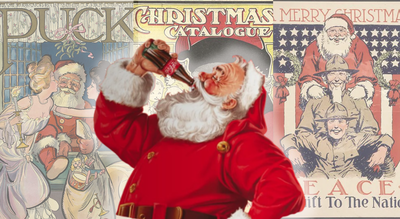
Long before Coca-Cola’s ads, Santa often appeared red-coated in poems, illustrations, and holiday postcards.
Every December, the same claim resurfaces: that Santa Claus wears red because Coca-Cola dressed him that way. It sounds neat, corporate, and believable, a global brand colouring Christmas in its own image.
But when you trace how Santa actually came to look the way he does, the story becomes longer, messier, and far older than a 1930s advertising campaign.Long before Coca-Cola entered the picture, Santa was already appearing in red. Not always. Not consistently. But often enough that the colour cannot be pinned to a single company or moment.
Before advertising, before America
The story begins far from billboards or brand colours. Santa Claus traces back to Saint Nicholas, a monk believed to have lived around 280 AD in what is now modern-day Turkey.
He was known for acts of generosity, particularly gift-giving. Whether he existed as a historical figure remains debated, but belief in him appears in early writings and diary entries, showing that people accepted his presence long before modern Christmas traditions formed.As the story travelled across Europe, it blended with local customs. In the UK, Saint Nicholas merged with Father Christmas, a figure tied to feasting and winter celebration.
In the Netherlands, traditions around Sinterklaas added further layers. At this stage, there was no fixed appearance. Santa could be tall or short, thin or rotund, kind or unsettling. Clothing varied widely, including green, brown and red.
Poems, pens and red coats
By the early nineteenth century in the United States, writers and artists began shaping a more recognisable character. Clement Clarke Moore’s 1823 poem A Visit from St Nicholas described a plump, cheerful gift-giver travelling by sleigh, establishing many traits that still endure. Visual artists followed. Most influential was Thomas Nast, whose illustrations in Harper’s Weekly from the 1860s onwards gradually standardised Santa’s features.
Nast depicted him as round, bearded, and increasingly dressed in red with white trim. An 1881 illustration titled Merry Old Santa shows a figure unmistakably close to the modern image.Crucially, this was decades before Coca-Cola.By the late 19th century, Santa in red appeared widely. He featured in advertisements for the US Confection Company’s Sugar Plums, on the cover of humour magazine Puck, and in postcards and illustrated books. These depictions show that red was already a familiar choice, not a corporate invention.
What Coca-Cola actually did
Coca-Cola entered the picture in the 1930s, hiring illustrator Haddon Sundblom to create Christmas advertisements. The goal was practical: to encourage people to drink Coke during winter, when sales typically dropped.Sundblom based his Santa on Moore’s 1822 poem and on existing illustrations, particularly Nast’s work. His version was warm, grandfatherly, rosy-cheeked and dressed in red with white trim. The colour aligned neatly with Coca-Cola’s branding, but it was not new.
It was familiar.Those adverts ran repeatedly through the 1930s and 1940s, then spread globally. Their reach helped standardise the image, fixing it in popular memory. But they did not originate it.Fact-checking organisations and historians have repeatedly debunked the claim that Coca-Cola created Santa’s red outfit. The verdict is clear: the company helped cement a particular version of Santa, but it inherited that image rather than designing it from scratch. Santa had already worn red, had already grown rotund, and had already acquired his familiar cheer long before advertising executives saw his potential.










 English (US) ·