
 1 month ago
18
1 month ago
18
In a twist of Cold War-era policy, Danish soldiers are bound by a 1952 rule to counter-attack immediately if the US invades Greenland.
02:58, Thu, Jan 8, 2026 Updated: 02:58, Thu, Jan 8, 2026

HDMS Triton is a Thetis-class frigate belonging to the Royal Danish Navy (Image: Getty)
Danish soldiers will be required to shoot first and ask questions later if the United States invades Greenland, under the army's rules of engagement. On Wednesday, the Danish defence ministry confirmed the existence of a 1952 rule requiring soldiers to "immediately" counter-attack invading forces without awaiting orders.
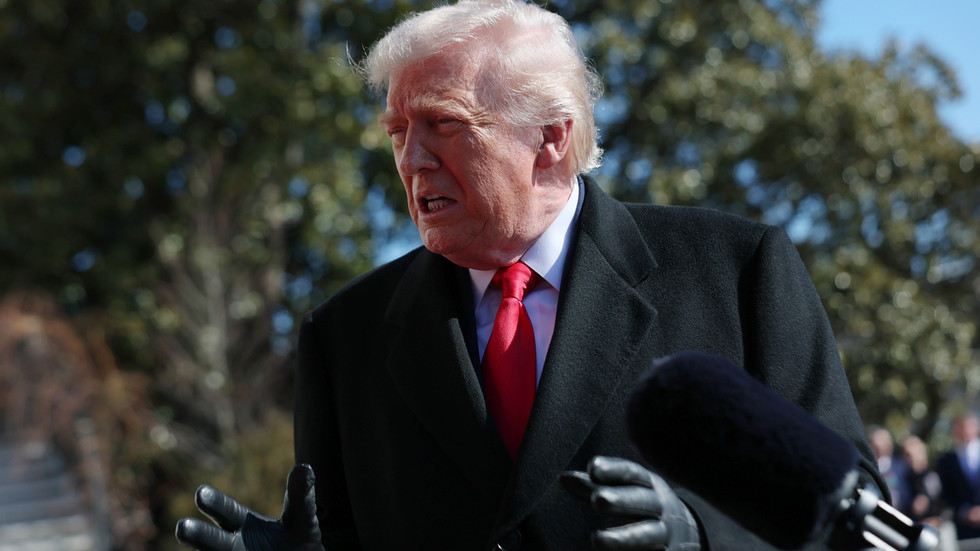
The defence ministry also said that the rule "remains in force" when asked about its status by Berlingske, a centre-Right Danish newspaper. This week, Donald Trump, the US president, repeated his intention to annex the Nato territory of Greenland, which he views as essential to US national security, including by military force if necessary.
His remarks have shocked Denmark, which rules Greenland as an overseas territory and insists the island is "not for sale" as well as Greenland's government and the wider Nato alliance. According to the Danish newspaper Berlingske, the 1952 rule states that in the event of an invasion, "the attacked forces must immediately take up the fight without waiting for or seeking orders, even if the commanders in question are not aware of the declaration of war or state of war".
The latest news from around the world Invalid email
We use your sign-up to provide content in ways you've consented to and to improve our understanding of you. This may include adverts from us and 3rd parties based on our understanding. You can unsubscribe at any time. Read our Privacy Policy
European allies hold urgent talks on response to possible US attack
European allies are holding urgent talks on how to respond to a possible US attack on Greenland, a move that experts say would probably mark the end of the Nato alliance. "We want to take action, but we want to do so together with our European partners," Jean-Noël Barrot, the French foreign minister, said of discussions on how Europe should respond to a US takeover of the Arctic island.
A German government source told Reuters news agency separately that Germany was "closely working together with other European countries and Denmark on the next steps regarding Greenland".
Also on Wednesday, Mr Barrot suggested he had received assurances from US Secretary of State Marco Rubio that Washington was not planning an "invasion." "I myself was on the phone yesterday with Rubio... who confirmed that this was not the approach taken... he ruled out the possibility of an invasion [of Greenland]," said the French foreign minister.
Greenlandic PM pushes back on Trump's calls of country takeover
Rubio's assurances appear to contradict Trump's press secretary
Mr Rubio also briefed US politicians that threats against Greenland do not signal an imminent invasion, and that the goal is to buy the island, sources told the Wall Street Journal (WSJ). The WSJ report and Mr Rubio's assurances appeared to contradict Karoline Leavitt, Mr Trump's press secretary, who said on Tuesday that military action was "always an option."
At the same time, the Washington Post reported on Wednesday that US officials were increasingly discussing a takeover of Greenland with their European counterparts as a "concrete" possibility. A senior European diplomat told the newspaper that there had been a marked shift in tone on the issue in recent days.
Sir Keir Starmer "set out his position on Greenland" in a phone call with Donald Trump on Wednesday evening, Downing Street said on Wednesday night.
Former French Prime Minister Dominique de Villepin warned that if the US were to invade Greenland, it would become an "enemy" of Europe's Nato members. "In no case should Europe accept any damage to European sovereignty," Mr Villepin told Bloomberg TV, as he stressed that a case of one Nato member attacking another was "unprecedented".
"And of course if Donald Trump goes forward, the status of the US will go from adversary or rival to the one of enemy," Mr Villepin said. "It'll be a huge historical change."





 English (US) ·