
 3 weeks ago
17
3 weeks ago
17

ChatGPT ‘nearly kills’ woman after giving confident advice about a poisonous plant/ (@rawbeautybykristi/Instagram)
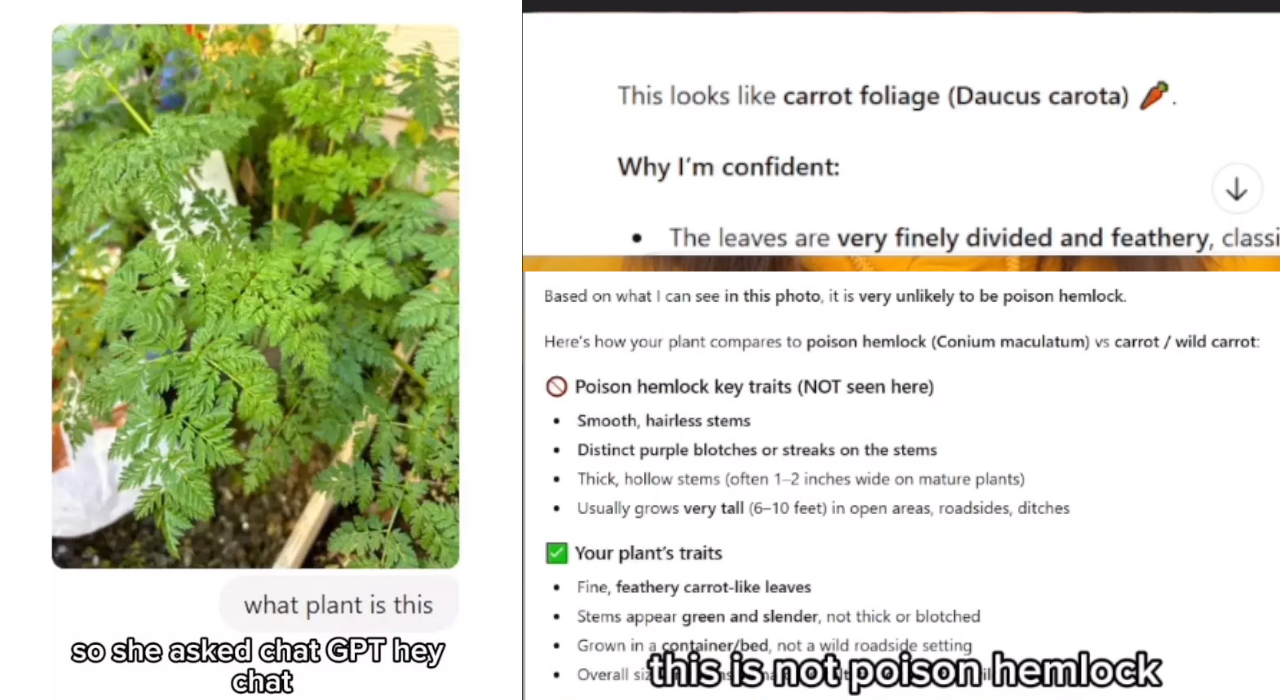
Millions of people now treat AI chatbots as a first stop for everyday questions, from recipes to home projects. But one YouTuber has warned that misplaced trust in those answers can be dangerous, after her best friend was repeatedly reassured by ChatGPT that a highly toxic plant was safe.The warning came from Kristi, who shared the incident with her nearly half a million Instagram followers. In a series of posts and videos, she explained that her friend had sent photos of an unfamiliar plant growing in her garden to ChatGPT, asking a simple question: what plant is this?
When confidence replaces caution
According to screenshots Kristi shared, the chatbot identified the plant as carrot foliage. It listed the “finely divided and feathery leaves” as a classic sign of carrot tops and expressed confidence in its conclusion, saying it was “highly unlikely” to be poison hemlock.
It also provided lists of common lookalikes, including parsley, coriander, shock horror, and Queen Anne’s lace.Concerned, Kristi’s friend asked directly whether the plant could be poison hemlock. ChatGPT reassured her multiple times that it was not.“I don’t know if you guys know this, you eat it, you die. You touch it, you can die,” Kristi told her followers, stressing the danger of poison hemlock. She later shared information she found independently, noting that hemlock causes systemic poisoning and has no antidote.
The reassurances continued even after her friend sent additional images. ChatGPT again dismissed poison hemlock as a possibility, saying the plant did not show smooth, hollow stems with purple blotching, despite Kristi pointing out that those features appeared clearly visible in the photos. At one point, the chatbot even suggested the plant might be carrot foliage growing in a shared school garden where Kristi’s friend works.
(@rawbeautybykristi/Instagram)
Alarmed, Kristi ran the same images through Google Lens, which immediately identified the plant as poison hemlock. Her friend then uploaded the photos into a separate ChatGPT session on her phone and, this time, was told the plant was poisonous.“She’s a grown adult and she knew to ask me beyond what ChatGPT said, thank God,” Kristi said. “Because what if she wasn’t? They would literally be dead. There is no antidote for this.”In a strongly worded caption accompanying her post, Kristi wrote:“Chat GPT NEARLY k*lled my best friend by telling her that POISON HEMLOCK was CARROT. It not only said it was POSITIVE it doubled down over and over CONFIRMING with ABSOLUTE certainty that it was in fact NOT poison hemlock, that it was IN FACT wild carrot. Spoiler, it’s poison hemlock. Which there is NO antidote for and is EXTREMELY deadly.
She ended with a blunt warning to her audience:“This is a warning to you that ChatGPT and other large language models and any other AI, they are not your friend, they are not to be trusted, they are not helpful, they are awful and they could cause severe harm.”
A deadly lookalike
Poison hemlock (Conium maculatum) is not an obscure toxin. In ancient Athens, it was the state’s chosen method of execution, most famously used to kill Socrates in 399 BCE. Modern medicine understands its effects in far greater detail, but the outcome can be the same. According to the Cleveland Clinic, every part of the plant is poisonous, seeds, roots, stems, leaves and fruit, and ingestion can be fatal even in small amounts.
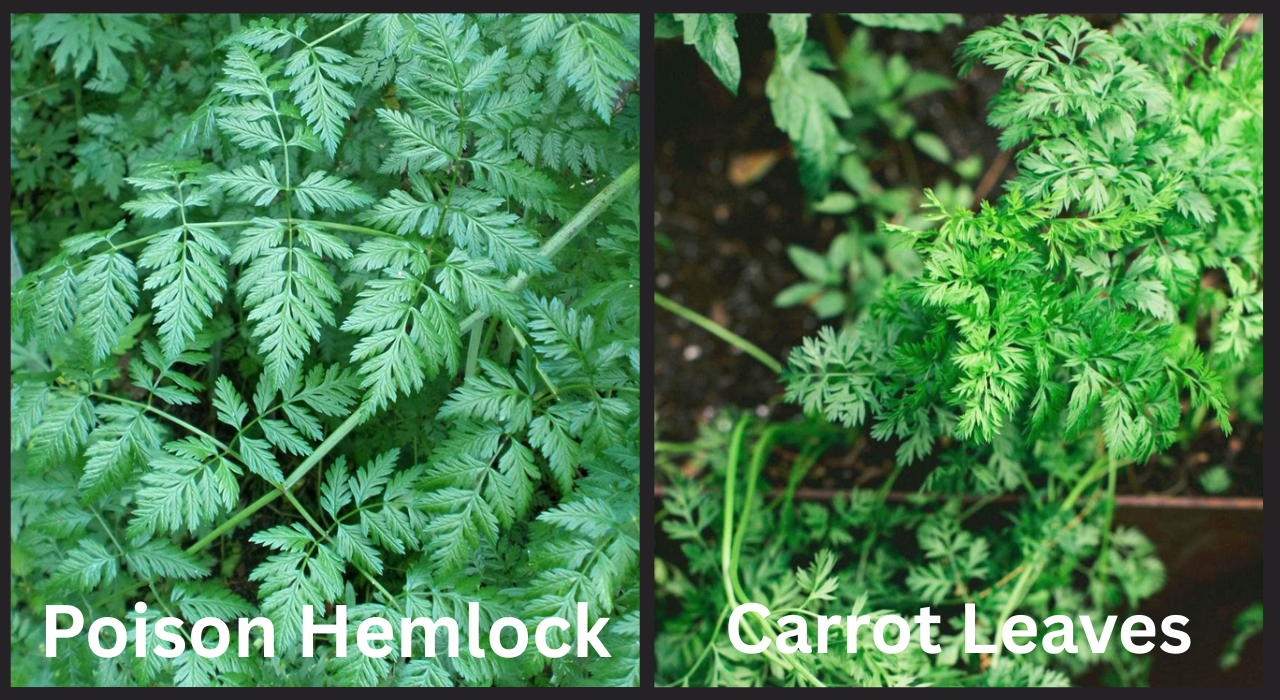
The difference between poison hemlock (Conium maculatum) and carrot (Daucus carota), both in the same family, lies in toxicity, stem markings, and leaf texture.
The danger lies partly in how easily hemlock is mistaken for benign members of the carrot family. It closely resembles wild carrot or Queen Anne’s lace, with delicate, parsley-like leaves and clusters of small white flowers. The key warning signs, a hollow stem marked with purple blotches and rapid growth that can reach several feets, are often missed by non-specialists.Clinically, hemlock poisoning acts fast. Symptoms can begin within 15 minutes of ingestion and may include sweating, vomiting, dilated pupils, excessive salivation, dry mouth, rapid heartbeat, high blood pressure, confusion, muscle twitching, tremors and seizures.
In severe cases, patients can develop muscle paralysis, dangerously low blood pressure, kidney failure and central nervous system depression.
The plant’s toxic alkaloids disrupt the neuromuscular junctions that control muscle movement; when the respiratory muscles fail, breathing stops. There is no specific antidote. Diagnosis relies largely on symptoms and exposure history, sometimes aided by a sample of the plant itself.
Why mistakes like this matter
That combination, visual similarity to harmless plants, rapid onset of symptoms and the absence of an antidote, is precisely why botanists and clinicians warn against casual identification. Kristi’s account shows how easily a confident but incorrect AI response can short-circuit that caution, turning a routine question into a near-miss with a poison once used to end the life of one of history’s most famous philosophers.










 English (US) ·