
 1 month ago
36
1 month ago
36
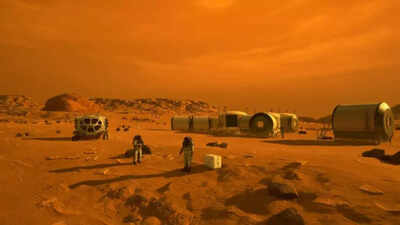
In today’s world, questions about the existence of more complex life forms on Mars have become more prominent because there have been reports of ‘insect' and ‘reptile' types of life, based on photo evidence, that were both surprising and provocative, while the National Aeronautics and Space Administration (NASA) remains separated by the many alternative theories, often contradicting themselves in their quest to find out whether or not these complex organisms do exist on the red planet Mars.
NASA’s mission, Curiosity Rover, has found many complex organic molecules and has also discovered numerous ancient ‘spiderweb’ boxwork formations at Gale Crater; however, NASA and other agencies that are looking for higher-level organisms have not yet identified any clear evidence confirming that higher-level organisms (life) do indeed exist on Mars.
Controversy over the existence of insects and reptiles on Mars
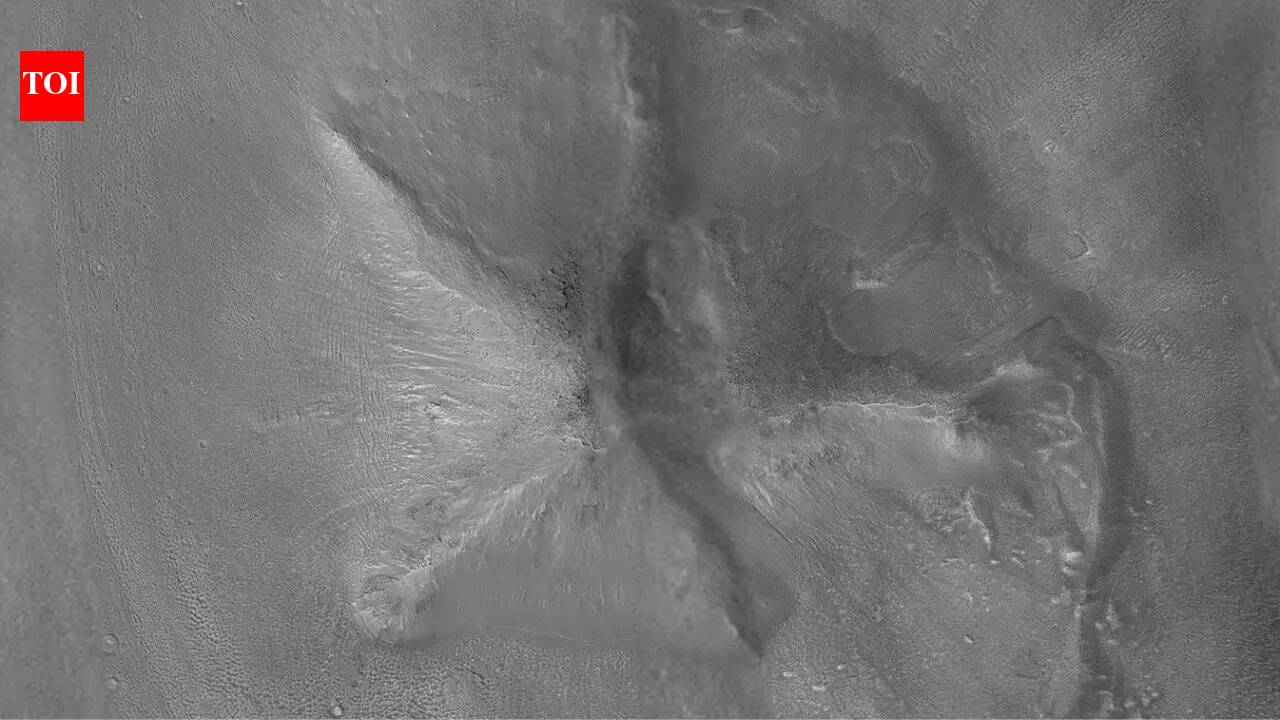
A new surge of interest has arisen in the potential existence of alien life due to the work of entomologist Dr. William Romoser from Ohio University. According to its analysis of images from the Curiosity Rover, many features seen on Mars look very much like bees or reptiles that exist on Earth.
Dr. William Romoser believes that these observations are examples of ‘mosaic’ type individuals, who exhibit characteristics of jointed limbs, wings, and possibly are able to fly.NASA, along with other scientists do not agree with Dr. Romoser’s research. The scientific community quotes that these sightings on Mars may be caused by a psychological phenomenon that has been defined as pareidolia, which refers to the brain's highly developed ability to recognize and identify typical forms, such as people or animals, in seemingly random forms and shadows.
Furthermore, planetary scientists stress that the characteristics of the Martian atmosphere (for example, it is composed almost entirely of Carbon dioxide and lacks both oxygen and pressure) do not support the energy-intensive metabolism that is required to support complex life.
What NASA rovers are actually finding
The ongoing debate regarding the ‘insects’ does not influence what is becoming clear from actual NASA research - there are even more significant discoveries being made.
For example, in February and March of 2026, the Curiosity Rover discovered complex carbon chains (12 atoms) hidden within strange formations called ‘boxwork’ formations in Gale Crater. In 2021, the Perseverance rover made a breakthrough in terms of searching for life. Perseverance is exploring a classic lake as well as a river delta in Jezero Crater. It is outfitted with advanced instruments designed to find biosignatures, which are either chemical or physical remnants of ancient microscopic living beings.Recently, the rover found various mineral patterns in the Cheyava Falls (a part of the Sapphire Canyon sample series), including the famous leopard spots. On Earth, combinations of minerals, such as vivianite & greigite, form due to microbial activity. NASA scientists also state that while these may be considered 'possible bio signatures', they do not qualify as definitive 'proof' since similar forms could be created through geologic processes. The Mars Sample Return mission will return to Earth with these rock samples for further laboratory investigations in hopes of providing some definitive answers.






 English (US) ·