
Mexican army special forces located and killed Nemesio Oseguera Cervantes, known as “El Mencho”, in the town of Tapalpa, Jalisco, on February 22. Up to eight CJNG members were killed in the operation, including the cartel’s elusive leader – for years the most-wanted criminal figure on both sides of the US-Mexico border.
Within hours, the cartel launched hundreds of coordinated “narco-blockades” in around 20 locations nationwide, paralysing major cities including Guadalajara and Puerto Vallarta. Vehicles were set ablaze, highways blocked and businesses shuttered in a show of force that underscored the CJNG’s operational capacity, even without its co-founder.
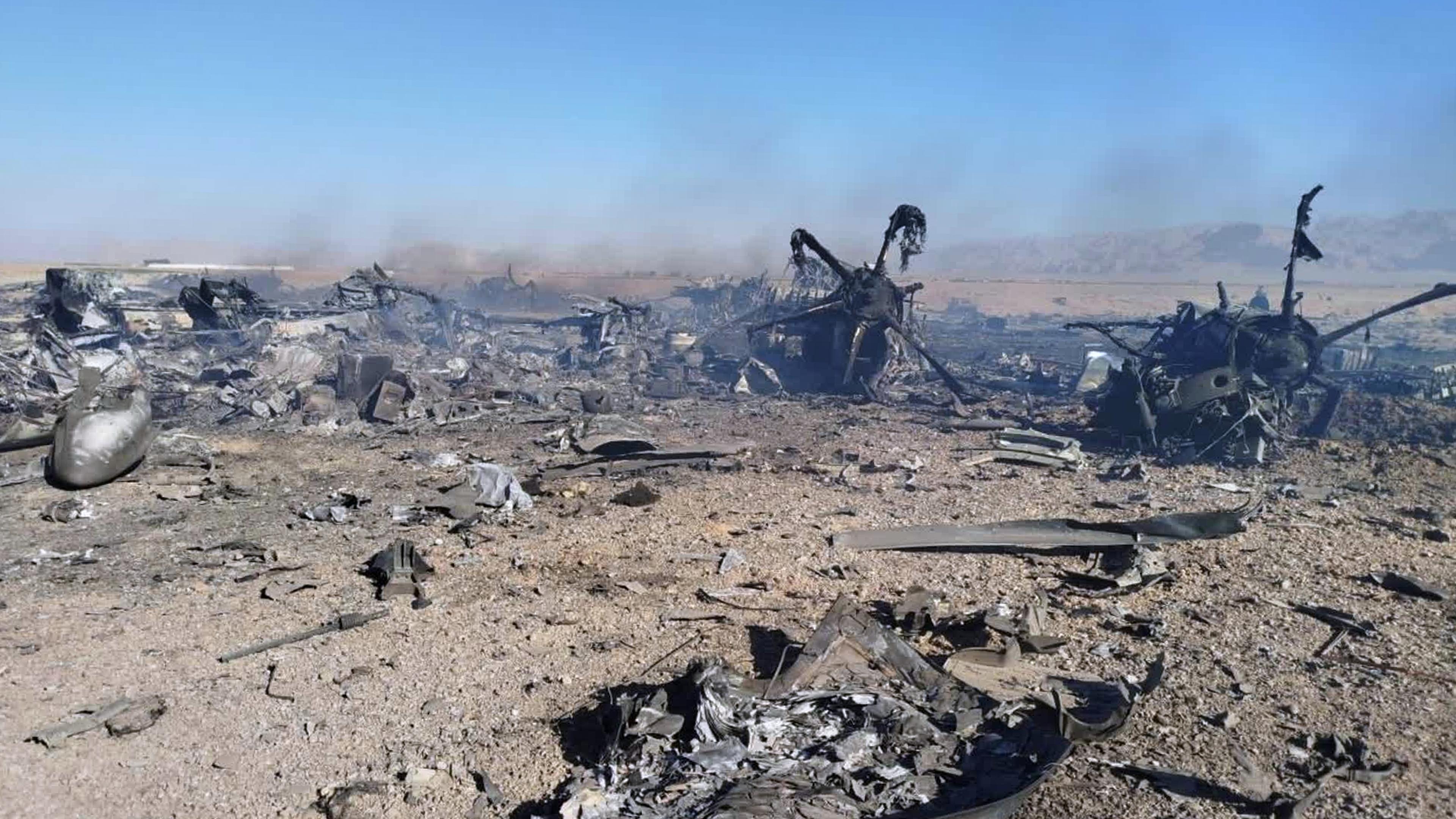
El Mencho, indicted in the United States in 2014 on drug trafficking and weapons charges, had a $15 million bounty on his head. Under his command, the CJNG shot down a Mexican military helicopter, attempted to assassinate Mexico City’s then police chief Omar Garcia Harfuch in 2020, and built what US authorities consider one of the main trafficking networks for heroin, methamphetamine, cocaine and fentanyl into the United States.
Founded in 2009, the CJNG grew into one of Mexico’s most powerful criminal organisations, rivalling – and in some regions, surpassing – the Sinaloa cartel. At its height, it was believed to command tens of thousands of armed members and maintained an extraordinary level of military-style firepower.
But with its leader gone, the question is more about the CJNG’s cohesion than its strength.
Read morePortrait of a drug lord: ‘El Mencho’, Mexico's most feared cartel kingpin
A highly volatile succession
“We don’t really know what will happen: the situation is highly volatile,” said Jean-Michel Le Prince, a Radio-Canada journalist and author of "La faute à Pablo Escobar" (in French).
“The cartel map in Mexico has changed drastically in recent years. Jalisco expanded enormously.”
 CJNG has a strong presence in most Mexican states. © Graphic studio, France Médias Monde
El Mencho reportedly had four key lieutenants, and they could turn against each other, Le Prince said.
“It’s possible the cartel could be run in a more discreet way. But as often in Mexico, it’s very difficult to anticipate what will happen.”
The precedent of the Sinaloa cartel looms large. After the capture of Joaquin “El Chapo” Guzman, two main factions emerged: his sons, known as the "Chapitos", on the one side and his longtime associate Ismael “El Mayo” Zambada on the other.
“At one point, people spoke of a ‘pax narca’,” Le Prince recalled. “But one of the Chapitos lured El Mayo into an ambush. Since then, it’s been war – and it’s still war. Yet the cartel continues to function.”
The CJNG rose to prominence, in part, because Sinaloa was weakened by internal conflict. A similar fragmentation today could redraw Mexico’s criminal geography once again.
Read moreHow Mexico killed powerful drug kingpin 'El Mencho' and what it means
Franchise model, systemic reach
Unlike the rigid hierarchies often portrayed in popular culture, the CJNG operates through what security specialist José Luis Montenegro described as “criminal franchises” in an interview with FRANCE 24’s Spanish-language channel.
“It’s not like in the Netflix series,” Montenegro says. “The structure is not rigid. Each leader has territorial autonomy. It’s highly departmentalised.”
The group maintains semi-autonomous regional factions that forge alliances with local criminal actors to manage drug production and trafficking, extortion rackets and fuel theft. This model has allowed it to expand rapidly across Mexico and abroad, with US authorities estimating its presence in up to 100 countries, according to the US Drug Enforcement Agency.
The territorial control the CJNG established allowed it to infiltrate deep into local politics, judicial systems and security forces.
Human rights lawyer Jimena Reyes notes that the CJNG became notorious for “conquering territories through highly visible brutality” and ruling “through fear” – including the public display of mutilated bodies in contested areas such as Veracruz.
Watch moreNo, US special forces didn't lead the Mexican operation against 'El Mencho'
For Reyes, the key concern now is fragmentation.
“There will certainly be violence during the restructuring process,” she said. “Strategic routes, laboratories and territories are at stake.”
Ernesto Lopez Portillo, coordinator of the Citizen Security Programme at Mexico’s Iberoamericana University, warned that the group's “power centres may have incentives for immediate reorganisation, but also incentives for confrontation”. He sees “a strong possibility of temporary but sharp increases in violence”, both internally and between rival cartels.
Given the CJNG’s size and reach, a fierce power struggle could erupt in several regions simultaneously.
A tougher line in Mexico
The operation that killed El Mencho signals a shift in tone under President Claudia Sheinbaum. Her predecessor, Andres Manuel Lopez Obrador, famously championed a policy referred to as “Abrazos, no balazos” (Hugs, not bullets).
Yet during the 2019 capture of Ovidio Guzman, one of El Chapo’s sons, Obrador ordered his release after intense urban fighting – only for him to be rearrested later and extradited to the United States.
“This time, the hard line is being used,” Le Prince said. He cited a “double factor” driving the change: both domestic security pressures and US expectations.
Under US President Donald Trump, Washington had increased pressure on Mexico to dismantle major trafficking networks. Sheinbaum has swiftly extradited high-profile traffickers and militarised parts of the border.
“She is clearly taking the initiative,” Le Prince said, suggesting the move might also be ailed at pre-empting any unilateral US action.
Watch moreAccess to US-made weapons 'a key element' of Mexican cartels' power, expert says
Mexico’s national security chief Omar Garcia Harfuch – himself a past target of the CJNG – is credited with leading the Tapalpa operation. Notably, there were few reports of civilian casualties, a rare outcome in cartel confrontations.
Yet the swift narco-blockades that followed El Mencho’s death served as a reminder: These are vast criminal enterprises that do not disappear overnight.
“These are major businesses. They will continue,” Le Prince said. But he added: “They need stability to conduct business.”
Whether the CJNG maintains that stability through consolidation or descends into open warfare may well determine Mexico’s security landscape in the months ahead.







 English (US) ·