
 3 weeks ago
25
3 weeks ago
25
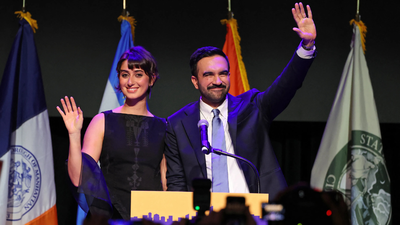
In the months since taking office, New York City mayor Zohran Mamdani has repeatedly attempted to reassure Jewish New Yorkers that his administration would stand firmly against antisemitism.
Yet the resurfacing of social media activity by his wife, Rama Duwaji, has triggered intense scrutiny and raised difficult questions about whether those assurances align with the political and ideological environment surrounding the mayor.The controversy centres on posts liked by Duwaji in the aftermath of the Hamas attack on Israel of October 7, 2023, one of the deadliest assaults on Jews in modern history. The incident is not merely a social media misstep.
It has become a symbol of a wider pattern. Political rhetoric and activism that downplays or rationalises violence against Israelis while claiming to oppose antisemitism.The debate has intensified because Mamdani governs a city that is home to the largest Jewish population outside Israel.
The Oct 7 posts that ignited the controversy
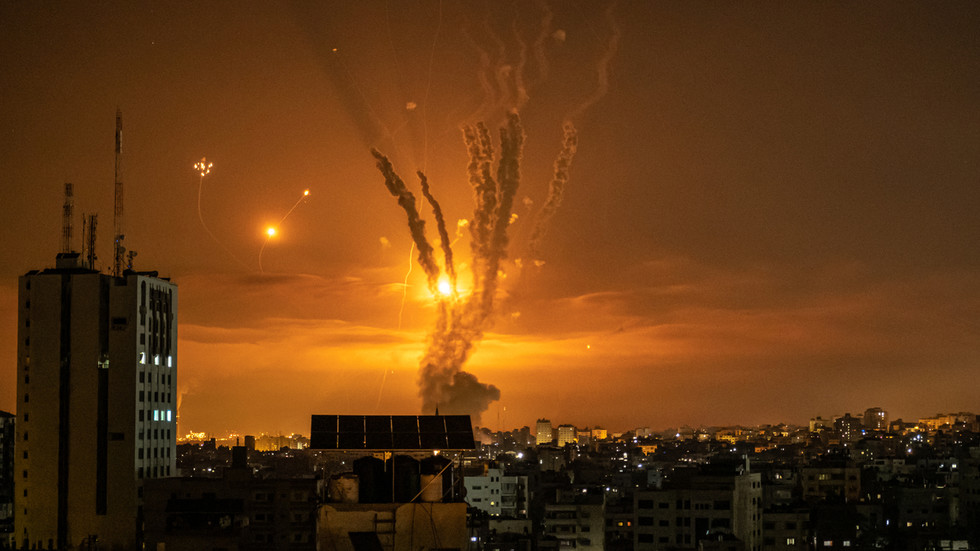
The October 7 attack carried out by Hamas killed around 1,200 people and led to the kidnapping of more than 250 hostages, most of them civilians.
Militants stormed Israeli towns and a music festival, killing families, children and elderly residents. The brutality of the attack triggered global condemnation and sparked the ongoing Israel–Hamas war.In the days and weeks following the attack, social media posts circulated online framing the massacre as “resistance”. Some of these posts also attempted to cast doubt on widely reported atrocities, including sexual violence committed during the attack.According to reports that resurfaced in 2026, Duwaji had liked several posts connected to those narratives. Among them were posts celebrating the breach of Israel’s border and framing the assault as an act of liberation. One report also alleged that she liked a post claiming that reports of Hamas sexual violence during the attack were hoaxes and fabricated claims.Such engagement with posts is not neutral political commentary.
Amplifying content that glorifies or excuses a massacre of civilians crosses a moral line. It shifts discourse away from legitimate criticism of governments and into territory where the suffering of victims is dismissed or denied.In a city with more than a million Jewish residents, that distinction matters profoundly.
Mamdani’s response and distancing from the controversy
When questioned about the posts, Mamdani attempted to distance himself from the controversy, emphasising that his wife is a private individual and does not speak for his administration.He did not directly condemn the content she engaged with.That response has itself drawn criticism. For many observers, the issue is not simply that a political spouse liked controversial posts. The issue is that the mayor chose not to clearly denounce narratives that justify or minimise one of the most brutal terrorist attacks in recent decades.Leadership during moments of moral clarity often requires more than technical distancing.
Critics argue that a simple and unequivocal rejection of the narratives surrounding the attack would have gone further in reassuring concerned Jewish communities.
Mamdani’s past rhetoric on Israel
The controversy surrounding Duwaji has also revived scrutiny of Mamdani’s own political record.Before becoming mayor, Mamdani built his career as a progressive activist and politician closely aligned with pro-Palestinian movements. He has been a vocal supporter of the Boycott, Divestment and Sanctions movement, commonly known as BDS.
The campaign seeks to pressure Israel economically and culturally over its policies toward Palestinians.Many Jewish organisations consider BDS discriminatory because it singles out Israel for global boycotts and challenges the legitimacy of the world’s only Jewish state.Mamdani has also been sharply critical of Israeli government policy and has refused to recognise Israel as a specifically Jewish state.
This rhetoric contributes to a broader political climate in which hostility toward Israel can blur into hostility toward Jews.Supporters of Israel argue that denying the legitimacy of a Jewish state while supporting the national aspirations of other groups represents a double standard.
His stance during the Israel–Hamas war
During the war that followed the October 7 attack, Mamdani repeatedly criticised Israel’s military campaign in Gaza and called for a ceasefire.While many political leaders around the world made similar calls, critics say Mamdani’s messaging often focused heavily on condemning Israeli actions while giving comparatively little emphasis to the crimes that triggered the war. The Hamas massacre itself.This imbalance feeds a wider pattern in which the suffering of Israeli victims fades from the conversation while Israel’s right to defend itself is constantly questioned.For Jewish communities still mourning the victims of October 7, that perception matters deeply.
The antisemitism debate in New York
The controversy arrives at a time when antisemitism has surged globally. Jewish institutions across the US and Europe have reported sharp increases in threats, vandalism and harassment since the October 7 attack and the war that followed.New York City, home to one of the largest Jewish populations in the world, has not been immune.Against that backdrop, symbolic signals from political leaders carry significant weight. Statements, alliances and even social media behaviour by people close to those leaders are scrutinised carefully for what they may reveal about deeper attitudes.When posts appear to celebrate or excuse violence against Jews, many observers argue that the response should be swift and unequivocal.
A credibility gap
Mamdani has condemned antisemitic vandalism and pledged to protect Jewish communities in the city.
Those statements, taken on their own, appear straightforward.Yet the controversy surrounding his wife’s social media activity has complicated those assurances. Combined with Mamdani’s long-standing activism on Israel and his alignment with movements that many Jewish organisations view as hostile, the episode has created a credibility gap.The issue is not a single Instagram “like”. It is the broader political environment that normalises rhetoric portraying the murder of civilians as resistance.In the aftermath of the October 7 massacre, many believe that drawing clear moral boundaries should not be difficult.Celebrating or excusing the killing of civilians is not activism. It is the normalisation of terror.And for a mayor governing one of the world’s largest Jewish communities, the obligation to reject such narratives should be unmistakable.





 English (US) ·