
 1 month ago
39
1 month ago
39
As long as attacks and demands continue unabated, reasonable voices for peace will never be heard
More than a month into the war with Iran, Washington is confronting the strategic nightmare it tried to avoid. What began as a campaign that many in the US and Israel appear to have imagined as short, punishing, and politically manageable has instead become prolonged, expensive, globally destabilizing, and increasingly difficult to define as success.
The battlefield logic is now inseparable from the political logic, and on both fronts the pressure is mounting on Donald Trump’s administration. Reuters reports that the conflict, launched on February 28, has disrupted global energy flows, driven oil sharply higher, pushed US gasoline prices above four dollars a gallon, and dragged US President Donald Trump’s approval rating down to 36%, the lowest level since his return to office.
How to sell a war
A domestic audience can be persuaded to see a short war as an act of decisive leadership, but a long war becomes a test of competence, a source of inflation, a burden on allied relations, and eventually a question about whether the White House ever had a serious political endgame. Trump, who built much of his political appeal on the promise that he would be stronger than his predecessors and yet less trapped by endless wars, now faces the opposite image. The longer this campaign drags on, the more it looks like a war of choice with no clean exit, one that hurts households at the gas pump, deepens strategic uncertainty, and gives Tehran new ways to impose costs without needing conventional military parity.
That is the crucial point often missed in triumphalist rhetoric coming out of Washington. Iran does not need to dominate the skies or defeat the US in a contest of arms to claim strategic success. It needs only to survive, to keep retaliating, to deny the Americans and Israelis a clean political settlement, and to convert geography into leverage. Reuters described this with unusual clarity when it noted that Tehran has effectively put its hand on a pressure point of the global economy through the Strait of Hormuz and attacks on energy infrastructure. In other words, Iran’s war aim is economic coercion by endurance, not a classic military victory.
That reality explains why repeated mediation efforts have failed to produce a breakthrough. Pakistan, Türkiye, Egypt, and Oman have all been involved in one form or another, while regional diplomacy has become increasingly crowded with ad hoc initiatives and competing back channels. Yet none of these efforts has yielded a stable formula because the central political problem remains unresolved. Tehran does not believe Washington is negotiating in good faith. From the Iranian perspective, the precedent of the US withdrawal from the 2015 nuclear deal destroyed confidence in American commitments. In the middle of an active war, that distrust becomes even more intense. Iran continues to insist on its own terms for ending what it calls an unlawful war, while rejecting temporary arrangements that look like tactical pauses rather than real de-escalation.
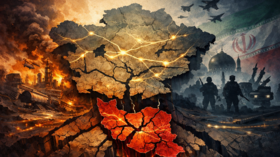
Negotiations as a stalling tactic
The suspicion in Tehran is straightforward and, from its own strategic perspective, rational. Many Iranian decision-makers appear to believe that Trump wants negotiations not as a path to peace, but as a way to buy time, reshape the battlefield, calm markets, and prepare the next wave of attacks under more favorable political conditions. Trump’s own public messaging has only reinforced that fear. In recent days he has alternated between suggesting the war will end soon and issuing new threats of punishing escalation.
His recent Truth Social post made that tension impossible to miss: “Tuesday will be Power Plant Day, and Bridge Day, all wrapped up in one, in Iran. There will be nothing like it!!! Open the F*ckin’ Strait, you crazy bastards, or you’ll be living in Hell - JUST WATCH! Praise be to Allah.” Beyond the obscenity and the shock value, what matters for analysis is what the post reveals about the White House state of mind. This does not read like a message from an administration in calm command of escalation. It reads like anger mixed with improvisation, frustration at a war that has not bent Iran quickly enough, at allies who are not rushing in, and at a domestic electorate that is beginning to price the conflict into everyday life. The bizarre sign-off only underlined the disorientation.
Trump urgently needs an exit, but not just any exit. He needs an exit that can be presented as a victory to his electorate. A negotiated settlement that looks too much like compromise risks appearing weak after weeks of maximalist rhetoric. But a prolonged war with rising economic costs is politically worse. Reuters has already tied the fuel shock directly to falling approval and broad public skepticism about the war. Even if Republican voters remain more hawkish than the country at large, a president cannot indefinitely absorb rising energy prices, strategic ambiguity, and casualty reports while claiming he is still fully in control of events.
Western cohesion is falling apart
This domestic pressure is compounded by widening signs of institutional strain inside the US defense establishment. Defense Secretary Pete Hegseth pushed out Army Chief of Staff General Randy George along with other senior officers in the middle of the campaign. A war of this scale requires continuity in planning and confidence that military leadership is being evaluated by competence rather than by loyalty politics. Mass removals at the top suggest a crisis of internal coherence at the Pentagon. The symbolism is damaging even before one reaches the practical consequences.
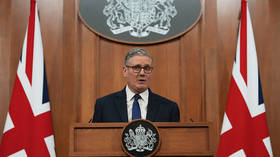
The alliance picture is no better. NATO partners have not lined up behind the US campaign, and in some cases they have done the opposite. France openly reminded Washington that NATO is designed for Euro-Atlantic defense, not for offensive missions in the Strait of Hormuz. Such public pushback strips away any illusion that the US can easily multilateralize the conflict and spread its political costs. Trump’s irritation with allies has become increasingly explicit, but frustration is not a substitute for cohesion. The more openly he pressures Europe to back a war it did not authorize and does not support, the more isolated Washington looks.
Regional actors are similarly reluctant. The Gulf monarchies have perhaps the most to lose from an open-ended war, yet they also have the strongest incentive to avoid full alignment with Washington’s escalation. Gulf states fear paying the price for a war they did not start and did not shape. Iranian attacks have already hit or threatened infrastructure in Kuwait, Bahrain, and the UAE. IRGC claims strikes on petrochemical facilities in those countries, while other reporting describes damage to desalination plants, power facilities, and energy sites. In strategic terms, this is devastating for the White House narrative. Washington can say it is imposing costs on Iran, but Iran is demonstrating that the broader region will pay as well. That is precisely why the Gulf monarchies do not want to become full participants in a US-led anti-Iran war. They understand that geography guarantees retaliation.
A new voice emerges in Iran
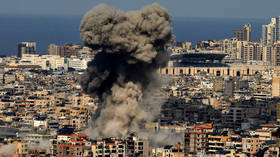
Meanwhile, the humanitarian and infrastructural toll keeps rising. AP, Reuters, and other outlets have described widening attacks on civilian-adjacent and civilian-critical infrastructure, including power systems, bridges, universities, petrochemical sites, and supply routes. Tehran in turn has broadened its retaliatory logic beyond direct military targets, warning that if civilian targets in Iran remain under attack, economic and civilian infrastructure elsewhere in the region will not be spared. This is the grim dynamic of war without rules. Every new strike creates a justification for the next one, and every side tells itself that escalation is temporary even as the target sets expand.
In that atmosphere, most Iranians are not predisposed to accept negotiations on Washington’s terms. The war is widely seen inside Iran not as a limited bargaining crisis, but as an existential struggle imposed from outside. The killing of the senior Iranian leadership early in the conflict hardened this psychology further by turning the confrontation into one framed in civilizational and religious terms. Once a society concludes that surrender may invite not peace but disintegration, compromise becomes politically toxic. In such an environment, calls for talks sound less like prudence and more like weakness unless they come attached to unmistakable gains.
That is the setting in which Mohammad Javad Zarif has re-emerged. Iran’s former foreign minister and a longtime diplomat who also served as ambassador to the United Nations, Zarif is not just any Iranian voice. He is perhaps the most recognizable symbol of the Islamic Republic’s diplomatic opening to the West in the modern era. He is the face of the diplomacy that produced the 2015 nuclear deal, a figure whose fluency in the language of international compromise made him both indispensable abroad and suspect at home. Today he is affiliated with the University of Tehran and remains one of the most visible standard-bearers of the small, battered, but persistent current inside Iran that still thinks accommodation with the West can yield strategic benefits.
His new Foreign Affairs essay is revealing both for what it proposes and what it assumes. Zarif argues that Iran has the upper hand because it has survived the initial storm, preserved its political continuity, and imposed severe costs on its adversaries. On that basis, he suggests Tehran should “declare victory” and convert battlefield resilience into diplomatic settlement. The broad package he sketches includes limits on Iran’s nuclear program under monitoring, reopening the Strait of Hormuz, sanctions relief, reintegration into the global economy, and a wider regional security framework that could involve countries such as Türkiye. It is, in essence, an attempt to revive the strategic logic of the nuclear bargain in a much bloodier setting.
The article is intelligent, disciplined, and politically doomed in the short term. It correctly identifies the central asymmetry of the moment. Iran may be surviving, but survival alone will not rebuild cities, restore infrastructure, or stabilize civilian life. Endless resistance can satisfy the national psyche while still damaging the state’s long-term position. Zarif also correctly sees that Trump needs a deal more than he publicly admits. An American president trapped between inflation, alliance friction, and unclear objectives is more negotiable than one enjoying a clean military triumph.
But the piece rests on a premise that much of Iran’s wartime public sphere does not currently share. Zarif treats diplomacy as a way to peace, while his critics see it as a trap that leads to surrender. That is why reaction to it within Iran was so furious. Iran International reported that hardliners branded him a traitor and demanded his arrest, framing his de-escalation line as capitulation and even espionage. Exile and opposition outlets should be treated with due caution, but the broader pattern is credible and entirely consistent with the historical Iranian right wing’s suspicion of Zarif. In wartime, the constituency for compromise shrinks even further. The slogans of resistance are always louder than calls for calibrated settlement when the bombs are still falling.
The pro-Western camp inside Iran remains a minority. It is small, elite, and socially weak in the present climate, yet it is trying to signal something important to Washington and to Western Europe. It is trying to say that there remains within Iran a constituency that can imagine coexistence, sanctions relief, and a managed relationship with the outside world. In ordinary circumstances that might be politically useful. In this war, however, it often has the opposite effect. Calls for talks are easily interpreted as signals of softness at the precise moment when many Iranians feel that only steadfastness can prevent greater humiliation. The result is that figures like Zarif appear not as national realists, but as men prematurely auditioning for a postwar order that does not yet exist.
This does not make Zarif irrelevant. On the contrary, his intervention is important precisely because it reveals that parts of the Iranian elite understand the material cost of endless war and are already thinking about an eventual settlement. Yet the timing is terrible for his side. As long as Trump continues to threaten fresh strikes, as long as civilian infrastructure remains in the target cycle, and as long as Tehran believes negotiations may merely serve as a bridge to the next attack, the pro-Western argument will struggle to gain legitimacy.
The war is therefore hardening both systems at once. In Washington it is radicalizing rhetoric while exposing strategic confusion. In Tehran it is deepening the belief that survival itself is victory and that negotiations under fire are a form of surrender. This is the deepest irony of the present moment. Both Trump and Zarif want an end state they can describe as success, but they are speaking to publics that increasingly understand success in incompatible ways.
For Trump, success means getting out quickly while still claiming that Iran was forced to bend. For most Iranians at this stage, success means refusing to bend at all. As long as that contradiction remains unresolved, diplomacy will keep appearing on the horizon only to dissolve on contact with political reality. And the longer that continues, the worse the outcome becomes for everyone involved.








 English (US) ·