
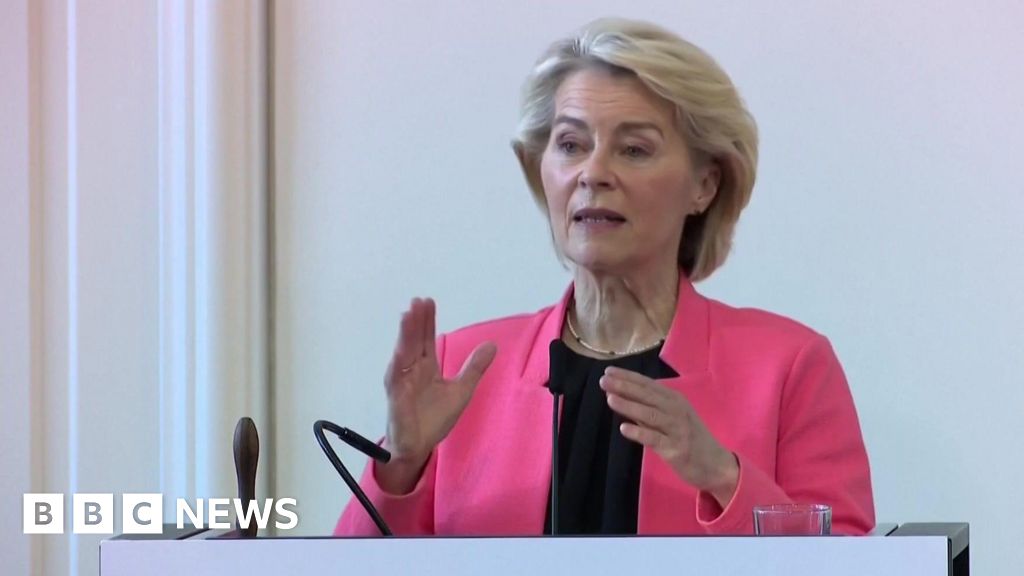
Europe must speed up its push for energy independence and break free from "excessive dependence on fossil fuels" as the continent grapples with a more volatile and hostile global order, the head of the world's largest public bank told FRANCE 24's Douglas Herbert in Talking Europe.
Nadia Calviño, the president of the European Investment Bank, and a former deputy prime minister in the Spanish government of Pedro Sanchez, has been named one Europe's top "doers" by the digital news site Politico.
She is at the helm of one of the world's largest public lenders – which has set a funding goal of €100 billion this year alone – at a time when defence, security and tech sovereignty have catapulted to the top of the European agenda.
Calviño told FRANCE 24 that the green transition is a strategic necessity. "We need to continue on this track… so that we can become more independent and have a stronger voice in this new world."
That shift is also visible in the EIB's evolving priorities. While insisting in the past that the bank is "not a defence ministry", Calviño says the shifting global landscape has seen a sharp increase in the bank's support for security and defence-related projects, particularly dual-use technologies.
Funding has roughly doubled over the past two years, and could rise further. "I wouldn't exclude that we revise [targets] upwards in the course of the year," she said, pointing to growing demand as Europe seeks to scale up its capabilities.
Beyond geopolitics, Calviño highlighted a mounting domestic pressure point: Europe's housing crisis. Housing prices across the EU have surged by around 60 percent since 2015, with rents soaring and supply tightening.
"We've had a perfect storm since the pandemic," she said. The EIB plans to invest €6 billion this year in housing, focusing on cheaper construction methods, renovation of existing buildings and new projects as part of a broader push to ease pressure on households and younger generations.
On Ukraine, the EIB has emerged as a key financial backer since Russia's full-scale invasion, mobilising €4 billion to rebuild infrastructure, support businesses and keep the economy afloat.
Calviño expressed confidence in Ukraine's long-term prospects. "I am quite confident that the Ukrainian economy is going to bounce back very strongly once the war is over," she said, citing the resilience of its people and ongoing cooperation with Kyiv.
She also pushed back on the impact of US trade tensions under Donald Trump, arguing that tariffs have hit American companies harder than European ones.
EU firms, she said, are benefiting from a vast network of global trade agreements. In a fragmenting world, she insisted, Europe has the tools, and the scale, to act like the global economic superpower it is – if it chooses to use them.
Programme prepared by Paul Guianvarc'h, Perrine Desplats, Aline Bottin, Oihana Almandoz and Isabelle Romero


 English (US) ·