
Virginians voted Tuesday to back a new electoral map that could hand Democrats four more seats in the US House of Representatives, turning President Donald Trump's redistricting push into a potential liability for Republicans in upcoming midterm elections.
The battle over "gerrymandering" -- the long-established but widely criticized US practice of drawing electoral boundaries to benefit one party -- has become one of the defining fights of the campaign for November's congressional contests.
The state voted in a referendum to let officials redraw the congressional map before the next scheduled nationwide redistricting in 2030, giving Democrats a strong advantage in 10 of the state's 11 House districts, up from their previous 6-5 edge.
With control of the House on a knife's edge, the vote makes it more likely that Trump will be forced to finish his term with a Democratic legislature empowered to block his agenda and investigate his administration, rather than the compliant Republican Congress he now enjoys.
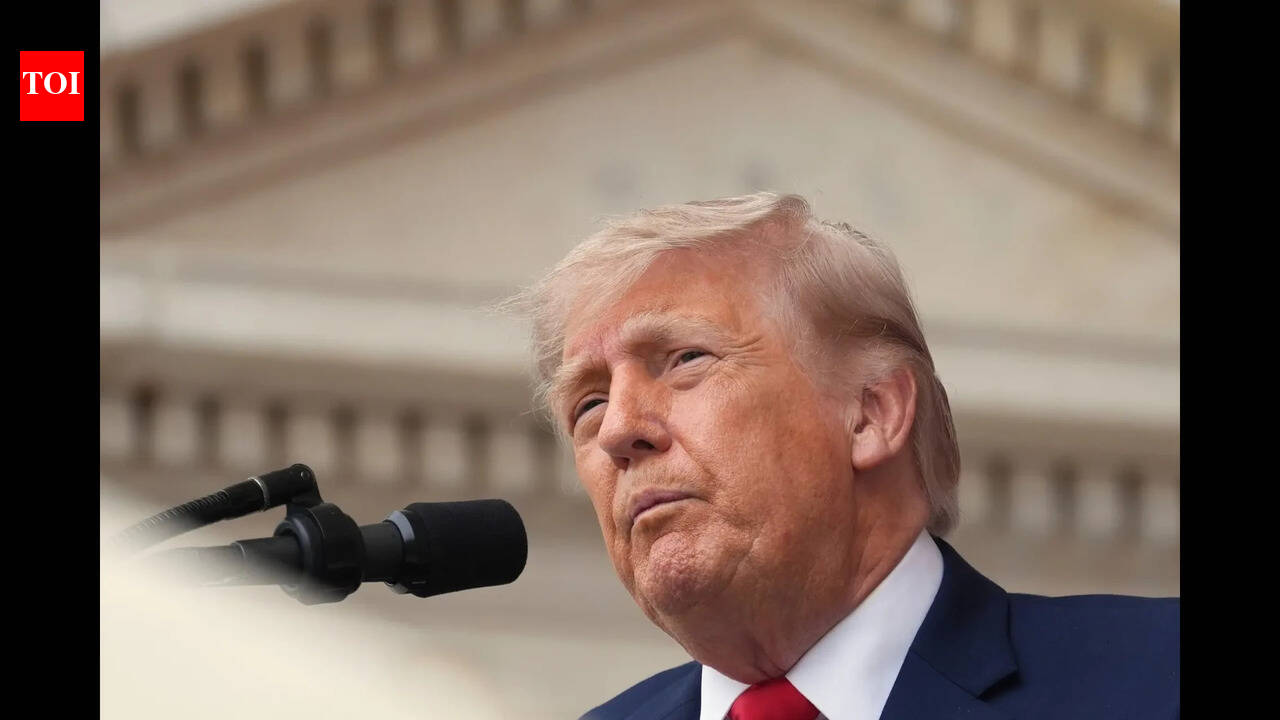
It marked a stinging defeat for Trump, who joined a telephone rally Monday night with House Speaker Mike Johnson to urge a no-vote, warning Virginians: "The whole country is watching."
Redistricting usually follows the national census every 10 years, but Trump last year urged Republican-led states to redraw maps mid-decade to protect the party's fragile House majority.
That triggered a tit-for-tat contest as both parties raced to squeeze out an extra advantage before November.
Texas moved first, adopting a map that could add up to five Republican seats. California answered with a ballot measure designed to give Democrats five more of their own.
"Virginia voters have spoken, and tonight they approved a temporary measure to push back against a President who claims he is 'entitled' to more Republican seats in Congress," Virginia Governor Abigail Spanberger, a Democrat, said in a statement after the referendum was called.
Democratic groups poured money into the state election, making the vote one of the most expensive redistricting fights in US history.
The main campaigns on both sides have raised nearly $100 million, much of it from "dark money" groups -- nonprofit organizations that can spend heavily on politics without publicly disclosing their donors.
'Unfair advantage'
The pro-redistricting campaign, Virginians for Fair Elections, raised the lion's share -- nearly $65 million, according to The Hill news site.
It was given an assist by former president Barack Obama, still one of the Democratic Party's most influential campaign voices, who urged Virginians to vote yes.
"By voting yes, you can push back against the Republicans trying to give themselves an unfair advantage in the midterms...And we're counting on you," he said in a video message.
Democrats argue that the Virginia map is a necessary counterweight to Trump's pressure campaign. Republicans call it a naked power grab in a politically mixed state where Trump took 46 percent of the vote in 2024.
But University of Virginia political scientist Larry Sabato cautioned that -- even with the success of the "yes" campaign -- winning 10 out of 11 seats in November will not be straightforward for Democrats.
"Sometimes constituencies shock the map makers. You know, they don't vote the way the map makers thought they would vote. So you never know for sure, and the margins here aren't enormous," he told AFP.
Virginia resident Corey Crouch told CBS News he had voted no.
"I don't look at what other states and what everybody else is doing...I don't think we need to change maps around or anything," he told the broadcaster.
The result was being watched closely nationwide and could shape the final phase of the national map fight.
Trump ally and Florida Governor Ron DeSantis is pushing a special session that could allow Republicans to gain as many as five seats, potentially wiping out any Democratic gains in Virginia.
(FRANCE 24 with AFP)






 English (US) ·