
Cortina d'Ampezzo, Italy — Ukrainian skeleton athlete Vladyslav Heraskevych is out of the Milan Cortina Games after refusing a last-minute plea from the International Olympic Committee to use a helmet other than the one that honors athletes killed in the war with Russia.
IOC President Kirsty Coventry was waiting for Heraskevych at the top of the track when he arrived around 8:15 a.m. Thursday, or roughly 75 minutes before the start of the men's skeleton race.
They went into a private area and spoke briefly, and Coventry was unable to change Heraskevych's mind. He was holding the decision from the International Bobsled and Skeleton Federation when he briefly addressed reporters and said he would appeal to the Court of Arbitration for Sport.
"It's hard to say or put into words. It's emptiness," he said.
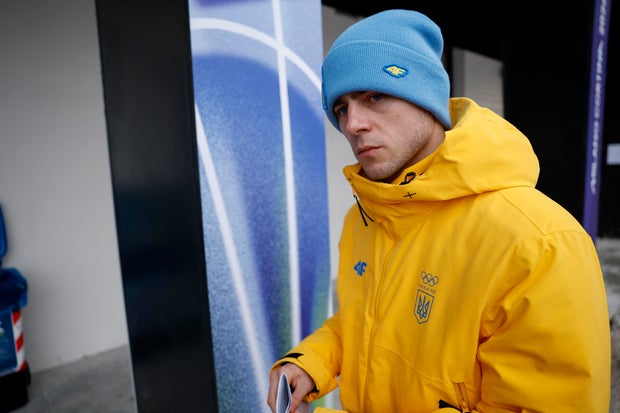 Ukraine's Vladyslav Heraskevych reacts after being disqualified from the Milano Cortina 2026 Winter Olympic Games in Cortina d'Ampezzo on Feb. 12, 2026.
Odd ANDERSEN / AFP via Getty Images
Ukraine's Vladyslav Heraskevych reacts after being disqualified from the Milano Cortina 2026 Winter Olympic Games in Cortina d'Ampezzo on Feb. 12, 2026.
Odd ANDERSEN / AFP via Getty Images
Coventry spoke with reporters after the meeting, tears rolling down her face as she spoke.
"It's a message of memory and no one is disagreeing with that," Coventry said.
The IOC added that it made its decision "with regret."
"Despite multiple exchanges and in-person meetings between the IOC and Mr Heraskevych, the last one this morning with IOC President Kirsty Coventry, he did not consider any form of compromise," the IOC said in a statement. "The IOC was very keen for Mr Heraskevych to compete. This is why the IOC sat down with him to look for the most respectful way to address his desire to remember his fellow athletes who have lost their lives following Russia's invasion of Ukraine. The essence of this case is not about the message, it is about where he wanted to express it."
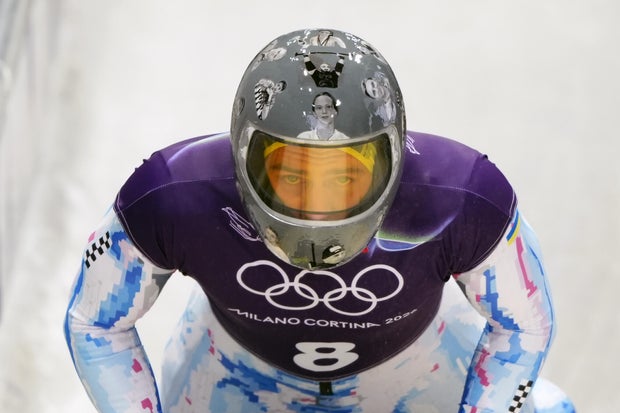 Ukraine's Vladyslav Heraskevych is seen during the Men's Skeleton Training at the Cortina Sliding Center, on day three of the Milano Cortina 2026 Winter Olympics in Italy on Feb. 9, 2026.
Andrew Milligan / PA Images/Getty
Ukraine's Vladyslav Heraskevych is seen during the Men's Skeleton Training at the Cortina Sliding Center, on day three of the Milano Cortina 2026 Winter Olympics in Italy on Feb. 9, 2026.
Andrew Milligan / PA Images/Getty
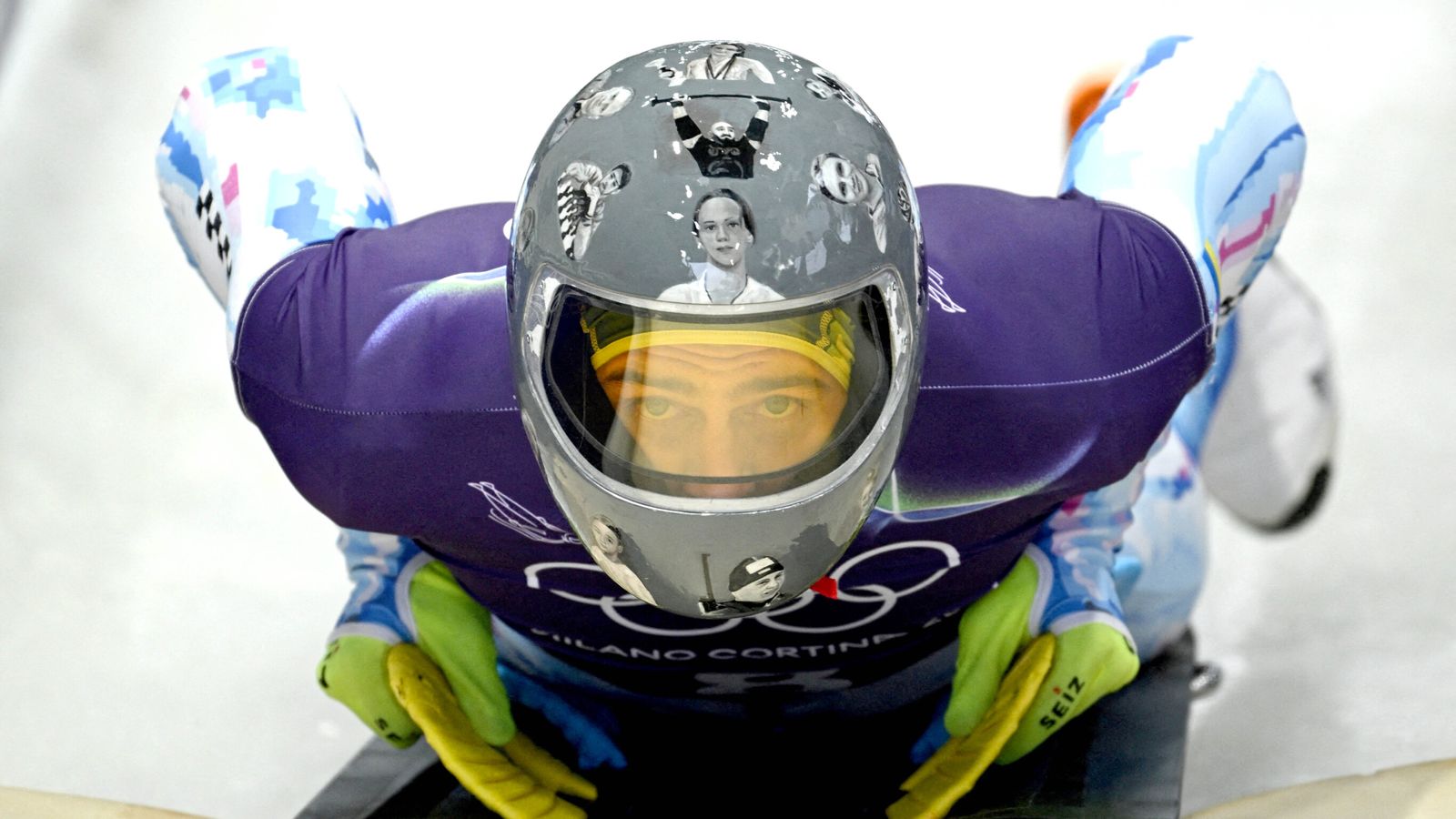
Heraskevych came to the Olympics with a customized helmet showing the faces of more than 20 Ukrainian athletes and coaches who were killed during the war, a conflict that started shortly after the 2022 Beijing Games ended.
The IOC said Monday night that the helmet wouldn't be allowed in competition, citing a rule against making political statements on the Olympic field of play. Heraskevych wore the helmet for training Tuesday and Wednesday anyway, knowing the IOC could ultimately keep him from the Olympic race.
"The helmet does not violate any IOC rules," Heraskevych said.
The IOC had no immediate comment.
The IOC had sided with Heraskevych before. When he displayed a "No war in Ukraine" sign after his fourth and final run at the 2022 Beijing Olympics, the IOC said he was simply calling for peace and did not find him in violation of the Olympic charter.
"We want him to compete. We really, really want him to have his moment," IOC spokesman Mark Adams said Wednesday. "That's very, very important. We want all athletes to have their moment and that's the point. We want all our athletes to have a fair and level playing field."
The first two runs of the race were Thursday, with the final two runs on Friday night. Heraskevych was a legitimate medal hopeful.
In:





 English (US) ·