
 3 weeks ago
14
3 weeks ago
14
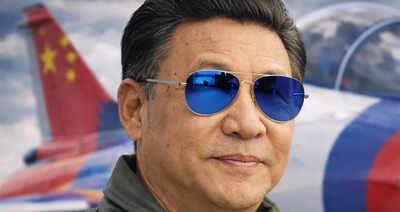
A new book by American investigative author Peter Schweizer has alleged that thousands of Chinese nationals receive flight training every year at civilian aviation schools in the United States, raising concerns that the skills acquired could ultimately strengthen China’s military aviation capabilities.In The Invisible Coup, Schweizer claims that flight schools across California and Arizona have, for years, trained Chinese students under standard civilian visa programmes, even as Beijing struggles to meet the growing demand for qualified pilots for both civilian airlines and the People’s Liberation Army Air Force.
Civilian training, strategic implications
The book argues that while the training provided is civilian in nature, the aviation skills acquired are inherently transferable.
Schweizer writes that early-stage pilot instruction, including navigation, instrument flying, emergency handling, and multi-engine operations, forms the foundation of military aviation and reduces the time and cost required for later combat training.According to the author, the US offers an unmatched training environment, with open airspace, frequent flight hours, modern simulators, and instructors trained to Western aviation standards.
These advantages, the book claims, make American flight schools particularly attractive to foreign trainees.
Focus on California and Arizona
Schweizer identifies aviation hubs in California and Arizona as key centres for foreign pilot training, citing favourable weather conditions, dense clusters of flight schools, and established visa-processing infrastructure. The book claims that Chinese nationals make up a significant share of foreign enrolments at some of these institutions.While the book does not allege illegal activity by the schools involved, it questions whether sufficient scrutiny is applied to applicants whose training could later serve military objectives.
Oversight gaps

A central argument of The Invisible Coup is that US oversight mechanisms are fragmented. Schweizer contends that aviation training is treated primarily as a commercial service, regulated through immigration and transportation security checks, rather than as a strategic capability with long-term national security implications.The book argues that background checks typically assess immediate risks but do not track how skills acquired in the US are later deployed abroad, particularly in countries viewed as strategic competitors.
Immigration as leverage
Beyond aviation, Schweizer places pilot training within a broader thesis that immigration systems can be exploited by rival powers. He argues that open education and training pathways allow foreign states to extract high-value skills without engaging in espionage or violating laws, blurring the line between openness and vulnerability.
No official response
US authorities and the flight schools referenced in the book have not publicly responded to the specific claims outlined in The Invisible Coup. Current regulations permit foreign nationals to undergo civilian flight training provided they meet visa and security requirements.The book’s publication is likely to add fuel to an ongoing debate in Washington over whether existing immigration and education frameworks adequately account for strategic competition with China, particularly in sectors where civilian skills overlap with military utility.










 English (US) ·