
 1 month ago
25
1 month ago
25
2 hours ago
Navin Singh KhadkaEnvironment correspondent
Watch: Drone footage shows glacial lake Imja near Mount Everest
An early flood warning system designed to save the lives of thousands of people in the Everest region may no longer be working, Nepalese officials have admitted to the BBC, after it was allowed to fall into a state of disrepair.
The disclosure came after villagers in the local Sherpa communities told the BBC no inspection of the UN-supported project had been carried out for many years after the dangerous Imja glacial lake was last drained in 2016.
Since then, no maintenance has been undertaken, which means siren towers have been left to rust, while some have even had their batteries stolen, according to locals.
On top of this, the satellite data reception transmitting the lake's water level - which can then be used to send out mobile phone alerts to locals - has been unreliable, officials at Nepal's department of hydrology and meteorology (DHM) told the BBC.
The Imja lake, which sits at a little over 5,000m (16,400ft) above sea level, has not burst since it was drained a decade ago - at which point, it was almost 150m deep in places.
Back then, the depth of the lake was reduced by about 3.5m as part of a $3.5m risk reduction project, which included the early warning system.
But scientists warn global warming-induced fast melting glaciers are causing many Himalayan glacial lakes to expand dangerously - meaning they can then burst out and sweep away downstream settlements, trekking routes and bridges.

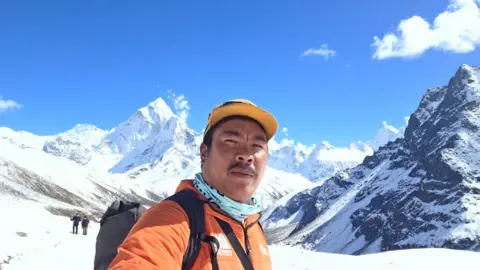 Jangbu Sherpa
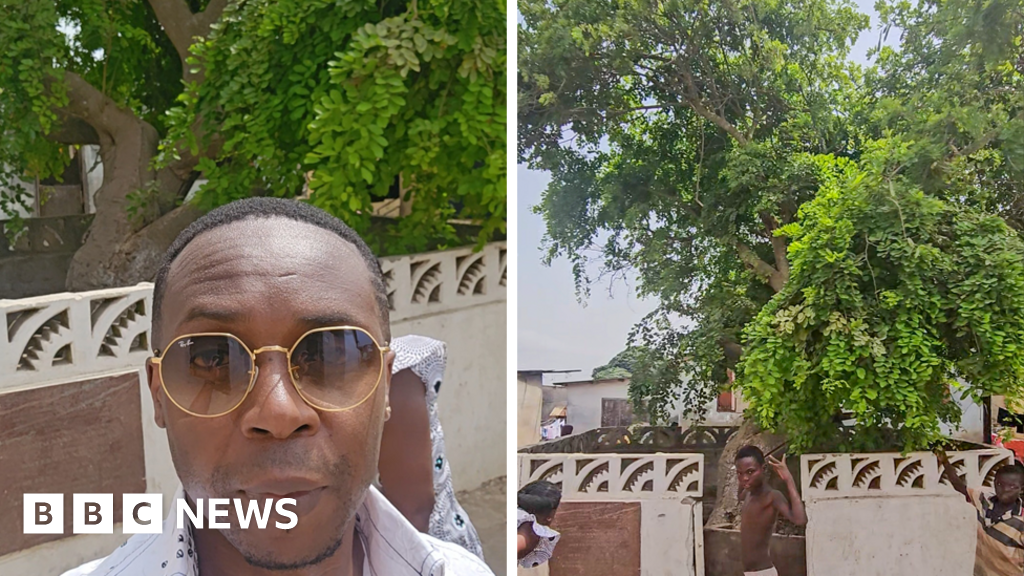
Locals like Jangbu Sherpa in the Chhukung village say they were told officials would inspect the siren system every year but that has not happened
Ice loss rates have doubled in the Hindu Khush Himalaya region since 2000, according to a recent assessment by the Kathmandu-based International Centre for Integrated Mountain Development.
Experts say rising temperatures have also left mountains less stable, unleashing rockfalls and glacial collapse - sometimes triggering catastrophic floods.
In the Everest region alone, there have been at least five floods from glacial lakes in the last five decades, leaving those living in Imja lake's path fearing for the future.
"Going by the state of the siren towers, we don't expect to get any flood warning from them even when Imja lake bursts out," said Ang Nuru Sherpa, chairman of the Chaurikharka buffer zone area adjoining the Sagarmatha national park in the Everest region.
"The siren tower in our village is rusting and leaning and is set to fall any time because there has never been any maintenance."
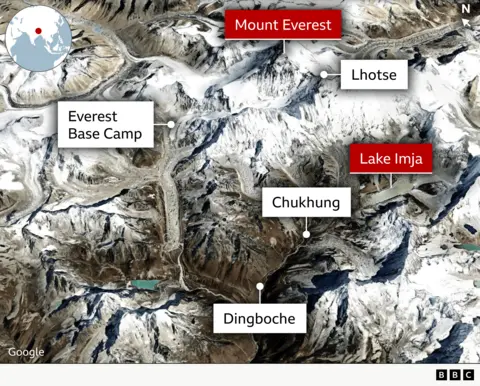
The Everest region has seen at least five glacial lake floods in the last five decades
"When the project was commissioned, we were told officials from the department of hydrology and meteorology will be visiting the region every year to inspect the system, but we see no one coming here," said Jangbu Sherpa at Chhukung, which would be the first village hit if Lake Imja burst.
"So, we go to the DHM in Kathmandu every year to request them to repair and maintain the early warning system but that has been of no use."
Tshering Sherpa, chief executive officer of the Sagarmatha Pollution Control Committee, a local NGO in the Everest region, echoed the same message, adding that it was more than just the villagers at risk should Imja burst. Spring is peak visitor season here, with trekkers, tourists and climbers all arriving in the area.
"Six villages in the region are vulnerable to floods and so are the more than 60,000 tourists who visit our region every year," Sherpa pointed out.
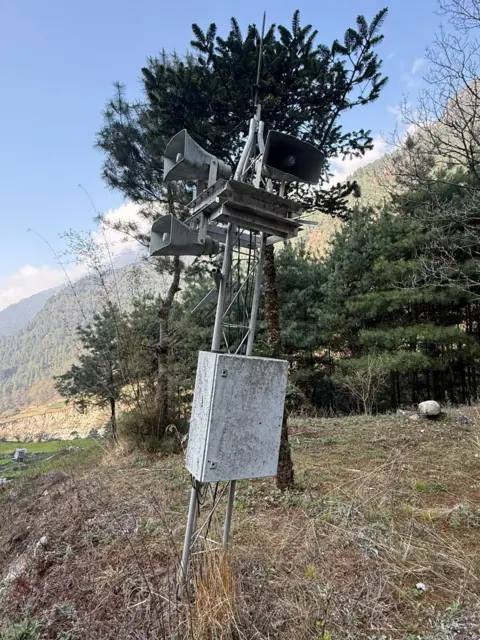 Ang Nuru Sherpa
Memebers of the Sherpa community say siren towers have not been maintained and repaired for years
It is not that officials are not aware of the risks.
But Niraj Pradhananga, a senior meteorologist in the DHM, said central government had failed to allocate any budget, while suggestions the maintenance cost could be covered by hydro-power providers further down the valley have not come to fruition.
"As a result, we cannot say for sure if the early warning sirens work or they don't," he told the BBC.
"We have heard that batteries of the siren system have been stolen in [downstream villages ] like Dingboche."
Archana Shrestha, the DHM's acting director general, acknowledged funds had been redirected to upgrade the early warning system for another glacial lake.
"That took all our resources and time, now we will move our attention to Imja lake," she told the BBC.
"We are also making changes in rules and regulation so that our staff get enough time, budget and resources to go to the ground and perform maintenance and repair works as the Imja lake is in a remote location."
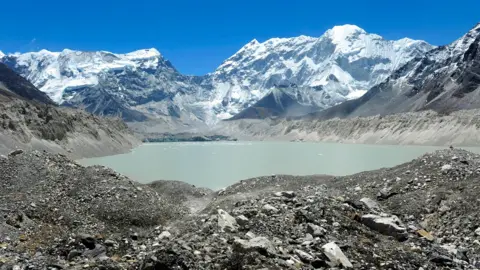 Getty Images
Before it was drained in 2016, Lake Imja (pictured in 2010) had expanded dangerously fuelling fears that it could burst any time
Compounding concerns is the fact the hydro-met station which is supposed to transfer real-time water-level related data to officials in Kathmandu has been plagued with issues.
"We have not been receiving data [of the level of lake and any changes] as regularly as we need to and as a result we are unable to issue mobile phone alerts if there is flood.
"We have been raising this with the satellite company and its local service provider," said Pradhananga.
The satellite company told the BBC there were no issues, pointing to the local service provider. DHM officials said the local service provider had not responded to them.
The BBC has contacted the provider with a request for comment.
Even as these problems are being dealt with, the UNDP has received another $36m grant to repeat the process from Imja lake at four other locations in Nepal.
Monica Upadhyay, head of communication with UNDP Nepal, said "lessons from Imja" had informed the design of the other schemes.
"These place stronger emphasis from the outset on long-term sustainability - through clearer institutional arrangements, dedicated financing mechanisms, and partnerships, including with the private sector where appropriate."
Meanwhile, members of the Sherpa community say they have no choice but to live with risks.
"For us in the Khumbu region, it has just been an eyewash," said Nawang Thome Sherpa, head of a local body in Phakding, one of the vulnerable villages downstream Imja lake.
"They spent millions of dollars in the name of protecting us from potential disaster - but we are having to live with fear of loss of lives and property every day."








 English (US) ·