
 3 weeks ago
16
3 weeks ago
16
The story of the 1953 Iran coup that cost Washington less than $100,000, took just six days, and left hundreds of Iranians dead while reshaping the Middle East for decades
Just like during all the recent Iran protests, the language used by Western politicians and media follows a familiar script: “freedom,” “democracy,” and “support for the protesters” is what Europe and the US present as their priorities. Washington and London present themselves as moral actors, standing on the side of the protesters against an oppressive state.
Yet history shows that this language has rarely translated into genuine concern for human rights. Instead, it has consistently masked a far more concrete and enduring objective: control over Iran’s resources, especially its oil, and influence over its political direction.
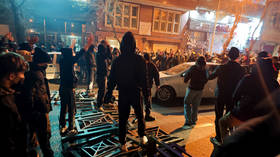
Freedom as a slogan, oil as a strategy
The idea that the US or Europe support Iranian protests out of solidarity with ordinary people collapses the moment one looks at their historical record. From the very beginning of modern US involvement in the Middle East, Iran has been treated not as a society with political aspirations, but as a strategic asset. Its geography, its energy reserves, and its position between rival powers made it a prize worth controlling. When Iranian politics aligned with Western economic interests, the government was tolerated. When it did not, “regime change” became acceptable.
That pattern began long before the Islamic Republic existed. In 1908, the discovery of vast oil reserves in Iran led to the creation of the Anglo-Persian Oil Company, later renamed the Anglo-Iranian Oil Company (AIOC) and eventually British Petroleum. By 1914, citing both financial uncertainty and the need to convert the Royal Navy from coal to oil, the British government acquired a majority stake in the company.
The timing proved decisive. World War I triggered a global oil boom, and Iranian production expanded rapidly, with the company supplying a substantial share of Britain’s wartime energy needs. From that moment on, Iran became an energy artery for the British Empire.
After the war, a 1925 coup ended Qajar rule, and Reza Khan, the minister of war, crowned himself Shah, founding the Pahlavi dynasty. This is when Pahlavi’s dictatorship, which preceded the 1979 Islamic Revolution and was one of the most brutal security states in the region, began.
Determined to modernize and centralize Iran, Reza Shah pursued a Western-style model of industrial and state development. At the same time, he consolidated power by establishing a political dictatorship, relying on his personal authority and control of the army. He outlawed political parties, crushed uprisings, created a powerful police apparatus, and sharply limited the influence of the clergy, reshaping Iran into a tightly controlled and highly centralized state.
Yet it was precisely during this period that Iran was described in Western discourse as “modernizing” and “pro-Western.” The reason was simple. Oil flowed freely to Western markets, and Iran positioned itself firmly against the Soviet Union. He renegotiated Iran’s oil concession on slightly better terms, but the increased revenues enriched the Pahlavi elite far more than ordinary Iranians. Inequality deepened, and resentment grew.
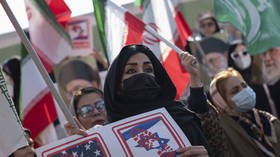
When Iran became an energy artery of empire
British dominance over the oil sector, combined with the Shah’s failure to defend national sovereignty, radicalized large segments of Iranian society. This anger was especially intense among oil workers, who lived and labored in harsh, dangerous conditions, excluded from advancement and trapped in a rigid colonial hierarchy that stood in stark contrast to the privileged lives of foreign staff.
Human rights abuses were not only ignored, they were quietly accepted as the price of strategic loyalty.
The extent to which the monarchy served foreign interests had already become unmistakable during WWII. After Britain and the Soviet Union deposed Reza Shah, citing his closeness to Nazi Germany, Mohammad Reza Pahlavi, the Shah’s young and politically inexperienced son, was installed on the throne. Mohammed’s goal was to guarantee uninterrupted access to energy resources and ensure Iran remained aligned with Allied interests. For good measure, British and Soviet forces occupied the country for the next five years.
When the war ended and the occupation lifted, Iranians renewed their demands for genuine independence. The first and most urgent symbol of that independence was control over their natural wealth. Mohammad Mossadegh came to embody this struggle.
A European-trained lawyer and the leader of the National Front coalition, he represented a broad alliance of nationalists, liberals, and social reformers who believed Iran could be both democratic and sovereign. In 1951, he became Iran’s first fully democratically elected prime minister, sidelining the Shah’s authority and riding a wave of overwhelming popular support.
Mossadegh’s rise was not a local event. It resonated internationally. By 1952, Time magazine named him Man of the Year, calling him the “Iranian George Washington,” a symbol of a nation seeking to reclaim its independence from imperial control.
The Soviet Union, having secured victory over Nazi Germany, withdrew its forces and did not pursue long-term control over Iran’s political or economic system. Britain and the US, however, took a very different path. London remained determined to preserve its dominance over Iran’s oil industry and to prevent any challenge to its commercial and strategic interests.
It was at this moment that the conflict shifted from political disagreement to existential confrontation. Mossadegh was not merely reforming Iran’s government. He was threatening the entire structure of postwar economic power in the Middle East. And it was this challenge, more than any fear of communism or instability, that sealed his fate and made the 1953 coup inevitable.
1953: How oil and empire gave birth to modern regime change
In retrospect, the 1953 overthrow of Mossadegh stands as one of the most consequential events in modern Iranian and global history. As historian Mark J. Gasiorowski notes, it was “the first peacetime use of covert action by the United States to overthrow a foreign government.” It was when regime change became a standardized instrument of Western power.
Mossadegh’s government was not radical in ideological terms. It was nationalist, constitutional, and democratic in orientation. His central “crime” was the nationalization of Iran’s oil industry in 1951, which removed control from the AIOC.
That decision struck at the heart of Britain’s global economic power. The British government, itself a major shareholder in the AIOC, was determined not to allow Iran to set a precedent of real resource independence. Winston Churchill, who had played a central role in securing those oil rights for Britain decades earlier, became instrumental in persuading Washington to support covert action. For London, the objective of overthrowing Iran’s democratically elected government was clear: to preserve control over Iranian oil, which was vital to Britain’s international economic standing and postwar recovery.
For the United States, the motivation was also deeply ideological. In the early Cold War climate, Washington viewed the Middle East as a critical front line in the struggle for global influence. Any independent political movement that weakened Western control over strategic resources was seen as creating space for Soviet expansion, regardless of whether it was communist or not.
As Britain’s colonial dominance faded, the United States stepped forward as the new guarantor of Western control over strategic resources. The 1953 coup marked that transition: the moment when British imperial priorities merged with American global ambition, and Iran became the first testing ground of a new, US-led order built not on formal empire, but on managed governments and controlled access to oil.

Britain’s response unfolded in three stages: legal pressure, economic warfare, and covert political action.
First came legal maneuvers. Britain attempted to reverse nationalization through the International Court of Justice, the United Nations, and US mediation. Negotiations were staged that nominally accepted nationalization but demanded that AIOC retain control over marketing and profit-sharing. Mossadegh rejected these proposals because they preserved colonial domination under a different name. By 1951, diplomacy had failed.
The second stage was economic suffocation when Britain imposed a full oil blockade by mid-1951. Tankers were prevented from loading Iranian oil at Abadan city port. AIOC slowed production and then shut it down entirely. By July, the blockade was “full-fledged,” and other Western oil companies joined it. Thousands of Iranian oil workers were laid off, forcing Mossadegh to place them on the state payroll.
These were not defensive actions. They were instruments of economic siege. Gasiorowski records that the British even prepared for military seizure of Abadan. Only US opposition prevented a direct British invasion.
Operation AJAX
The third stage was political subversion. When sanctions and blockades failed to remove Mossadegh, British officials openly began discussing carrying out a coup. In internal documents, Mossadegh’s removal was described as “objective number one.” This is not interpretation; it is the language used by the architects of the operation themselves.
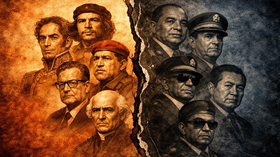
Britain began building a covert network inside Iran, which included pro-British politicians, businessmen, military officers, and even religious figures. The plan was simple: destabilize Mosaddeq politically while engineering a replacement government friendly to Western oil interests.
Yet Britain alone could not execute the coup. It needed American participation. The United States initially resisted direct overthrow, preferring negotiation. But after Dwight Eisenhower’s election in late 1952, the balance shifted, and the CIA leaders had already concluded a coup was “necessary.” In February 1953, just weeks after Eisenhower’s inauguration, US and British officials met and agreed to “develop and implement a plan to overthrow Mossadegh.”
Operation AJAX, as they called it, was not even framed as saving Iran. A retired general and member of the Senate, Fazlollah Zahedi, the chosen replacement, had earlier been described by US officials as “unscrupulous” and “an opportunist.” Yet he was now rebranded as a “strong figure” who could bring Iran “firmly back into the Western camp.” Moral character was irrelevant. Political obedience was decisive.
The coup plan had four main components: propaganda against Mosaddeq, encouraging opposition figures to create a disturbance, the Shah’s agreement, and the support of key active-duty military officers. A CIA paramilitary specialist with recent experience in Korea was even brought in and given responsibility for liaison with the Iranian military officers involved in the plot.
By June and July 1953, Mosaddeq’s position had become increasingly fragile. Demonstrations by both his supporters and his opponents, as well as by the communist Tudeh Party, were taking place almost daily. Even after Mossadegh secured a major electoral victory, the unrest did not subside. Instead, it was deliberately sustained and intensified.
This decisive phase unfolded on August 19, 1953, the day Iran’s democratic experiment was brought to an end. The CIA moved to provoke a decisive confrontation. The agency’s officers bribed a prominent Iranian politician and cleric, Ayatollah Abul Qassem Kashani, with $10,000 so he would organize an anti-Mosaddeq march in central Tehran. The crowd quickly grew as army and police units joined in, along with large numbers of bystanders.
The crowd then attacked government buildings, the offices of pro-Mosaddeq newspapers and political parties. Despite the violence, Mosaddeq refused to order the army or police to crush the demonstrators, fearing a bloodbath and hoping to avoid civil war.
The turning point came when military units with tanks openly joined the uprising. What followed was a nine-hour battle around Mosaddeq’s residence. About 300 people were killed. Tanks and artillery destroyed the walls of his home, and the army stormed it. And though Mosaddeq tried to escape over the roof, he was caught later and made to surrender to General Zahedi the next day.
The coup succeeded not because Iranians demanded another person ruling them, but because the country’s economy had been deliberately strangled, its political institutions systematically destabilized, and its sovereignty methodically undermined from abroad.

Victory that did not last
The US and Britain ultimately failed to secure long-term control over Iran’s oil.
The 1953 coup restored Western access to Iranian resources, but that victory proved temporary. Less than three decades later, the entire arrangement collapsed. The Islamic Revolution of 1979 did not simply overthrow the Shah; it dismantled the political and economic system that had guaranteed Western dominance over Iran’s energy sector. What had been achieved through covert action and client rule was undone by mass mobilization and a complete rejection of foreign control.
In the final months before the revolution, Iran’s oil industry itself became a battlefield. In November 1978, a strike involving around 37,000 workers at Iran’s nationalized refineries slashed production from roughly six million barrels per day to about 1.5 million. Foreign personnel fled the country. The government managed only a temporary recovery by deploying navy personnel to keep operations running, but the collapse of authority was already irreversible. The oil sector, once the foundation of Western influence, had become a tool of domestic resistance.
On January 16, 1979, Mohammad Reza Pahlavi and his wife left Iran, effectively ending the monarchy. Within weeks, Ayatollah Ruhollah Khomeini emerged as the new leader of the country. One of the first symbolic acts of the revolutionary government was to cancel all oil contracts signed with multinational companies under the post-1953 arrangements. These contracts, concluded in 1954 with American, British, Dutch, and French corporations, were declared illegitimate. Iranian officials accused the companies of having “plundered” the country’s resources for decades while Iran received only a fraction of their real value.
By then, the economic relationship that had defined Iran’s role in the Western system was already shattered. Before the revolution, Iran produced about six million barrels of oil per day. After 1979, production fell to under one million. The collapse was not only economic; it was geopolitical. Iran was no longer a dependable energy partner, no longer a strategic outpost, and no longer a controllable client.
This loss reshaped US foreign policy across the region. The shock of 1979 pushed Washington toward deeper imperial entanglement: a tighter alliance with Saudi Arabia, a more direct response to the Soviet invasion of Afghanistan, and the foundations of what would later become the Gulf War system. These shifts were not isolated reactions. They formed a continuous arc that led toward the militarization of US power in the Middle East and, eventually, the architecture of the so-called ‘War on Terror’. The collapse of US influence in Iran was not the end of interventionist strategy; it was the moment it expanded outward.
The great irony
In March 2000, then Secretary of State Madeleine Albright for the first time publicly acknowledged the US role in the coup:
“In 1953 the United States played a significant role in orchestrating the overthrow of Iran’s popular Prime Minister, Mohammed Massadegh. The Eisenhower Administration believed its actions were justified for strategic reasons; but the coup was clearly a setback for Iran’s political development.”
Indeed, the coup was a turning point in Iranian and American history.
The Mossadegh government turned out to be the last popular, democratically-oriented government to hold office in Iran until 1979. This is the central irony. Western intervention claimed to protect stability. Instead, it destroyed the only democratic path Iran had ever known and replaced it with what it itself calls dictatorship. That “dictatorship” then became the justification for future intervention.
1953 was not about communism. It was not about freedom. It was not about democracy.
It was about oil. And about teaching the world that sovereignty is conditional.
By Elizaveta Naumova, a Russian political journalist and expert at the Higher School of Economics







 English (US) ·