
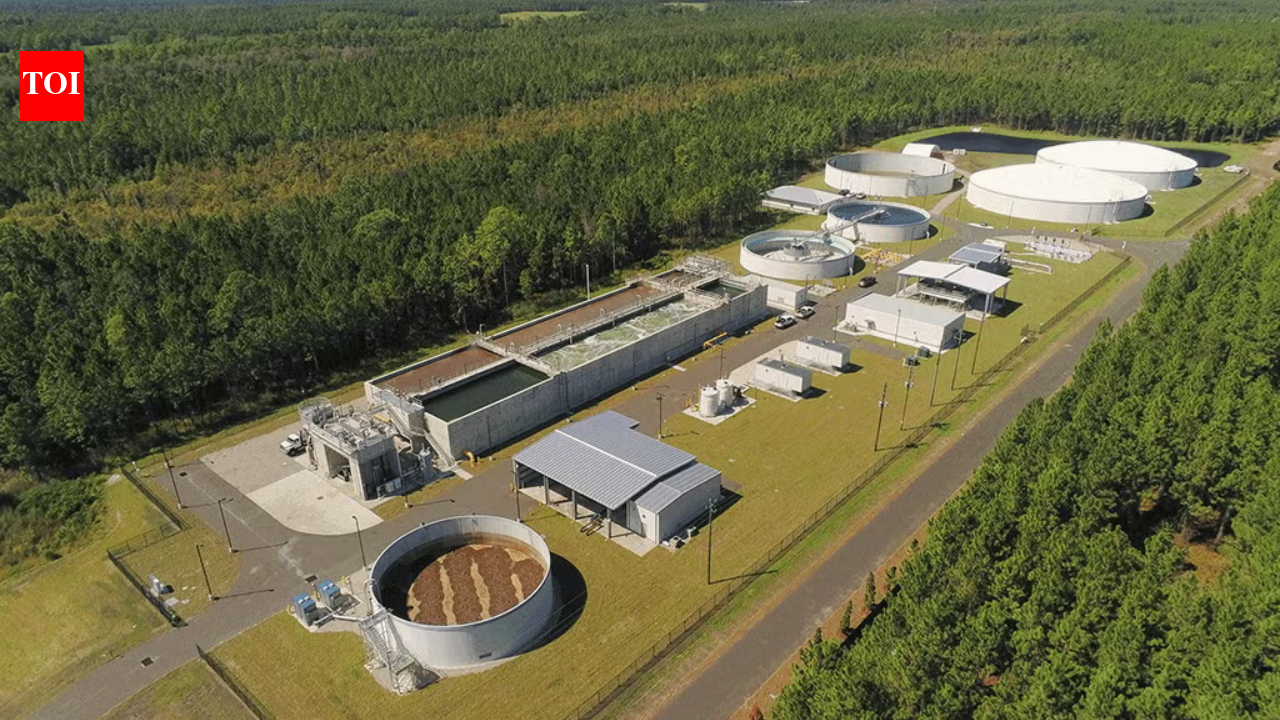
US had just two 500-foot smokestacks An effort by American power companies to reduce local air pollution in the 1970s ended up creating a much wider environmental crisis, turning a local health problem into a continent-wide acid rain emergency. By building huge smokestacks to send coal emissions away from nearby towns, power companies pushed sulfur dioxide and nitrogen oxides into high-altitude winds. Instead of removing the pollution, the strategy carried these harmful chemicals hundreds of miles downwind, bringing acidic rain to forests, lakes and communities far from the power plants. Data collected in a major government investigation by the United States Government Accountability Office (GAO), titled Air Quality: Information on Tall Smokestacks and Their Contribution to Interstate Transport of Air Pollution (GAO-11-473), shows how the rapid spread of these giant structures changed air chemistry across North America.The rise of the giant chimneysIn 1970, the United States had only two industrial smokestacks taller than 500 feet. By 1985, the number had risen to more than 180 as power companies worked to meet new ground-level air quality standards under the Clean Air Act. Instead...
The US had just two 500-foot smokestacks in 1970 and more than 180 by 1985 to dilute pollution
 1 month ago
37
1 month ago
37
Related

Brazilian man sells all, travels 1,200 miles to marry online...
45 minutes ago
0

'Like we had a war': France left reeling after nationwide vi...
45 minutes ago
2


Popular


Oil prices rise as Chinese refiners reportedly ban October f...
2 weeks ago
255

OpenAI fires workers for mishandling 'sensitive information'...
2 weeks ago
242

CNBC Daily Open: Three’s a crowd: U.S. carrier buildup in Mi...
2 weeks ago
238

Meet the seventh-grader who found psyllium could remove 93.3...
2 weeks ago
229
 English (US) ·
 © Clint's World News 2026. All rights are reserved
