
In its opening moments, Untold: Chess Mates contextualizes a cheating scandal that rocked the top tiers of competitive chess in 2022—which spiraled out of control with allegations of a player using vibrating sex toys—by explaining how the game has evolved culturally from its Cold War stereotypes.
“When I say ‘chess player,’ people think of an old white guy from Russia,” Danny Rensch, the chief chess officer of Chess.com and a key figure in the controversy, puts it in the documentary.
But as revealed in Chess Mates—the latest installment in Netflix’s Untold anthology docuseries about scandals and wild stories in sports—things have changed significantly since the days of Bobby Fischer and Boris Spassky. The documentary unpacks the rivalry between Norwegian grandmaster Magnus Carlsen, who for 15 years has been ranked No. 1 in the world (but who has not competed in the World Chess Championship since 2022), and Hans Niemann, a young American player considered an outsider who achieved grandmaster status in 2021.
How the internet changed the world of chess
Chess.com, founded in 2007, exploded in popularity during COVID, and then again later in 2020 when The Queen’s Gambit became Netflix’s most-watched scripted limited series. Today's chess players mirror the ones of yesteryear—there's no shortage of players known for mastering the game at an early age and are suspicious of anyone who might question their talent. What has changed is the ecosystem they play within. The advent of the internet massively affected where the game could be played, who the spectators were, and how its controversies unfolded. “Online, a new breed of glamorous chess “streamers” has sprung up, some of whom earn hundreds of thousands of pounds a year. Millions more are now playing and watching," The Guardian reported during the Carlsen–Niemann controversy in 2022. "Meanwhile, at the top level, stories abound of cheating, excessive drinking, groupies, even death threats—if not yet at the same time.”
Chess Mates is Carlsen and Niemann’s chance to put their side of the story on the record. Carlsen is collected, careful with his words, with years more experience under his belt. In his talking-head segments, Niemann seems assured and confident, but back in 2022, he was a 19-year-old prodigy with a hungry, edgelord fanbase and a propensity for screaming and crashing out during livestreamed games.
As archive footage shows us, Niemann is a driven and talented player who is most comfortable as a louder-than-thou clown, whose attempts to psychologically “mog” his opponents are undermined by a clear nervousness about public appearances. If Niemann is trying to be seen as “alpha”, Carlsen models himself more on the measured, self-sufficient “sigma male."
Based on how the Norwegian grandmaster first leveled a cheating accusation against Niemann, we know he likes memes; in opposition with Niemann, Carlsen is better characterised by the internet catchphrase, “Learn to Sit Back and Observe, Not Everything Needs a Reaction.”
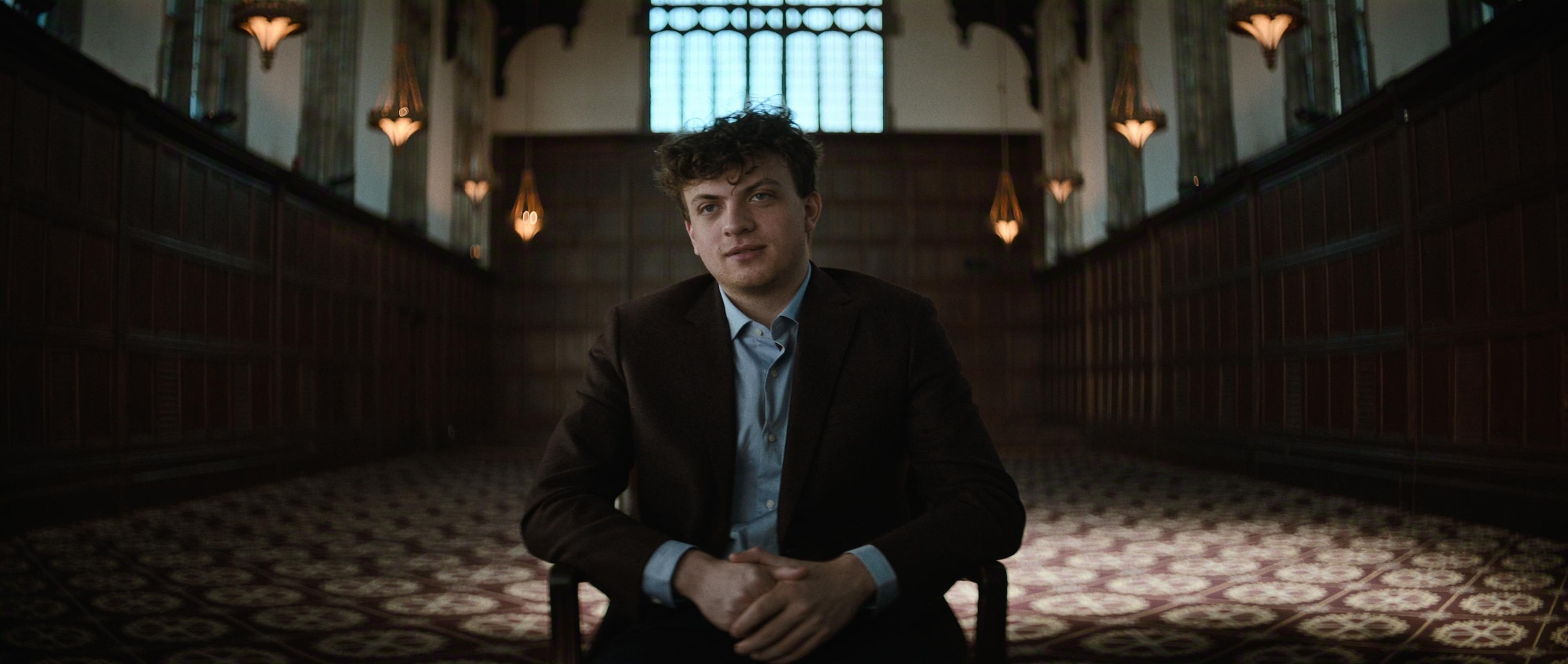
Hans Niemann Courtesy of Netflix
Suspicions of chess cheating
So, what exactly did Carlsen observe? In 2022, Niemann was on the ascendent, appearing at a string of international tournaments and enjoying a healthy rise in his worldwide ranking position. At the FTX Crypto Cup in Miami, Niemann beat Carlsen in the first of their four games—when an interviewer asked for a comment on his victory, he gave a pithy, deadpan, one-line response: “The chess speaks for itself.”
Niemann did not beat Carlsen during their three subsequent games in Miami, but according to American–Filipino grandmaster Wesley So, Niemann “learned a lot from losing all his matches in Miami”, where he was nicknamed “the chess villain." To everyone’s surprise, Niemann beat Carlsen in their third-round matchup during the 2022 Sinquefield Cup in St. Louis, Missouri. This prompted Carlsen to withdraw from the tournament the next day, accompanied with the viral video of football manager José Mourinho telling a reporter, “If I speak, I am in big trouble.” This was interpreted as an indirect accusation of cheating.
As Chess Mates explains, Carlsen had shared his suspicions about the irregular match with tournament officials before withdrawing, suggesting Niemann was being secretly aided by computer programs. Their next scheduled match was two weeks later, an online game in the Julius Baer Generation Cup—Carlsen made one move and forfeited the match. Later, he made similarly cryptic comments about his sudden withdrawal, saying people can “draw their own conclusions” and ironically praising Niemann’s former mentor Maxim Dlugy, who himself had been accused of cheating.
The vibrating sex toy theory
This is where we reach the “anal beads” of the affair—while sophisticated computer programs that can algorithmically determine a player’s best paths to victory, they are much easier to deploy during an online game, where a player can toggle to another window without attracting much attention. In fact, in the subsequent investigation into whether Niemann was a chess cheat, a pivotal Chess.com report concluded that Niemann had cheated in more than 100 online games in this manner.
During in-person games, also known as Over-the-Board (OTB) matches, cheating can take many forms, many of which overlap with athletic sports, including collusion, bribery, and illegal moves. The concept of “sandbagging”, of deliberately losing matches to reap the financial benefits of being treated as a worse player than you actually are, has a lot of crossover with the NBA’s current “tanking” controversy. Players who have cheated with technology often hide cellphones in washrooms, and sometimes collude with a teammate or coach to communicate their moves with SMS messages or Bluetooth signals. Devices have been found sewn into caps, ear plugs, and even shoe insoles.
But even though Niemann was found with no device, the speculation spiralled out of control—how could he have been tipped off by chess software? You can blame internet humor for the outrageousness of what happened next, as Reddit users and livestream spectators suggested that Niemann was using remote-controlled vibrating anal beads to be notified of winning moves. This theory exploded online—even boosted by Elon Musk—and Niemann has spent three years refuting the admittedly baseless accusation. The outlandish nature of the theory may have gone viral, but ultimately, no evidence of Niemann cheating in OTB games was found. Still, the surge of chess-related attention was welcomed by the founders of Chess.com. “Anal beads have been super good to us,” says co-founder Erik Allebest in the doc, laughing.
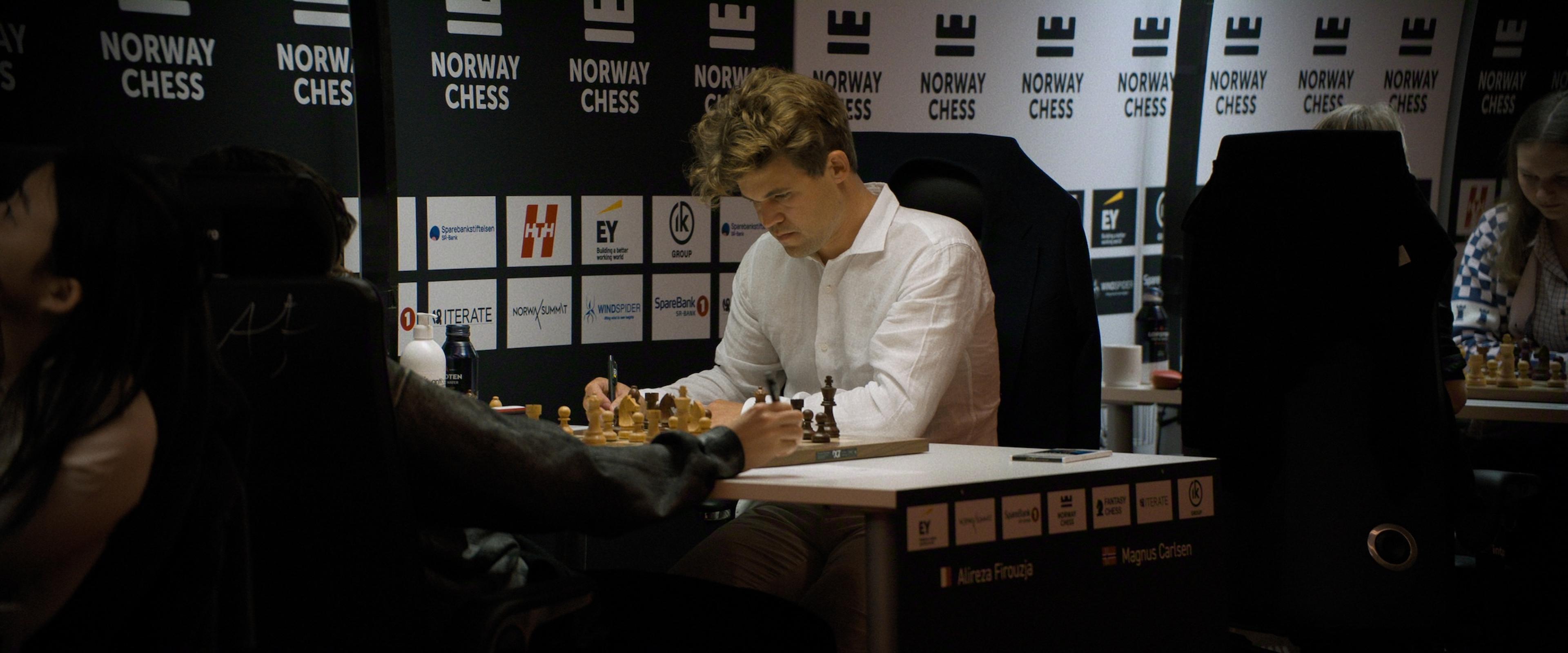
Magnus Carlsen Courtesy of Netflix
How the chess scandal continues to be felt
If there are lessons to be learned from the Carlsen-Niemann affair, it’s that companies like Chess.com ought to be viewed with a higher degree of skepticism. In Chess Mates, both Rensch and Allebest openly discuss their friendships with the grandmasters, giving insight into how they tried to assist and placate both feuding players—all to avoid a scandal that would harm them financially and reputationally. The platform also had business with Carlsen, acquiring his company Play Magnus Group for $80 million in late 2022—a deal which Niemann is convinced was the reason why he was banned from the website, despite him admitting he had previously cheated on Chess.com before the end of the Sinquefield Cup.
Carlsen and his father, Henrik, asked Rensch and Allebest if their anti-cheating software, usually reserved for online games, could be used to analyze Niemann’s OTB matches. Eager to solve the conflict, the Chess.com founders agreed—but the report found no evidence of OTB cheating. Carlsen thinks he was led on: “I felt that I’d sort of been gaslit a bit by Chess.com.” His father gives perhaps the doc’s most clear-eyed analysis of the debacle: “In retrospect, maybe Chess.com was so concerned about [their] relationship to Magnus that they might have promised a little more than they can deliver.”
In October 2022, Niemann filed a $100 million lawsuit against everyone he thought had wronged him—Carlsen, Rensch, and fellow grandmaster streamer Hikaru Nakamura—in defaming him. The suit was dismissed the following June, and all parties agreed to put the dispute behind them. The chess villain now had a difficult and perspective-altering origin story to galvanize his antihero mentality; he reentered the chess world bitter, cynical, and with a lot to prove. While Niemann has plenty of chess-playing ahead of him, you wouldn’t call his first rematch against his accuser a comeback; Chess Mates concludes with Carlsen handily defeating Niemann in Paris’ Speed Chess Championship in 2024.
The scandal behind Chess Mates has more or less died down, but the day before the documentary premiered on Netflix, Reuters reported that Carlsen’s chess start-up Take Take Take was “expanding from a content platform into tools for playing and improving at chess”, making it a direct competitor to Chess.com. As per an agreement in Chess.com’s acquisition of Play Magnus Group, Carlsen can’t be involved in promoting Take Take Take, but this announcement coincides with the release of a documentary where he criticises Chess.com’s founders. It could be a coincidence—or we might be witnessing the opening move in a grudge match.








 English (US) ·