
The first four minutes of #Skyking: Panic in the Sky present an extraordinary piece of footage: CCTV from Aug. 10, 2018 of ground service agent Richard Russell breezing past security at Seattle-Tacoma International Airport, clambering aboard a plane, and taxiing to the runway. Russell, a Horizon Air employee, stole the De Havilland Dash 8-400 aircraft and performed an unauthorized takeoff, startling Sea-Tac air traffic control (ATC) and prompting two Oregon Air National Guard fighter jets to take off in pursuit. After being asked to identify himself, Russell finally spoke: “Horizon guy, about to take off, it’s about to be crazy.”
As a ground service agent, the 28-year-old had neither a pilot’s license nor any flying experience or training. He was not a domestic terrorist, didn’t plan to use the aircraft to cause civilian casualties, and had no political agenda. As Russell says in the final section of the ATC recording, he was “just a broken guy, got a few screws loose, I guess.”
As explored in the new documentary, now streaming on Hulu after premiering at the South by Southwest Film Festival last month, Russell, who suffered from depression, was convinced he had no way out after commandeering the aircraft. After just over an hour in the air, he crashed into the sparsely populated Ketron Island in Puget Sound. He was the sole occupant of the plane. In the media frenzy that followed Russell’s death, his friends and family were heartbroken and tormented by mistruths that turned his tragedy into something it wasn’t. “He could never be a bad guy, he was always a good guy,” says Pat, Russell’s aunt, in an interview for the film.
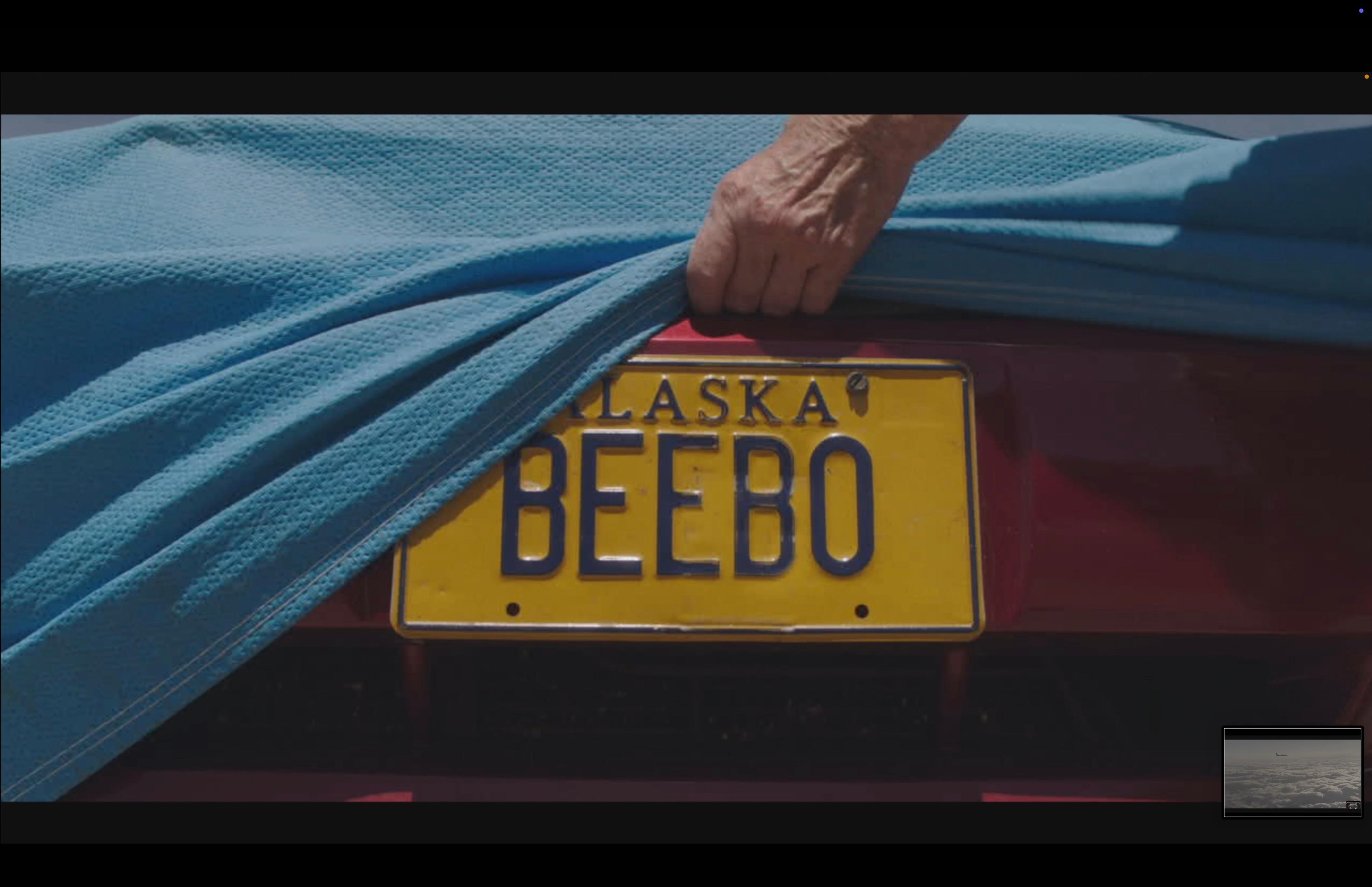
A license plate with Russell's nickname on it Courtesy of ABC
From the age of 6, Russell and his sisters were raised by their mother, Karen, who according to the documentary left an allegedly abusive husband and moved from Florida to Wasilla, Alaska. Russell was affectionately nicknamed “Beebo” by friends and family. He was well-liked at school, noted for being kind, thoughtful, and funny, and after graduation moved to North Dakota to play college football. Throughout Skyking, director Patricia E. Gillespie shows home movies of Russell’s childhood and adolescence, a warm and bittersweet contrast to the documentary’s main archive material—recordings of Russell’s extended conversation with ATC, which his relatives and friends listen and react to throughout the film. The only person who refuses to listen to the recordings in the documentary is Karen, who says, “I can’t hear his voice, because his voice was very special. He spoke so well.”
While attending a Campus Crusade for Christ meeting in Oregon, Russell met Hannah, who he later married. They opened a bakery, but sold it after three years and moved to Washington to be closer to Hannah’s family. Russell got a job with Horizon Air, which made it easier to visit his family in Alaska, and also satisfied his desire to travel the world. But Russell struggled with his working conditions—at the time, ground crew employees were paid only $12.75 an hour. (As of 2026, Washington’s minimum wage is $17.13.) According to Russell’s former coworker Andreas, ground service agents were “understaffed, underpaid, [and] overworked,” but Russell maintained his professionalism because he wanted a managerial position. Still, Andreas alleges they were not treated “with dignity and respect." According to those who knew Russell, pilots and air crew would use demeaning nicknames for ground crew like “ramp rats.”
Russell’s attempts to procure a promotion failed, and he slipped deeper into a depression that he kept secret from his loved ones. Days after the incident, reports emerged that industry leaders were calling for a reckoning with mental health in the aviation industry.
What happened while Russell was in the air?
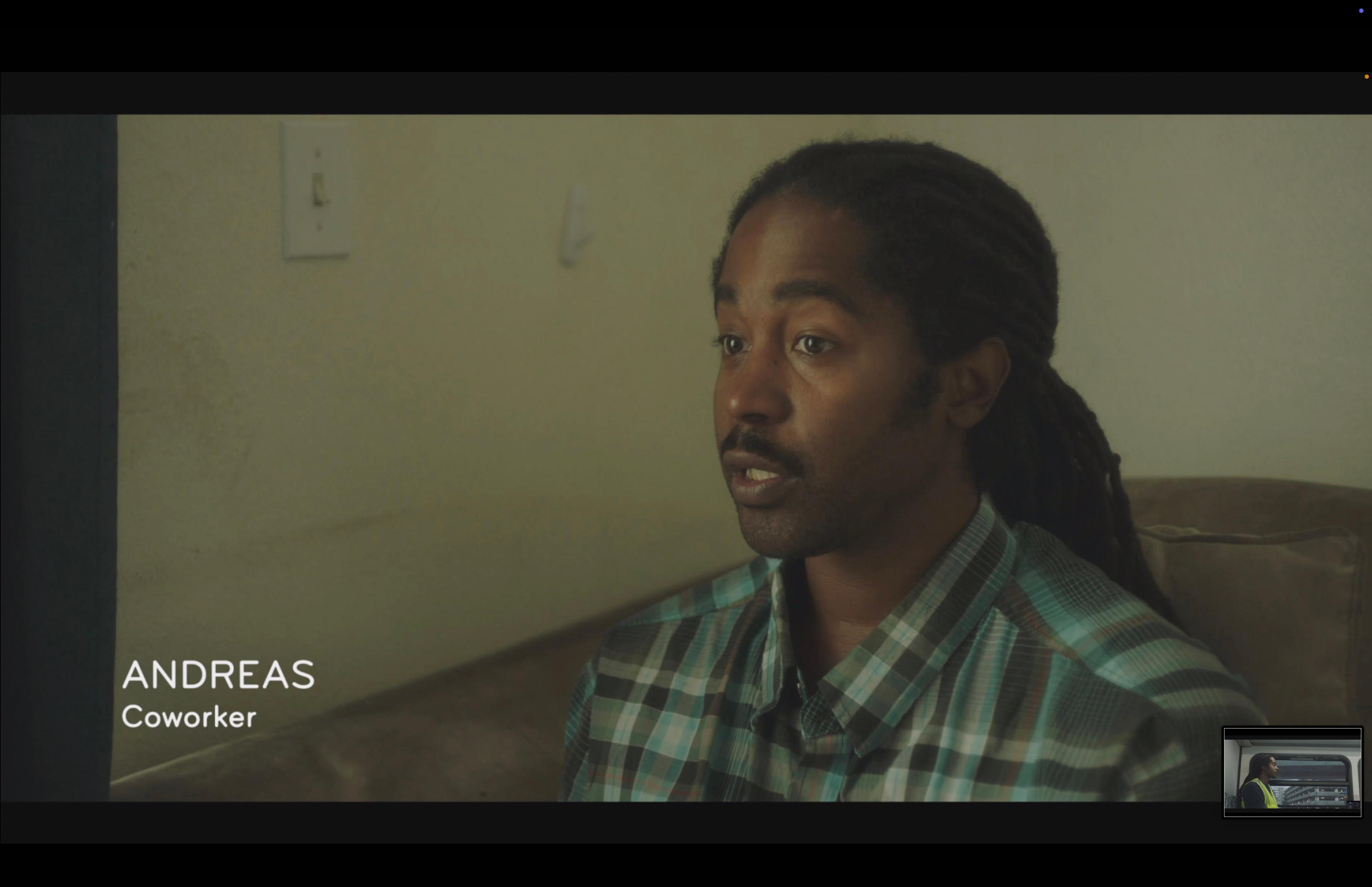
Russell's former colleague sits for an interview in the documentary Courtesy of ABC
“This was a major metropolitan area. If that plane was used as a weapon, then thousands of people would definitely be killed,” says Colleen, the ATC operations supervisor who first flagged the stolen plane, in the documentary. While speaking to ATC from the air, Russell spoke in a casual and colloquial manner, dismissing concerns that he was planning to hurt anyone. He flew to several natural landmarks, including Mount Rainier and the Olympic Mountains, and asked for the coordinates of an orca whale that had recently been in the news. When we hear him on the recording asking if it’s possible for his plane to perform a barrel roll, the ATC officer replies that he needs to focus on the autopilot. Russell gives a one-word response: “Boring!”
Since the incident, pilots and experts have noted that he was “uncannily skilled” at flying, with Horizon CEO Gary Beck remarking, “There were some maneuvers that were done that were incredible.” A SkyWest Airlines pilot recalled a suspicious encounter where he caught Russell and a second person inside the cockpit of an empty jet in 2017. On at least one occasion, the same pilot said Russell had asked him about the series of checks and procedures that pilots need to do for takeoff.
While Russell was in the air, an ATC officer offered nearby runways to Russell, as well as the assistance of an experienced pilot who could help him land. Russell admitted his only knowledge of flying came from video games. On the ATC recording, there’s an edge of paranoia in Russell’s voice that cuts through his attempts at banter. Russell seemed convinced he was going to be shot out of the sky by fighter jets or anti-aircraft guns. He refused help in landing the plane, preferring to die by suicide than go to jail for his crime, and with minutes’ worth of fuel left, completed a barrel roll over the water of Puget Sound and crashed into Ketron Island. He was the only fatality.
How did Richard Russell become #Skyking?
In the second half of the film, #Skyking turns its attention to how the theft and crash quickly became a hotly debated phenomenon—while some regarded Russell as a folk hero, his behavior was also interpreted as a rallying cry for downtrodden conservatives in Trump’s America on both sides of the political divide. “It was sensationalized and politicized almost exclusively just to argue pre-existing political points that were very extreme,” says Chris, one of Russell’s closest friends.
During the flight, Russell asked if he’d be offered a pilot job if he made a successful landing and the ATC officer told him he could get a job doing anything if he pulled it off. Russell replied: “Yeeeeahhh right! Nah, I’m a white guy…” This particular comment is still difficult for Russell’s friends and family to accept.
“There it is,” says Danny, slipping off his heavy-duty headphones. “There’s the “white guy” line that’s been…” He trails off, sighing. This stifling sadness and tension is common across the interviewees. “Can we cut the cameras?” Russell’s sister Mary politely asks.
Russell was a devout Christian and a blue-collar conservative, but his loved ones insist he was not racist, and in fact, was just repeating what his supervisor had told him when he didn’t get a promotion. To Andreas, it was an underhand method of sowing division in a workforce. “They wanted him to be angry. They wanted division so that we could not come together and actually get something going, because we were not covered by a union.” Andreas locates the reason not in Russell’s race, but his class. “White does not wash away poor. [...] Richard, I believe, did not get the job because he was considered white trash.”
But Russell’s comment was interpreted by white nationalists online as the reason why he snapped, his theft a form of rebellion against the system. This racist narrative was boosted by far-right publication The Occidental Observer and was even sold on a T-shirt. “These T-shirts here from a neo-Nazi white national outfit use my brother as kind of a poster child to sell merchandise,” says Danny.
Nearly eight years on, Russell’s story still resonates with people who have suffered from mental illness—all over Reddit, Facebook, and Youtube, there are tributes to the “Sky King,” who many believe turned his suffering into something strangely poignant in his final hour alive. Throughout the credits we see dozens of social media clips of people sharing and connecting over the “Sky King” story. It’s a romantic if dubious idea, one that’s difficult to swallow after watching Russell’s family struggle to process his severe suffering and very public suicide.
Even though #Skyking is first and foremost about putting a human face on an online character—this is the story of Beebo, not the hashtag he spawned—Gillespie capitalizes on the symbolic power that many saw in Russell’s implausibly executed barrel roll. When cellphone footage shows Russell about to plunge into the Puget Sound, the film cuts to black, building suspense, before Gillespie cuts to cellphone footage of the plane climbing back into the sky, set to the euphoric sound of M83’s “Outro”.
We see the reactions of Russell’s family listening to the ATC tape—they look stunned and moved, some even crack a smile. Minutes later, Russell would be dead, but this remarkable, bittersweet aerial stunt lingers in the mind. As his other brother Phil mournfully reflects, “The kid had unlimited potential.”








 English (US) ·