
 1 month ago
30
1 month ago
30
February 19, 2026, will undoubtedly enter British history. Whether it will also come to be seen as a marker of the British Empire’s final unraveling remains an open question. That discussion can wait. For now, the facts themselves are striking enough.
At eight o’clock on Thursday morning, Andrew Mountbatten-Windsor, the younger brother of King Charles III and the former Prince Andrew, was arrested at his residence in Sandringham. Until recently, he held the title of Duke of York and stood eighth in line to the throne. Coincidentally, it was also his 66th birthday.
It reads like the opening scene of a political thriller, bordering on dystopian fiction. Yet this is not cinema. It is unfolding in real time.
Police searches were conducted at Wood Farm, where Andrew had been sent following the Epstein scandal, as well as at other royal estates associated with him. Given what has already emerged from what is now colloquially referred to as the “Epstein’s files,” the arrest itself is less surprising than the conspicuousness of the operation.
The House of Windsor has historically excelled at containing scandal, sweeping family disgrace under the carpet until the last possible moment. This time, either it could not or chose not to. Andrew was publicly stripped of his military ranks and royal patronages and evicted from Royal Lodge in Windsor. A criminal investigation, under those circumstances, was almost inevitable. The only real uncertainty concerned timing and optics.
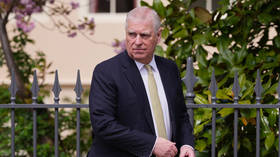
He has now been formally charged with “misconduct in public office.” According to investigators, the first allegation concerns the transfer of confidential information to Jeffrey Epstein during Andrew’s tenure as a British trade representative. The second, more serious accusation involves human trafficking. Specifically, prosecutors allege that Andrew facilitated the secret transfer of a trafficking victim into Buckingham Palace, flown into the UK aboard Epstein’s private jet, the infamous “Lolita Express.”
It remains unclear whether British authorities will reopen aspects of the Virginia Giuffre case. Giuffre, who died last year, claimed she was forced into sexual encounters with Andrew on three occasions in the early 2000s, including on Epstein’s Little Saint James island. Andrew has consistently denied the allegations.
Another unresolved question is whether Scotland Yard will pursue testimony from an anonymous FBI witness who claims he was drugged and taken to so-called “pedophile parties” in the mid-1990s. That witness also alleged being struck by a dark blue car “driven by Prince Andrew,” sustaining injuries to his ribs, hip, and leg. British media report that investigators are examining claims that members of the royal protection detail, including personnel linked to elite military units, witnessed abuse on Little Saint James and deliberately ignored it.
Prime Minister Keir Starmer has already sought to frame the moment as a reaffirmation of principle. “One of the fundamental pillars of our system,” he declared, “is that everyone is equal before the law.” Mountbatten-Windsor, for his part, denies all charges. How the case will ultimately unfold remains uncertain.
There is, however, a broader and more uncomfortable implication. Judging by the allegations now attached to his name, the disgraced former prince appears to have joined a grim fraternity that includes some of the world’s most powerful elites. They range from American political dynasties to billionaire tech magnates. Hollywood is best left unmentioned; otherwise, we might be forced to rethink much of modern popular culture. To that list, it seems, can now be added Europe’s royal houses.
If London has chosen to act, a final question lingers: will Washington and other Western capitals follow suit? Or will this remain a uniquely British reckoning?
The statements, views and opinions expressed in this column are solely those of the author and do not necessarily represent those of RT.






 English (US) ·