
 2 weeks ago
16
2 weeks ago
16
Terrorists have carried out attacks in various locations across Mali, according to the country's army.
Gunfire and helicopters were heard early this morning outside the capital, Bamako, near Kati military base and the international airport.
Similar scenes were reported in the towns of Sevare and Kidal, and in the city of Gao.
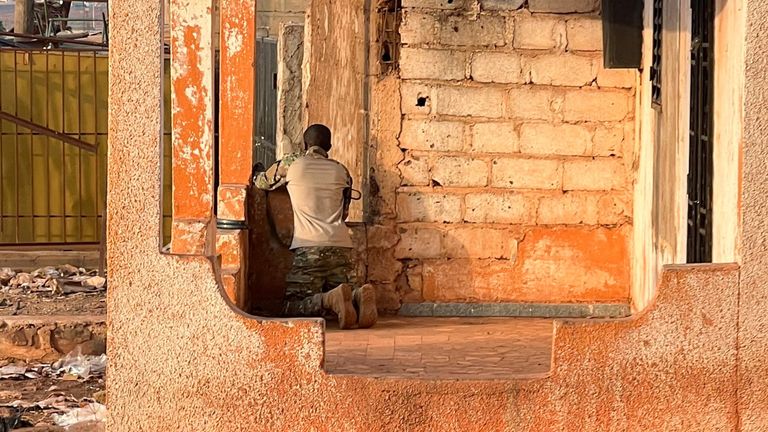
"There's gunfire everywhere," a witness in Sevare said, while a resident in Gao told Associated Press their house was shaking due to the "force of the explosions".
Mali's army said it was "eliminating the attackers" after "unidentified armed terrorist groups targeted certain locations and barracks in the capital".
A statement several hours later said the situation was under control but "sweeping operations" were continuing.
Regional al Qaeda affiliate Jama'at Nusrat al-Islam wal-Muslimin (JNIM) claimed responsibility with the Tuareg-dominated rebel group FLA for the coordinated attacks across Mali, SITE Intelligence Group quoted JNIM as saying.
Al Qaeda and ISIS affiliates operate in the West African country, while a Tuareg-led separatist rebellion has long rumbled on in the north.
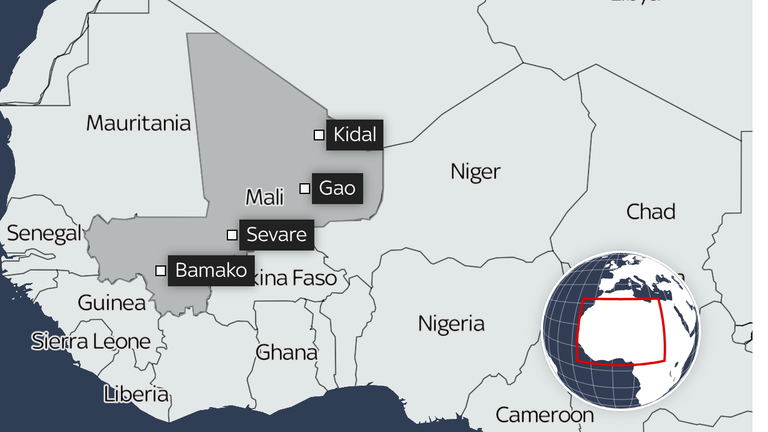
A spokesperson for the Azawad Liberation Front (FLA), a Tuareg-dominated alliance, said on social media it had taken control of positions in Kidal and Gao.
Meanwhile, security sources told Reuters that JNIM was also involved.
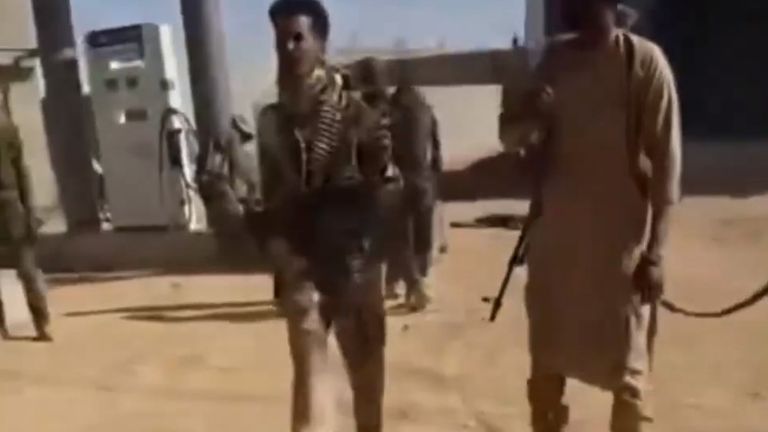
JNIM has staged frequent attacks in the country - including one in the capital in 2024 that killed dozens of trainee police and soldiers.
Mali's military leaders promised to boost security after seizing power in coups in 2020 and 2021 but the unrest has continued.
Who are JNIM?

Jama’at Nusrat al-Islam wal Muslimin (JNIM) is currently the deadliest jihadist militant group in West Africa, and has now carried out the largest co-ordinated attack on Mali in over a decade.
The Malian-born terror group was established as an alliance of five jihadist militant groups in March 2017, and declared itself to be an official branch of Al-Qaeda. In late 2018, JNIM was designated a terrorist entity by the United Nations after claiming responsibility for deadly attacks in Mali and Burkina Faso.
JNIM gained notoriety for violent campaigns in central Sahelian countries - Mali, Burkina Faso and Niger - and then went on to launch terror attacks on the West African coastal countries of Cote d’Ivoire, Togo and Benin from 2019.
The group has only expanded its reach in recent years. JNIM now controls large swathes of territory in Burkina Faso, and is operational across the borders of Benin, Mali and Niger. In 2025, JNIM carried out the world’s deadliest terror attacks in Burkina Faso. Last October, the group claimed responsibility for its first attack in Nigeria.
This latest series of JNIM-led attacks across cities in Mali is a display of strength after waging an eight-month fuel blockade on southern cities including the capital, Bamako.
The jihadist group infiltrated Bamako, struck military sites across the country, and launched a takeover of the northern regional capital Kidal along with separatist Tuareg rebels.
Neighbouring Niger and Burkina Faso have also been battling the terror group affiliates in recent years, with all three countries turning to Russia for help.
Russian mercenaries are understood to be housed at the military base attacked this morning near Bamako.
Read more from Sky News:
Seven killed in Ukraine after major Russian drone attack
Iran war latest: Tehran sets out demands to mediators
Who are the Tuareg?
The Tuareg are a Berber-speaking group of pastoralists who traditionally inhabit large areas of the western Sahara and Sahel regions.
As former French colonies like Mali won independence from the mid 20th century, the changing desert region and rising competition for resources coincided with increasing conflict in their homelands.
After a series of rebellions, Islamist groups formed an alliance with Tuareg separatists early in 2012 to capture territory from the Malian government in the wake of a coup, with the separatists proclaiming the new state Azawad.
With French military help, the Mali government retook much of the captured territory but the north of the country remained under insurgent control, which over time was reinforced.
The involvement of Russian mercenaries resulted in France and its European partners withdrawing in 2022. Political disagreements and claims of human rights violations only increased tensions, and insurgents have exerted growing control.
In the wake of the fighting, hundreds of thousands of people, including Tuaregs, have been forced to flee or been internally displaced, and millions require humanitarian help.
Sky's Africa correspondent Yousra Elbagir said the attacks were concerning but not a surprise as jihadists and separatist groups had consolidated their partnership in recent years.
"The concern now is what does this mean for other cities in the region," she added. "What does it mean for the capital of Burkina Faso and the capital of Niger?"
Ulf Laessing, a Mali expert from the Konrad Adenauer Foundation, told Sky News it was the "largest attack in years" and the apparent close coordination between the groups showed a "new level of threat".
"We had already an attack on the capital of Niger, Niamey Airport, in the start of February. And now again, attacking another capital, Bamako. So the jihadists, they're getting bolder."




 English (US) ·