
 1 month ago
31
1 month ago
31
Khartoum, Sudan – Before Husna Mohamed’s five children leave for school and her husband heads to his workshop, the 34-year-old is already carrying jerrycans towards her southern Khartoum neighbourhood’s shared water pipe.
Power cuts mean that the electric motor she once used to pump water inside her home is now useless, forcing her to make the daily trip.
Recommended Stories
list of 3 items- list 1 of 3Guterres urges end to arms flow as Sudan war enters fourth year
- list 2 of 3Countries pledge $1.5bn for Sudan crisis as war enters fourth year
- list 3 of 3‘Erosion of a country’s future’: What has the war cost Sudan?
“My day has become a series of attempts to overcome these small details, which have piled up to become a daily burden,” Husna told Al Jazeera. “When the electricity was stable, daily household chores were easier.”
Sudan’s power grid was already structurally compromised long before the current breakdown, and the war in the country between the Sudanese Armed Forces and the paramilitary Rapid Support Forces, now in its fourth year, has accelerated the collapse.
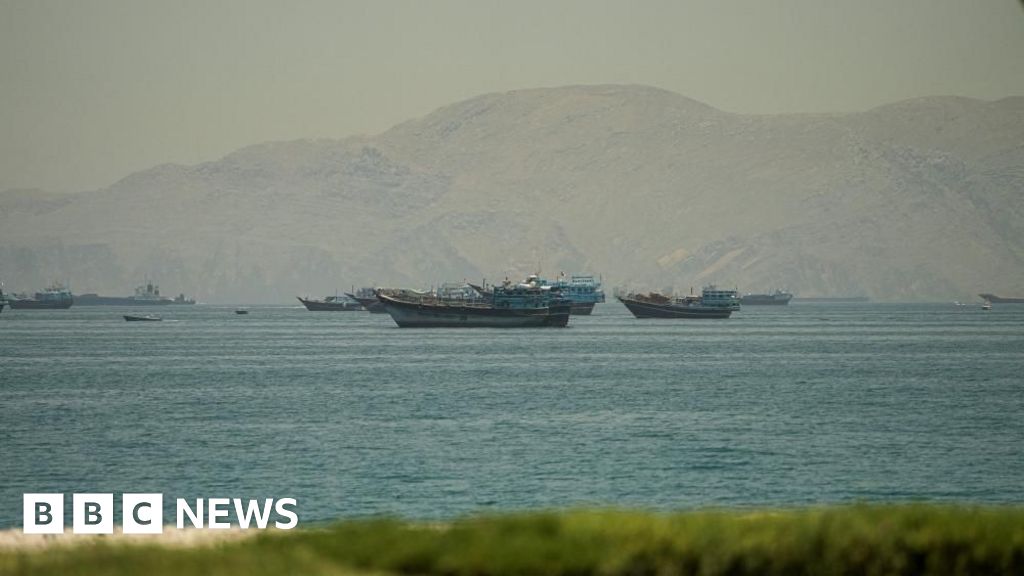
The regional shockwaves from the US-Israeli war with Iran have compounded these pressures further. Sudan, which relies heavily on imported fuel, has found itself caught in the disruption to Gulf energy supply chains and shipping routes, driving already strained fuel supplies tighter and pushing import costs higher still.
As a result, many of Sudan’s towns and cities have experienced crippling power cuts in the past two weeks. While the power cuts are not new, their current scale is disrupting nearly every aspect of daily life across the country, according to residents and officials.
The Sudanese pound has lost roughly 20 percent of its value in recent weeks, with the US dollar now trading at more than 390 pounds on the black market, while fuel prices have surged sharply, driving up the cost of transport, food, and basic goods.
The Sudanese government did announce a return to Khartoum in January and promised an improvement in services, including electricity. But restoring those services to a war-torn city, amid a global energy crisis, has proven difficult.
Inside homes, the consequences are immediate and compounding. Without refrigeration, Husna can no longer store food, forcing her to cook and consume meals the same day, often over firewood or charcoal. In the evenings, the family sits in the heat and the darkness. Her eldest daughter, 16, is preparing for her high school exams.
“The lack of electricity becomes a direct obstacle to her studies,” Husna said. “She is forced to rely on candle lights that do not provide a suitable environment for concentration.”
Fuel crisis
Husna’s husband, Ahmed Ali, 38, works as a car mechanic. His workshop depends partly on electricity to run equipment, and when the power goes out, work slows or stops entirely. A generator once bridged the gap. That option has effectively closed.
According to information gathered from drivers and fuel station owners in Khartoum, petrol prices climbed from 4,860 Sudanese pounds (about $12.50) per litre at the end of March to 6,870 pounds (about $17.60), an increase of more than 40 percent in a matter of weeks, further compressing the margins of anyone whose work depends on movement.
“The cost of running the generator has become more than we can afford,” Ahmed said. “We used to rely on it at times to get around this problem, but that’s no longer possible.”
The fuel crisis has reshaped entire livelihoods beyond the workshop. Yasser al-Balhawi, 48, drives a bus in Khartoum. His mornings no longer begin with work; they begin at the petrol station.
“My day is no longer measured by the number of trips I make, but by the number of hours I spend at gas stations,” he said. “With each passing day, this becomes more difficult, as prices rise and availability dwindles.”
Driving is al-Balhawi’s sole income. As fuel costs rise, his earnings no longer cover his expenses, leaving him caught between waiting in queues for hours or not working at all.
Markets in limbo
The knock-on effects are also visible in local markets.
Abdulhafiz Fadl Muhammad, a merchant at the al-Kalakla al-Lafa market in southern Khartoum, says both foot traffic and supply costs have deteriorated sharply. The heat drives customers away from poorly ventilated market spaces, while goods that require refrigeration are increasingly difficult to stock. He has already invested roughly three million Sudanese pounds in a solar power system to keep his business running.
Prices have moved quickly. A 10-kilogramme (22-pound) bag of sugar rose from about 28,000 ($71.70) to 35,000 Sudanese pounds ($89.75) in a single week; a 50-kilogramme (110-pound) bag of flour climbed from 47,000 ($120.50) to 55,000 pounds ($141); cooking oil moved from 30,000 ($76.90) to 37,000 pounds ($94.50). Further increases, Abdulhafiz says, are expected.
“Some merchants are hesitant to sell while waiting to see how prices will develop,” he said.
Economist Mohamed al-Tayeb says the “structure of Sudan’s economy makes it especially vulnerable to energy disruption. The country’s heavy reliance on land transport and power-dependent production means any break in energy supply moves quickly through the entire supply chain.”
But the crisis, al-Tayeb argues, is not only economic: It is also infrastructural, and its roots run deep.
“Sudan’s electricity networks rely heavily on illegal and makeshift poles erected without engineering oversight, which were never designed to carry sustained loads. As temperatures rise and demand spikes, the wires overheat, accelerating failures across the grid,” he said. “In many neighbourhoods, entire communities have been left dependent on a single shared generator operating well below the capacity the area actually requires.”
“These are not systems built for the population they are supposed to serve,” al-Tayeb told Al Jazeera. “When you have informal infrastructure carrying formal demand, the breaking point comes quickly, and when it does, there is no redundancy, no backup, and the burden falls entirely on residents.”
He describes the dynamic between power outages and fuel costs as self-reinforcing: factory output falls, transport costs rise, and the end consumer absorbs the cumulative weight through higher food prices and shrinking purchasing power.
“Rising fuel prices affect all stages, from operating generators to transporting goods between cities and markets,” al-Tayeb said. “As this rise continues, the cost of daily business operations becomes much higher, prompting merchants to raise prices to offset expenses.”
Local solutions
Neighbourhood-level responses have emerged, though they remain partial. In southern Khartoum, residents turned first to generators when the public water network failed, then abandoned them as fuel costs made that unsustainable. Solar panels now power some water pumps in the area, restoring a measure of service, though not at the scale the previous system once provided.
“This solution helped restore water flow to some homes in a more stable manner compared to generators,” said Magdi Saleh, the head of one of the local neighbourhood committees, “although it does not cover all needs.”
The improvisation extends beyond water. Across Khartoum’s residential neighbourhoods, households have developed their own informal hierarchies of coping: rationing the hours a shared generator runs, rotating who has access to charge devices, pooling resources to cover fuel costs that no single family can absorb alone. These arrangements are fragile, contingent on neighbourly goodwill and collective finances that are, themselves, under strain. When either gives way, the household is left with nothing.
For merchants like Abdulhafiz, the calculus is similar, but played out at a larger scale. Solar investment offers some relief, but it is a solution available only to those who can afford the upfront cost. Smaller traders, street vendors, and daily-wage workers have no such buffer. Their exposure to each price movement, in fuel, in food, in transport, is direct and unmediated.
What the crisis has made visible, al-Tayeb argues, is how little margin existed in the first place. “The Sudanese household was already absorbing multiple shocks: the war, the currency collapse, the displacement. The energy crisis has removed whatever room was left to adapt.”
Back in Husna and Ahmed’s home, the five children are trying to carry on. The eldest studies under inadequate light. The younger ones move through a household running on improvisation. Each day begins with the same calculus: What is available, what can be worked around, what must simply be gone without.
“The absence of electricity is no longer just a temporary power outage,” Husna said. “It has become a daily reality and an unbearable one.”









 English (US) ·