
Burnt olive groves, devastated fields and toxic fragments buried underground – in southern Lebanon, Israel's use of white phosphorus during the conflict with Hezbollah from October 2023 to November 2024 left a lasting mark.
Although not explicitly prohibited by international law, the use of white phosphorus is regulated as an incendiary weapon. Its use against civilians or in populated areas is prohibited. In June 2024, the Israeli army claimed that it did not use white phosphorus shells to target or set fires, adding that "Israel Defence Forces procedures require that such shells are not used in densely populated areas, subject to certain exceptions".
‘91% of white phosphorus strikes took place before Israeli forces entered southern Lebanon’
Ahmad Baydoun is an open source intelligence (OSINT) researcher at Delft University of Technology in the Netherlands. According to data from the study he led, presented in an interactive map published in October 2025, a significant proportion of white phosphorus strikes in southern Lebanon hit civilian and agricultural areas.
To display this content from X (Twitter), you must enable advertisement tracking and audience measurement.
Collecting this data involved combining digital tools, verification of images posted on social media (particularly Facebook and Instagram), and testimonies from residents on the ground. Baydoun explains:
“Israel justifies the use of white phosphorus as a smoke screen to protect the movements of its troops or to mark targets. But according to my research, 91 percent of white phosphorus strikes took place before Israeli forces entered southern Lebanon in October 2024, which contradicts the official Israeli version. Furthermore, 39 percent of all phosphorus strikes we documented took place over civilian areas, 16 percent over agricultural land, and only 44 percent in uninhabited areas or areas far from residents.”
To display this content from Facebook, you must enable advertisement tracking and audience measurement.
NGOs such as Human Rights Watch and Amnesty International have documented the use of white phosphorus in or near residential areas, contradicting official Israeli statements.
‘A persistent danger to human life and livestock’
White phosphorus was used only with artillery during the last war, according to Baydoun. The munition explodes, scattering incandescent fragments over a wide area, reaching temperatures of up to 800°C.
Baydoun told our team:
“The munitions explode in the air and produce 115 small fragments that sink into the ground and continue to emit this toxic substance for ten to fifteen minutes. Fragments can remain active in the ground. They can remain dormant until they are exposed to oxygen again. Then they reactivate and produce smoke.
We had a farmer in southern Lebanon who, a year after the initial strike, hit a fragment with a stick, and the fragment started emitting toxic smoke again, demonstrating the ongoing danger to people's lives and livestock.”
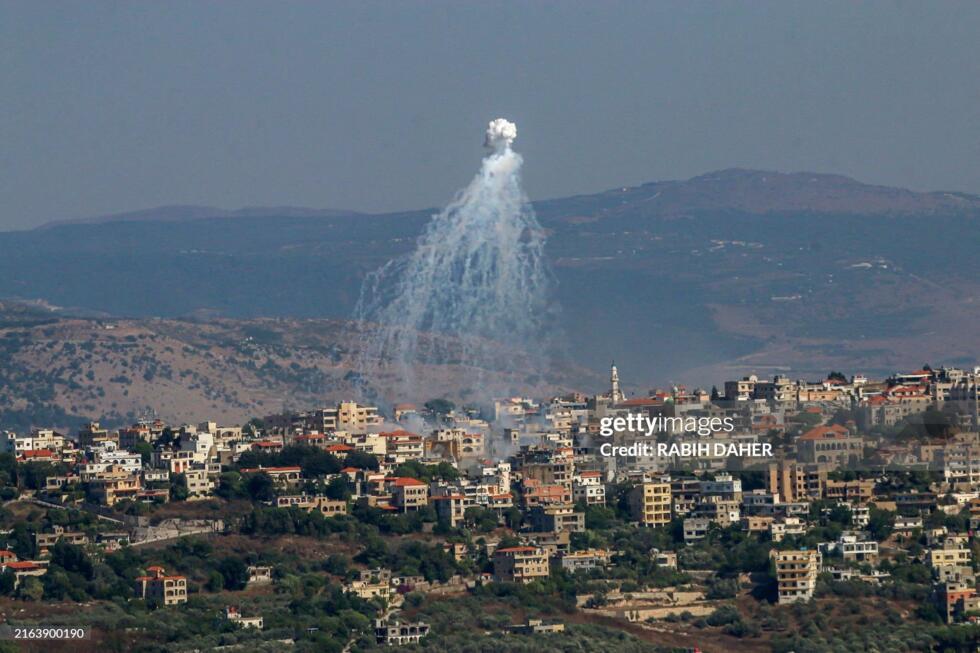 White phosphorus strike above the village of Al-Khiam, on June 30, 2024. Image verified and geolocated by Ahmad Baydoun: 33.329092 35.611997 AFP via Getty Images - RABIH DAHER
The study lists nearly 28,700 fragments scattered throughout the region, which are considered very difficult to extract.
“It is very difficult to extract them from the ground. If someone has livestock and that livestock eats one of these fragments, it dies immediately, and if a human consumes the meat from that livestock, they also die.”
Among the villages in southern Lebanon most affected by white phosphorus strikes are Al-Khiam (30 incidents), Meiss El-Jabal (28 strikes), Kfar Kila (26 strikes), Yaroun (24 strikes) and Rmaysh (17 strikes).
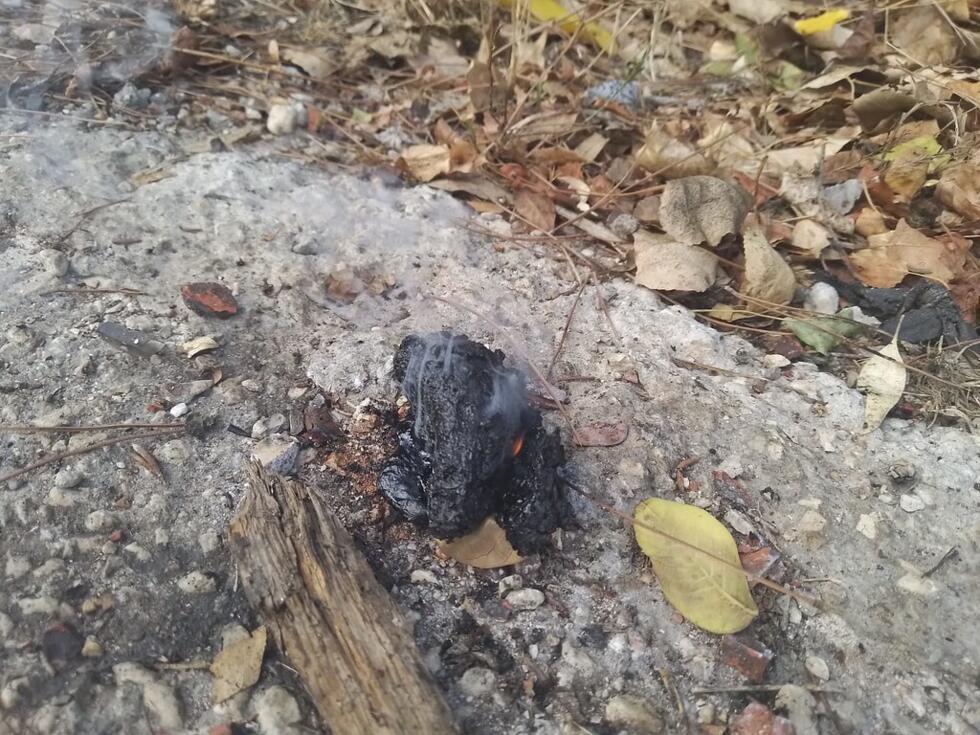 Felt pad soaked in white phosphorus found by residents near the village of Rab El Thalatine on September 15, 2024. Geolocation: 33.247278, 35.529111. © GreenSoutherners.
Fear of consuming local products
Thanks to the geolocation of hundreds of photos and videos, Baydoun's project has precisely documented 248 strikes. Residents can check whether their land or homes have been affected.
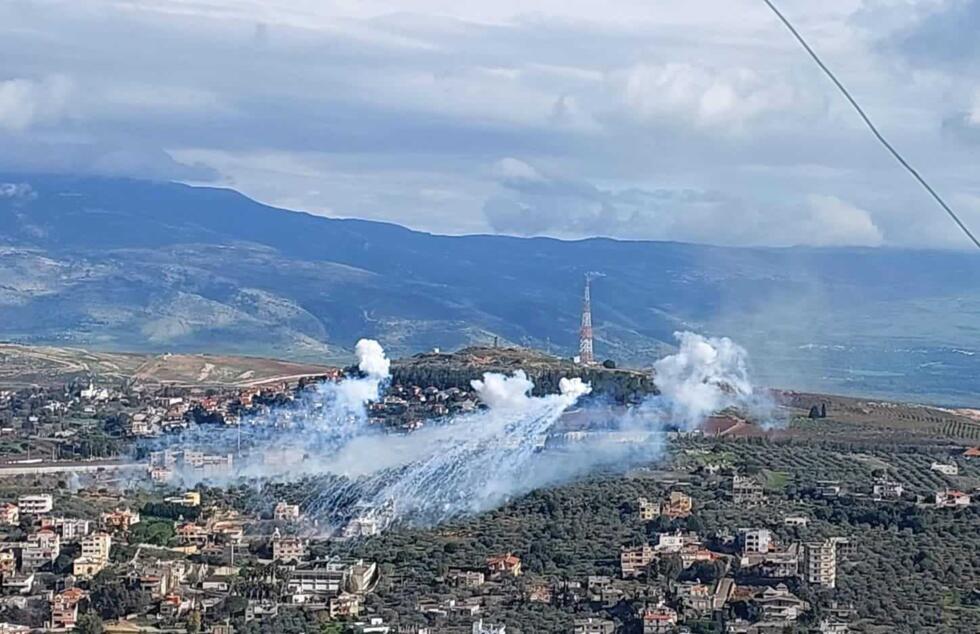 Explosion of four white phosphorus munitions over the village of Kfar Kila, in southern Lebanon, on January 14, 2024. Coordinates: 33.2775017898045, 35.5617281832726 © Image verified and geolocated by Ahmad Baydoun
Many residents express fear of consuming local products, particularly olive oil and vegetables, over concerns of invisible contamination. In February 2025, analyses conducted by the Lebanese Ministries of Agriculture and Environment did not detect traces of phosphorus in olive samples. However, high concentrations were found in some soils, posing a potential risk to future harvests.
According to the United Nations FAO, nearly 2,100 hectares of orchards were burned, 2.3 million livestock were killed, and agricultural losses in the south of the country and the Bekaa Valley (in eastern Lebanon) exceeded 704 million dollars between October 2023 and November 2024.
This article has been translated from the original in French.









 English (US) ·