
 10 hours ago
1
10 hours ago
1
Strait of Hormuz closure deflates global helium supply
The blockade in the Strait of Hormuz is affecting not only oil, but the global helium supply.
A MARTÍNEZ, HOST:
The blockade in the Strait of Hormuz is not just blocking oil shipments. NPR's Lilly Quiroz reports it's also disrupting the flow of about one-third of the world's supply of helium.
(SOUNDBITE OF HELIUM WHOOSHING)
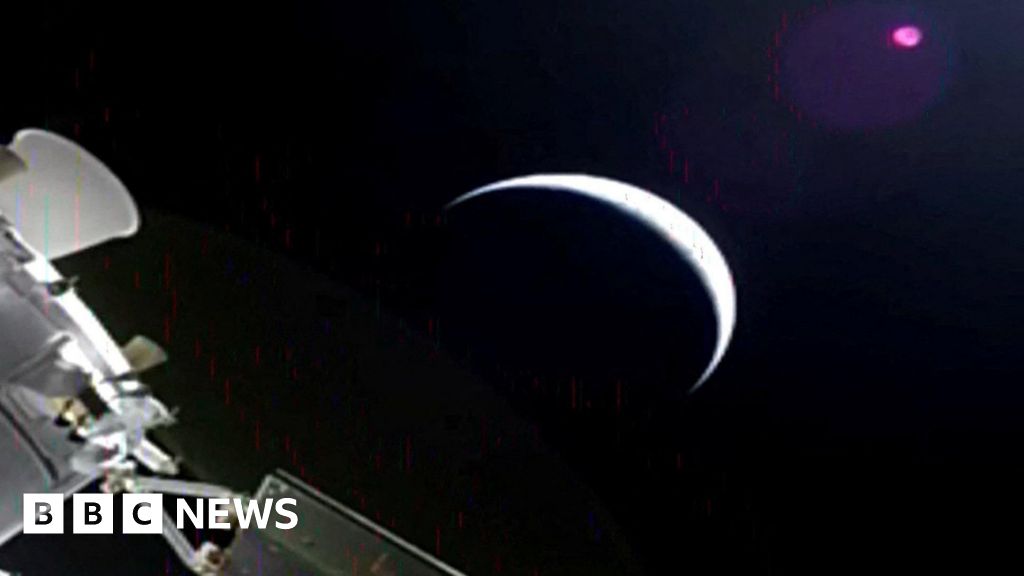
LILLY QUIROZ, BYLINE: Yep. Helium is used for balloons, but it's also used in a lot of other things. The Artemis II moon mission that blasted off Wednesday?
(SOUNDBITE OF ARCHIVED RECORDING)
DERROL NAIL: And liftoff.
(SOUNDBITE OF ROCKET LAUNCHING)
QUIROZ: That rocket required helium to help propel it into space. Semiconductor makers also use it, so it affects computers, smartphones and AI. And you know what else?
(SOUNDBITE OF MRI MACHINE WHIRRING)
QUIROZ: Helium is used in MRI machines.
M MAHESH: They use quite a large amount of helium to cool the coils to make - a magnetic field is created at the center of the tunnel. That's where the patient goes in and out.
QUIROZ: That's Dr. M. Mahesh, a professor of radiology at the Johns Hopkins School of Medicine. He says MRI scanners use approximately 2,000 liters of liquid helium.
MAHESH: But it remains quite constant for a long time. Every year, they tap it off a little bit when it is lost by heating.
QUIROZ: Dr. Mahesh says it's too early to know if what's happening in the Strait of Hormuz is affecting medical science yet. Now, helium is a gas at room temperature, but it's transported in liquid form. It needs to stay cold - like, negative-400-degrees-Fahrenheit cold. This is a problem for the containers holding liquid helium that have been sitting for weeks in the Strait of Hormuz. Around the six-week mark, the product will evaporate. South Korea and Taiwan are feeling the shortage the most. They're the biggest consumers of helium from Qatar, a major producer that is no longer shipping or making it. And while the U.S. is the world's largest exporter of helium...
BRAD BORGGARD: You can't make up for the fact that a third of world supply has been offline for a month.
QUIROZ: That's Brad Borggard, the chief financial officer for North American Helium, a small producer in Canada. He says this helium shortage isn't the first. It's actually the fifth in the past 20 years.
BORGGARD: A lot of the supply is in geopolitically - I'll call them - challenged areas like the Middle East, like Russia. And so that combination has been a big part of the reason why we've had all these shortages over the last couple of decades.
QUIROZ: He says his company is seeing an increase in consumers inquiring about their helium.
BORGGARD: What it really highlights is this need for diversification of supply sources for helium.
QUIROZ: In 2024, the global helium market was estimated to be worth $4.1 billion. That's according to the consulting company Grand View Research. And the growing demand for semiconductors is expected to increase the market value to over $6 billion by 2030. But semiconductor makers, like GlobalFoundries, don't appear to be immediately concerned. In a statement, they said they don't anticipate any near-term impacts but that the situation remains fluid. Scotten W. Jones, the president of Semiconductor Manufacturing Economics, says he's concerned about the shortage. But even if this leads to a price bump, he doesn't believe it will be put onto consumers.
SCOTTEN W JONES: You know, if helium doubled in price, quadrupled in price, it wouldn't impact semiconductors a whole lot. You know, if it went up 10x or 100x, then it would start to be a big problem.
QUIROZ: A kind of inflation that no consumer wants to see.
Lilly Quiroz, NPR News.
(SOUNDBITE OF NENA SONG, "99 LUFTBALLONS")
Copyright © 2026 NPR. All rights reserved. Visit our website terms of use and permissions pages at www.npr.org for further information.
Accuracy and availability of NPR transcripts may vary. Transcript text may be revised to correct errors or match updates to audio. Audio on npr.org may be edited after its original broadcast or publication. The authoritative record of NPR’s programming is the audio record.







 English (US) ·