
 3 weeks ago
18
3 weeks ago
18
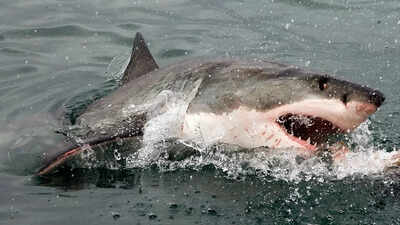
One of the most recognisable and feared predators within our oceans is, of course, the shark, and this is because of its greatly powerful and continually regrowing teeth. But aside from serving as a feeding mechanism, shark teeth play a very important part in how sharks can effectively hunt and keep themselves at the top of their food chain; and currently, recent findings have shown that as a result of higher carbon dioxide levels within our oceans, the integrity of a shark's teeth may start to deteriorate.
With higher acidity in our oceans, there is a great possibility that a shark's teeth may be more susceptible to corrosion and other forms of degradation, which can then impact their ability to hunt effectively and even their survival.
Rising ocean acidity threatens the strength of shark teeth
Ocean acidification results from the absorption of carbon dioxide from the atmosphere by the oceans. The main cause of this has been human activities such as the burning of fossil fuels.
The carbon dioxide reacts with the water in the oceans to form carbonic acid. This causes the pH level in the ocean to decrease. It has been projected that if the current situation continues, the ocean could become nine times more acidic by the year 2300.
These changes may seem subtle; however, they impact marine life in general and species like sharks and shellfish in particular.To test how sharks' teeth might deal with acidifying oceans, a team of German researchers ran experiments.
They gathered upwards of 600 cast-off teeth from blacktip reef sharks, a common species in the Pacific and Indian Oceans, and then submerged these teeth in water with both today's acidity and levels expected in the future.The results were striking: teeth subjected to higher acidity showed a number of cracks, holes, corroded roots, and degradation in their structure. These changes could weaken the teeth and reduce their ability to perform as effective biting tools, thus undermining sharks' apex predator role. As the lead author of this study, Maximilian Baum of Heinrich Heine University Düsseldorf, says, "Shark teeth are highly specialised weapons built for cutting flesh, not resisting ocean acid."
How rising ocean acidity could affect sharks over time
Sharks also depend on their thousands of teeth in their lifetimes to hunt and regulate their prey populations in the ocean, and thus any weakening of these teeth could lead to imbalances in the ocean’s ecosystems. Many species of sharks have already been endangered as a result of overfishing, destruction of their habitats, and pollution in their environments.Despite these dangers, however, there are some natural safeguards for sharks.
The development of their teeth begins in their tissue before it makes a full entry into their mouth; thus, the tooth is protected from the acidity of the water. In addition, it is important to acknowledge that for over 400 million years, sharks have continued to coexist despite many factors in their environment that have changed over time.
According to Nick Whitney of the Anderson Cabot Center for Ocean Life, note that this evolutionary resilience may give sharks some buffer against new threats, though it does not eliminate the risk.
How ocean acidification impacts sharks, shellfish, and marine life
The effects of ocean acidification do not just impact sharks. Shell-making animals such as oysters and clams will find it difficult to form their shells in the acidic environments caused by ocean acidification. The scales of fish can also weaken, which affects the balance of nature in marine life as far as predators and prey are concerned. It has been emphasised by researchers that there should be awareness and conservation efforts in order to counter the impact of ocean acidification.
Since overfishing is the current and most prominent threat to sharks, ocean acidification has been emerging as a secondary and future threat as well.Baum says, “Sharks’ completely developed teeth are an important factor in sharks’ adaptive radiation. The survival of their kind is vital not just for sharks but for the entire ecosystem in the seas around the world.”










 English (US) ·