
 1 month ago
26
1 month ago
26
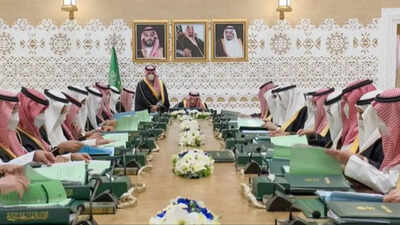
Saudi Cabinet Rejects Israeli Land Policies Amidst Founding Day 2026 Preparations
In a high-profile session chaired by King Salman bin Abdulaziz Al Saud, the Saudi Cabinet gathered in Riyadh recently to review preparations for the Kingdom’s upcoming Founding Day and to address pressing regional developments, including a renewed rejection of controversial Israeli land policies in the occupied West Bank.
The discussions underscored both national pride in Saudi history and the Kingdom’s continued advocacy for Palestinian rights and a peaceful, just resolution to longstanding conflicts.The Cabinet described Founding Day, which falls on February 22, as an expression of deep historical pride in the nearly three-century legacy of the Saudi state, from its origins with Imam Muhammad bin Saud to its current role as a leader in regional and global affairs.
Officials emphasised that the celebration reflects foundational values such as justice, unity and development and acknowledged the Kingdom’s economic, cultural and social progress under Vision 2030.
KSA Founding Day 2026: A pillar of Saudi national identity
Founding Day was instituted in 2022 by royal decree to commemorate the establishment of the first Saudi polity in 1727 CE (1139 AH) by Imam Muhammad bin Saud, marking the beginning of Saudi statehood. The holiday is observed on 22 February each year as a symbol of historical continuity and national pride rooted in the Kingdom’s centuries-long journey of governance, peace and growth.
At this week’s Cabinet session, ministers reaffirmed the importance of celebrating this milestone and acknowledged recent achievements, including record numbers of pilgrims participating in Hajj and Umrah seasons, 19.5 million international visitors in 2025, reflecting the Kingdom’s expanding role as a global hub for spiritual engagement, tourism and cultural diplomacy.
Saudi Cabinet's unanimous rejection of Israeli land laws
The Saudi Cabinet also issued a strong political statement condemning recent Israeli decisions to classify land in the occupied West Bank as “state land” and to open new land registration processes for the first time since 1967, moves that have sparked widespread regional criticism.
The Cabinet reiterated its categorical rejection of these measures, which it said undermine peace efforts and violate the legitimate rights of the Palestinian people.Saudi leaders stressed that these unilateral actions contravene international law, including relevant United Nations resolutions and damage prospects for the establishment of an independent Palestinian state on the 1967 borders with East Jerusalem as its capital.
The position aligns with statements from Gulf and broader Arab partners, who have jointly condemned Israel’s actions and called for respect for Palestinian rights and territorial integrity.The Cabinet’s decision to comment on Israeli land policies reflects broader diplomatic currents across the Middle East. Several Arab and Islamic states including Saudi Arabia, the UAE, Jordan, Qatar, Egypt, Pakistan, Indonesia and Turkey, issued a joint repudiation of similar Israeli moves earlier this week, emphasising that such steps threaten the viability of a two-state solution and violate longstanding international norms.
Saudi Arabia’s stance comes amid wider regional engagement on issues of security, stability and cooperation. Recent government discussions have also touched on concerns ranging from Yemen’s humanitarian crisis and peacebuilding efforts to international diplomatic ties. These reflect Riyadh’s traditional role as both a regional leader and a key interlocutor in broader Arab political discourse.
Saudi Arabia vs Israel domestic implications
In addition to Founding Day, the Cabinet reviewed domestic achievements and social initiatives aimed at strengthening national identity and cohesion.
The session highlighted ongoing endeavors such as the sixth National Campaign for Charitable Work, which embodies Saudi Arabia’s emphasis on social solidarity and community support.Officials also noted the Kingdom’s expanding participation in cultural and economic spheres, reinforcing its ambition under Vision 2030 to diversify the economy, enhance social well-being and project Saudi influence on global stages.
The Kingdom’s strategic vision foregrounds not only economic modernisation but also a deep engagement with heritage and collective memory, anchoring national celebrations like Founding Day in a narrative of long-term resilience and leadership.The Cabinet’s twin focus on Founding Day and regional political developments highlights two central themes in Saudi policymaking. By foregrounding Founding Day and its nearly 300-year legacy, Saudi leaders are reinforcing national identity at a time of rapid transformation. The categorical rejection of controversial Israeli land actions underscores Riyadh’s continued support for Palestinian rights and international law, a message that resonates with broader Arab diplomatic efforts.
Together, these elements reflect how Saudi Arabia is balancing heritage, domestic renewal and regional leadership in a complex geopolitical landscape.





 English (US) ·