
WARNING: SOME OF THE INFORMATION IN THIS ARTICLE MAY BE UPSETTING
In the photo, the Russian fighter, wearing a ski mask and a bulletproof vest and carrying a Kalashnikov, poses proudly in front of three bodies on the ground. The three dead men are all dressed in the military fatigues – complete with a yellow armband – worn by Ukrainian soldiers, though they have been stripped of their weapons. The photo, which was posted on Telegram on November 15, is captioned: “Take this as an example. That’s how an army of victors takes photos, not victims.”
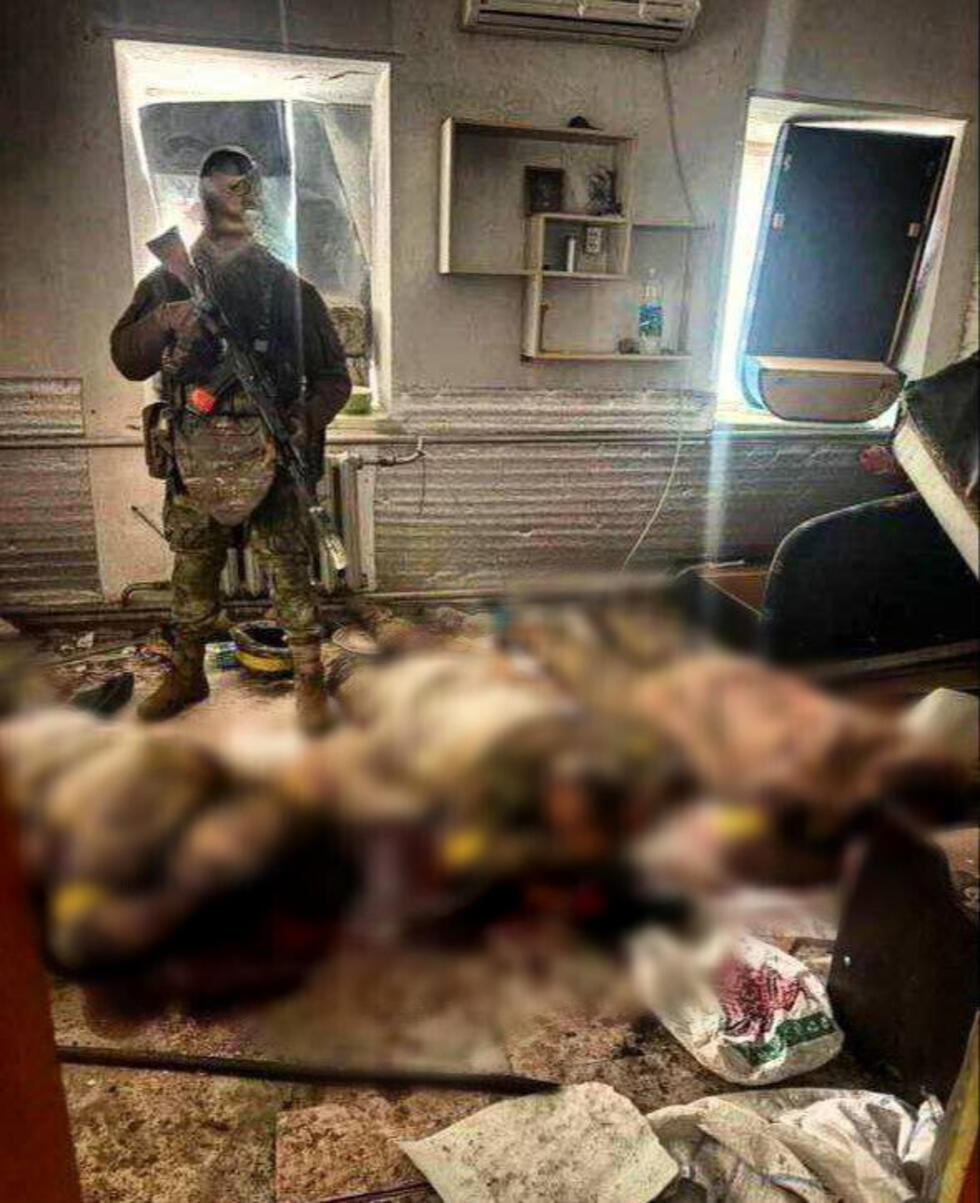 In this photo posted on Telegram on November 15, this Russian fighter poses in front of the bodies of three Ukrainian soldiers. © Telegram / dshrg2
According to pro-Russian blogger ButusovPlus, the photo was taken in the region of Pokrovsk, though it is impossible to independently verify this location.
A few hours later, the photo was followed by a second post, this time one that called on followers to send similar images in order to obtain an unspecified sum of cryptocurrency.
The message goes on to become even more macabre. “We are announcing a competition. The first three people who send a photo of prisoners who have clearly been executed will get a crypto money reward from Rusich.”
The post has since been deleted by the administrator of the Telegram channel.
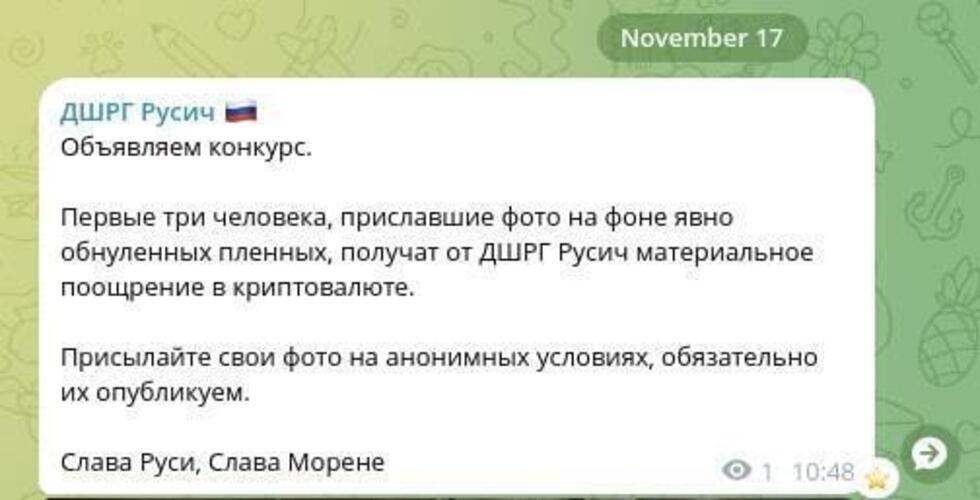 This message was posted on Rusich Telegram channel on November 15. It calls on followers to send images of Ukrainian soldiers who have been executed in exchange for payment. © Telegram / dshrg2
The Telegram channel that has been sharing these photos is unfortunately well-known. Since it was created, it has featured content promoting war crimes, including decapitations, the humiliation of prisoners and executions.
These atrocities are the hallmark of Rusich, a group of Russian mercenaries who regularly display neo-Nazi references. They became well-known in Donbas in 2014, then acted alongside the Russian mercenary operation, the Wagner Group. Currently, members of this group are active on the Ukrainian front. While it is difficult to estimate how many of them there are, analysts agree that Rusich had a few dozen fighters in 2022.
‘Their aim is to terrorise their adversary’
Today, Rusich has become a byword for terror, says Candace Rondeaux, a professor at Arizona State University:
"Rusich is one of the pillars of the irregular warfare that the Kremlin has been engaged in since 2014. Their aim is to terrorise their adversaries by showing off their brutality.
Rusich was close to the Wagner universe and that of the Redut group (Editor’s note: a Russian mercenary group with close links to the intelligence services); they intervened in Syria but also in Libya. It is also a paramilitary group that operates with the blessing of the GRU (Editor’s note: the Russian military intelligence service) and recruits within the Russian ultra-nationalist movement and amongst former Russian parachutists (Editor’s note: also called the VDV).
Since it was created in 2014, Rusich has been seen as a force that carries out complex operations, including reconnaissance missions, sabotage or sniping. Some of their forces are operating behind enemy lines in Ukraine.”
Neo-Nazi ideology
The members of the unit regularly show off ultra-nationalist and neo-Nazi symbols on Telegram. Case in point: the badge worn by members of the unit, which features an ultra-nationalist symbol called the Kolovrat superimposed on top of the Russian imperial flag (black, yellow and white).
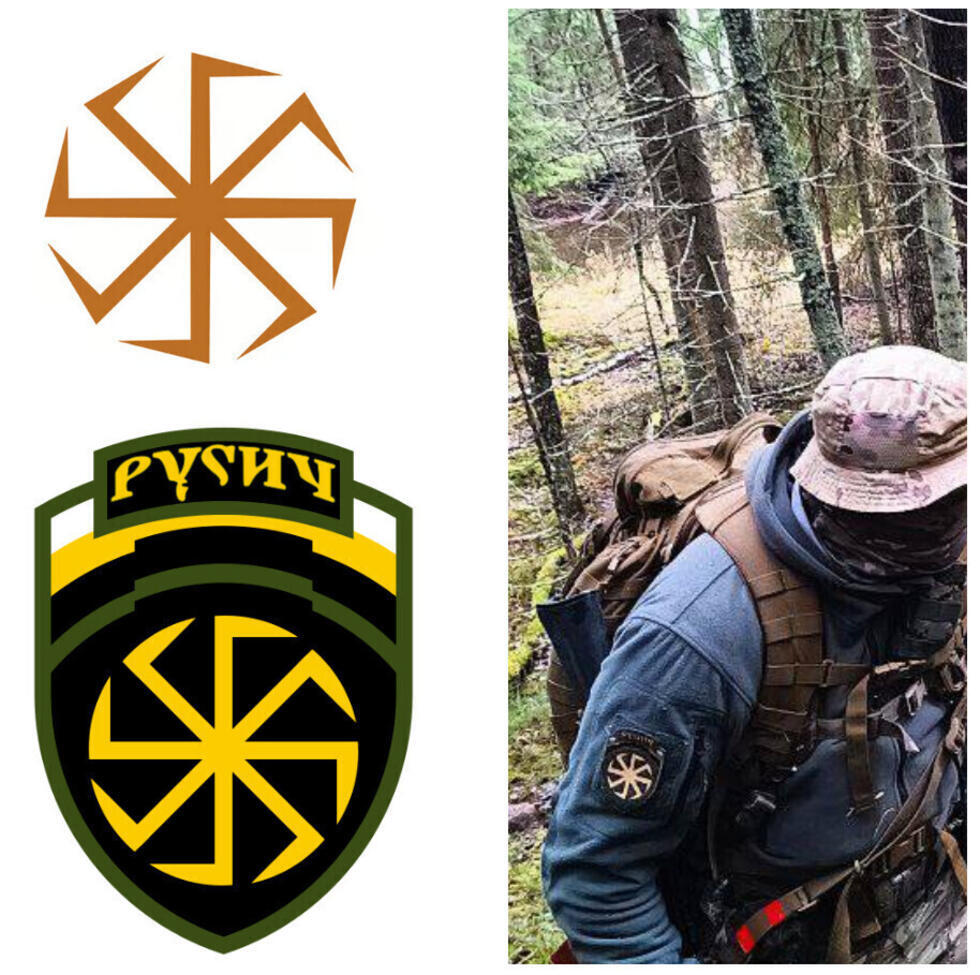 Top left is the Kolovrat symbol, which is featured on the Rusich badge (bottom left). This pagan symbol is frequently worn by members of the unit, as shown by a photo posted on Rusich Telegram channel on November 16 (right). © Indextreme.fr - Telegram / dshrg2
Ricardo Parreira, an expert in far-right symbols, says that the Kolovrat has become a sort of banner for neo-Nazi groups in Eastern Europe:
“This is a symbol that was supposedly used by Slavic civilisations, as far back as the 11th century, but there are very few artefacts that document this. After the end of the Second World War, it was adopted by several neo-Nazi groups in Eastern Europe and in Russia, like the neo-Nazi party Russian National Unity.
When the war in Ukraine began in 2014, the Kolovrat symbol gained more recognition and was then picked up by international far-right groups. Both Russian and Ukrainian nationalist groups wore this symbol during the conflict, even though they were enemies."
The men in Rusich also wear other symbols favoured by neo-Nazis around the world. Rusich fighters often flaunt the Tyr and Odal runes from Norse mythology.
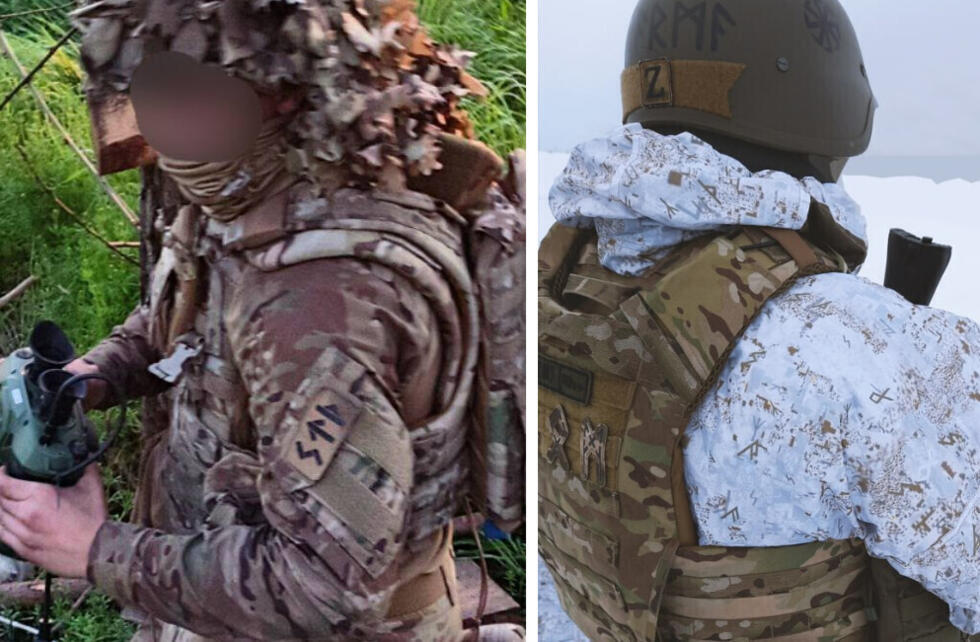 These members of Rusich display a Tyr rune on a patch on the arm (left) and an Odal rune on the back of the tactical vest (right). © Telegram / dshrg2
Parreira says that these symbols are used by many ultra-nationalist groups around the world:
"These days, all of these runes are references to a white supremacist and neo-Nazi ideology. But they were also used by Nazis, back in the day, as well as by some pagan movements, some of which are racist.
These symbols are meant to perpetuate the myth of a white people with Indo-European roots, supposedly the ancestors of both the Slavs and people from the Nordic countries. So they are symbols of an ethnopluralism (Editor’s note: a political ideology that promotes distinct ethnic and cultural groups living side by side but not mixing) that appears as frequently amongst the French extreme right (Institut Iliade, Nouvelle Droite) as in Russian supremacist circles."
Rusich members also seem to enjoy making references to the Third Reich. In a Telegram post from May 30, 2025, fighters from the unit wished one of their fellow fighters a happy birthday by adding an SS symbol to the wing of a drone.
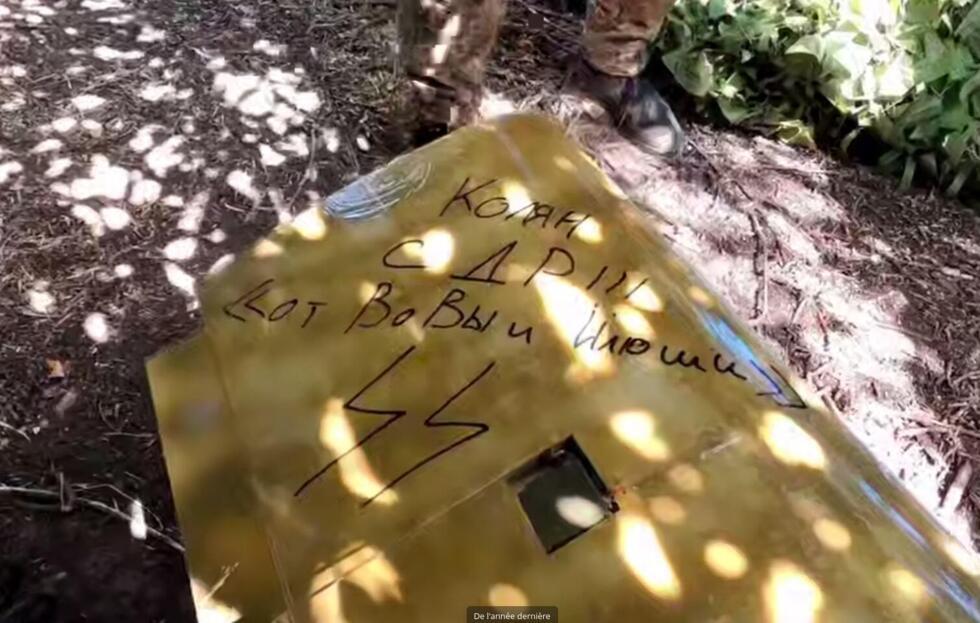 In this screenshot of a video posted on May 30, 2025, on the Rusich Telegram channel, fighters from the unit wrote a birthday message that features the SS symbol. © Telegram / dshrg2
One of the founders and the current leader of Rusich, Alexey Milchakov, stated publicly in an interview that he considers himself a Nazi and not a patriot or a nationalist.
He also called for the extermination of Ukrainians, “so they can no longer raise their children”. Ukrainian investigative group Molfar reported that Milchakov is believed to have cut off the ears of Ukrainian fighters in 2014 before publishing images of these atrocities on VKontakte.
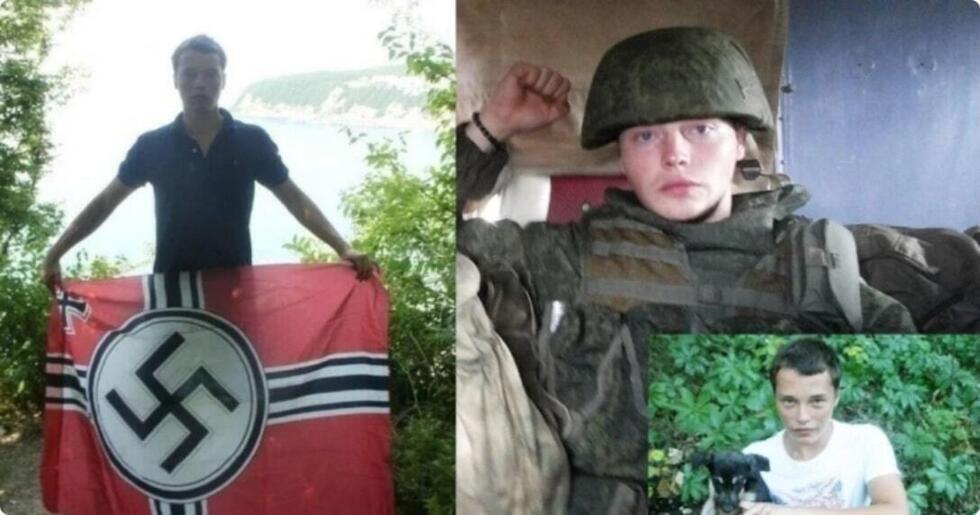 Oleksiy Milchakov was a member of the Russian neo-Nazi movement during his youth. © molfar.institute
According to the pro-Ukrainian ButusovPlus, Milchakov is actually deployed with the 417th Reconnaissance Battalion of the 42nd Guards Motor Rifle Division within the Russian army. According to the Institute for the Study of War, Milchakov’s unit was active to the west of the town of Zaporizhzhia in October 2025.
War crimes posted on social media
Throughout its existence, the Rusich group’s cruelty has set it apart from other Russian mercenary groups. In 2017, one of its members posed proudly holding the severed head of a man near Palmyra, Syria.
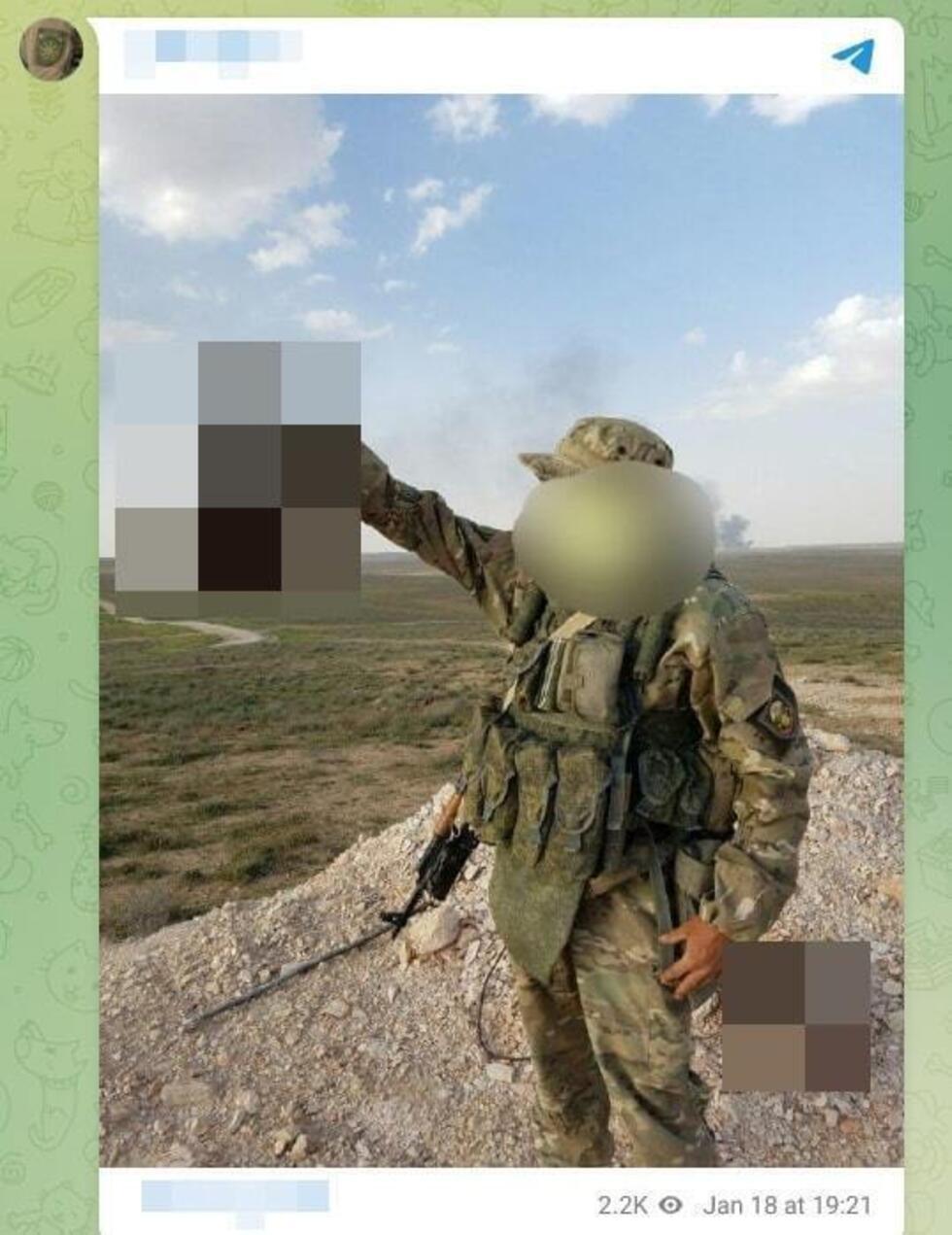 A Telegram account close to the Rusich group published a photo on June 18, 2021, of a man in a Russian uniform brandishing a severed head. Geolocation: 34.8766944, 37.9440556 © Bellingcat
The administrators of the Rusich Telegram channel continue to post scenes of horror. On November 26, 2024, the account posted an image of a severed head with a severed hand stuffed into its mouth. We don’t know where this image was taken.
In July 2024, the group posted an image of the body of a man lying in the middle of the street with a sword stuck into his chest. The body is partially dressed in Ukrainian Army military fatigues. An image that the account said was a “surprise for its followers”.
Similar photos and videos of crimes posted on social media were used in the trial of one of Rusich’s leaders, Yan Petrovsky. Petrovsky was arrested in Finland on July 20, 2023. He was sentenced to life in prison in Finland for four war crimes that he committed in eastern Ukraine in 2014.
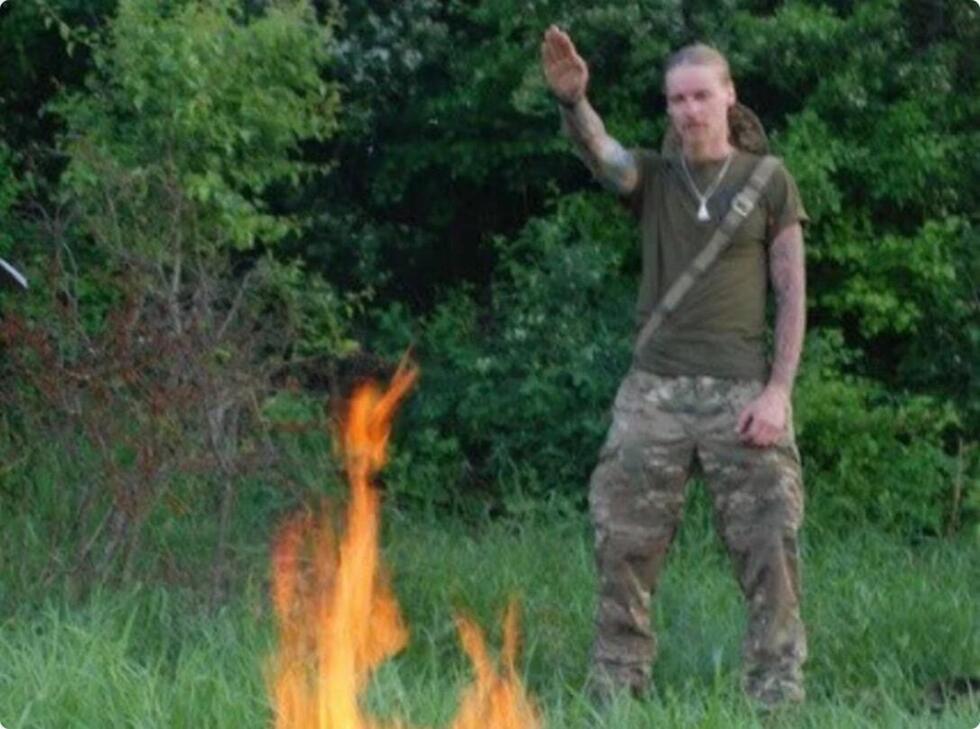 Here is a photo of Yan Petrovsky performing a Nazi salute, published by the Ukrainian investigative group, Molfar. © molfar.institute
‘Rusich perpetuates the idea that you can act in total impunity’
For Rondeaux, these posts are part of a well-planned communication strategy within the group:
“Communication has been part of the very DNA of Rusich since 2014. Back then, the group had its own Instagram account, its own YouTube channel and it was also very active on VKontakte (Editor’s note: a Russian social media network).
Rusich is carrying out psychological warfare on social media by publishing images of its crimes. It perpetuates the idea that the Kremlin and its troops can act in total impunity.
That serves a particular narrative, certainly now when Ukraine and Russia are considering a peace agreement that would not include any kind of system of reparations for Russian war crimes.”
This article has been translated from the original in French.





 English (US) ·