
 3 weeks ago
24
3 weeks ago
24
Снявший голову, по волосам не плачут
(When your head is cut off, you don’t cry about your hair)
- Old Russian Proverb
OPINION – Russia is readying for Victory Day celebrations at a time when Moscow is anything but victorious as its unprovoked war on Ukraine enters its fifth year of destruction and devastation. And for the first time, the impact of that war will be on full display in Moscow.
Russian President Vladimir Putin is hoping to remind Russians of the achievements of the Soviet Union in their defeat of Nazi Germany. He also wants them to believe that it is he, Putin, who has returned Russia as a military power to its proper place in the pantheon of world states. But this year’s Victory Day celebration and its centerpiece parade through Red Square will be something quite different ranging from who will be there, to what will be on display.
In part out of concern over potential Ukrainian drone strikes, there will be very few foreign leaders or dignitaries in attendance. There will even be reduced representation of the leadership of the Russian Federation present on Lenin’s tomb - the traditional place of honor. In the parade itself, there will be no Russian military hardware (armored vehicles and missiles) driven through the square.
The diminishment of the parade is a big deal, having witnessed five of them myself, I have seen what the victory celebration means to many Russians. The reduction in the size of the parade is clearly out of concern for a possible Ukrainian attack, but a more honest celebration this year would be for the current leadership of Russia to acknowledge the responsibility of the Soviet Union for the Second World War starting in the first place - with the division of Eastern Europe between Nazi Germany and the Soviet Union as defined in the Molotov-Ribbentrop Pact of August 1939, which became known as the German-Soviet non-aggression pact. It was signed immediately preceding Hitler’s invasion of Poland on September 1 of that same year.
Today, President Putin is reportedly showing excessive concern about his own security both from the threat of Ukrainian drone attacks (anti-drone patrol boats are reportedly visible on the Moscow River near the Kremlin) and the threat of possible attack by Ukrainian or Russian assassins in Moscow.
Putin is reportedly doing most of his work from a bunker complex in Russia’s Krasnodar region and avoiding his usual residences in the Moscow region and Valdai. He is also instituting extraordinary security protocols for visitors reminiscent of those he instituted during the COVID era. He has dramatically reduced public appearances in the past few months. And perhaps also representative of Putin’s growing paranoia, in March, Russian security forces arrested Russian Tsalikov, former Minister of Defense Shoigu’s long time Deputy on corruption charges. But sources in Russia suggest the real reason for the arrest was concern that he was involved in plotting a coup. This, as there is increasing evidence of criticism of Putin’s regime on social media and in military blogger communities, perhaps contributing to the regime’s efforts to limit communications on Telegram and the shutting down of the internet in Moscow, St. Petersburg, and other cities.
Perhaps playing most significant in Putin’s concerns over his own security and regime stability is the efficacy with which Ukraine is attacking energy infrastructure in the Russian Federation and the effect those attacks are having on the Russian economy.
In 2025 alone, Ukraine carried out more than 140 strikes on refineries, ports and logistics hubs in Russia with some targets located deep inside Russian territory. This year, Ukraine has conducted over 40 deep strikes, and the pace of those strikes is increasing, as evidenced by the success of Ukrainian attacks on Russian bases, naval targets in the Black Sea and attacks against ships that are part of Russia’s “Shadow Fleet” operating in the Mediterranean and elsewhere. Those attacks are meaningful but not as economically impactful as the ones targeting Russia’s energy infrastructure.
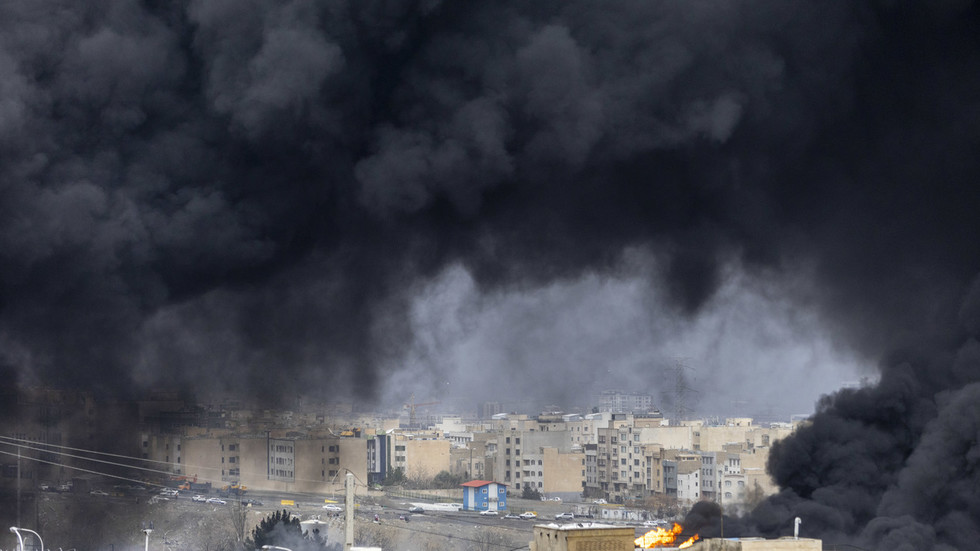
Throughout the second half of April, Ukraine made the Black Sea resort of Tuapse its primary target. Tuapse is a sprawling oil city - home to a Rosneft oil refinery, one of Russia’s oldest, which operates alongside an export terminal that ships petroleum products overseas. From April 16 to May 1, Ukraine hit the town four times, damaging both the terminal and the refinery. The drone strikes led to a genuine ecological catastrophe.
Video images of the fires at the refinery were shocking. Plumes of smoke were reportedly visible from orbit and toxic black rain fell across the city with burning petroleum pouring down at least one of the city’s streets. Air quality tests reportedly showed high levels of carcinogenic benzene and xylene in the air as well as toxic soot. And despite Putin’s best efforts to control state news media and shut down the internet, he still cannot conceal the effect of attacks such as those on Tuapse as well as the ports of Ust-Luga and Primorsk - from the Russian people.
Ukrainian attacks are economically consequential. According to various sources, there have been over $13 billion in losses to Russia’s oil sector and up to 40% of Russia’s refining capacity has been disrupted or is now operating under reduced conditions. The attacks on Russian ports have resulted in periods of exports dropping by 50% during peak periods. The Ukrainian attacks have reduced Russia’s revenue gain from the ill-timed, if temporary, U.S. lifting of sanctions on Russian energy. For a country that relies significantly on revenues from hydrocarbon sales, this is a serious blow.
There are domestic consequences as well, Russia has been forced to reintroduce a ban on gasoline exports (April–July 2026), while domestic fuel prices have already increased by 6–8%. Most of Russia’s refining capacity was modernized by western energy companies in the post-Soviet period. Those technologies are no longer available to Russia due to sanctions. Putin’s energy challenges are only going to get worse and financing the invasion of Ukraine is only going to get more difficult.
Compounding the problem set for the Russian leader in Krasnodar, former U.S. envoy to Ukraine Keith Kellogg has recently remarked that Russia is losing the war due to “astronomical” casualties, estimating 1.2-1.4 million Russian troops killed or wounded. These are World War Two level losses and compare unfavorably to the 18,000 lost by the Soviet Union in Afghanistan. Moreover, Russia is unable to replace lost troops at the pace they are being killed or wounded without a general mobilization. The troops which are being sent to Ukraine as replacements are even more poorly trained, prepared, and equipped than their predecessors - which may in part explain why Russian casualties are mounting and Russia is still unable to acquire meaningful tracts of Ukrainian territory.
One other risk to consider if Putin is feeling isolated and paranoid is the security services and leadership of the Baltic States that are increasingly expressing concerns of a Russian provocation against their countries under the pretext - especially in the case of Estonia - protecting against repression of the ethnic Russian population.
One will recall that this was part of the rationale for Russia’s occupation of Crimea and support for the insurrections in Donetsk and Luhansk as well as the invasion of Ukraine in February 2022. Similar concerns have appeared in threat assessments by the security services of new NATO members Sweden and Finland. The fear in those countries is that Putin will attack, forcing NATO countries to act in accordance with Article V of the NATO Charter. And Putin is betting that the Trump Administration will refuse to comply, thus ending NATO as it is currently structured. Congress may not let Trump renege on America’s commitment in such a scenario.
Judging from some of the comments coming from Ukrainian and other officials at the recently-concluded Kyiv Security Forum, there is a perceptible sense of optimism in Kyiv and elsewhere that Ukraine may win this war after all - despite the reduction or cessation of support under the Trump Administration. President Trump is famous for his disdain of being associated with “losers.” It would make sense then for him to reconsider his association with Putin and his stance on supporting Ukraine.
Next year at this time, there may be a Victory Day parade on the Maidan Square in Kyiv and neither Trump nor Vice President JD Vance will be invited. Talk about ending up on the wrong side of history.
The Cipher Brief is committed to publishing a range of perspectives on national security issues submitted by deeply experienced national security professionals. Opinions expressed are those of the author and do not represent the views or opinions of The Cipher Brief.
Have a perspective to share based on your experience in the national security field? Send it to Editor@thecipherbrief.com for publication consideration.
Read more expert-driven national security insights, perspective and analysis in The Cipher Brief








 English (US) ·