
 1 month ago
25
1 month ago
25
“Russia has no choice but to attempt to continue its foreign recruitment model given Russian military casualties and political realities of a significant mobilization in President Putin’s political bases in Moscow and Saint Petersburg,” Alex Plitsas, nonresident senior fellow with the Middle East Programs at the Atlantic Council, tells The Cipher Brief.
For Washington, the pipeline carries implications beyond the immediate battlefield. Combat-hardened fighters from regions where the United States competes with Russia for influence, particularly across Africa and Latin America, will eventually return home potentially equipped with drone warfare expertise, small arms proficiency, and tactical knowledge gained in Europe’s most technologically advanced land war since 1945.
Former AFRICOM commander General Stephen Townsend warned in 2019 that Russia’s meddling in Africa comprises the “second biggest threat to US security interests” after terrorism.
The Architecture of Exploitation
Moscow has effectively turned its migration system into a trap, routinely building military recruitment offices right beside immigration facilities where beatings and freezing cells are used to coerce signatures. Detention or military service are often the only options for migrants in legal limbo.
Incentives are also used to exploit poverty. Nepali recruits receive 75,000 to 200,000 rubles monthly, or $750 to $2,000, dwarfing local earnings but representing only a fraction of Russian compensation. Cuban networks promise citizenship and generous payments.
The Human Trafficking Pipeline
Several governments now describe these recruitment tactics as outright human trafficking. In Kenya, an investigation revealed that citizens were promised stable jobs only to find themselves on drone assembly lines in active war zones. India has documented a similar pattern, with at least 35 of its nationals sent to the front lines against their will.
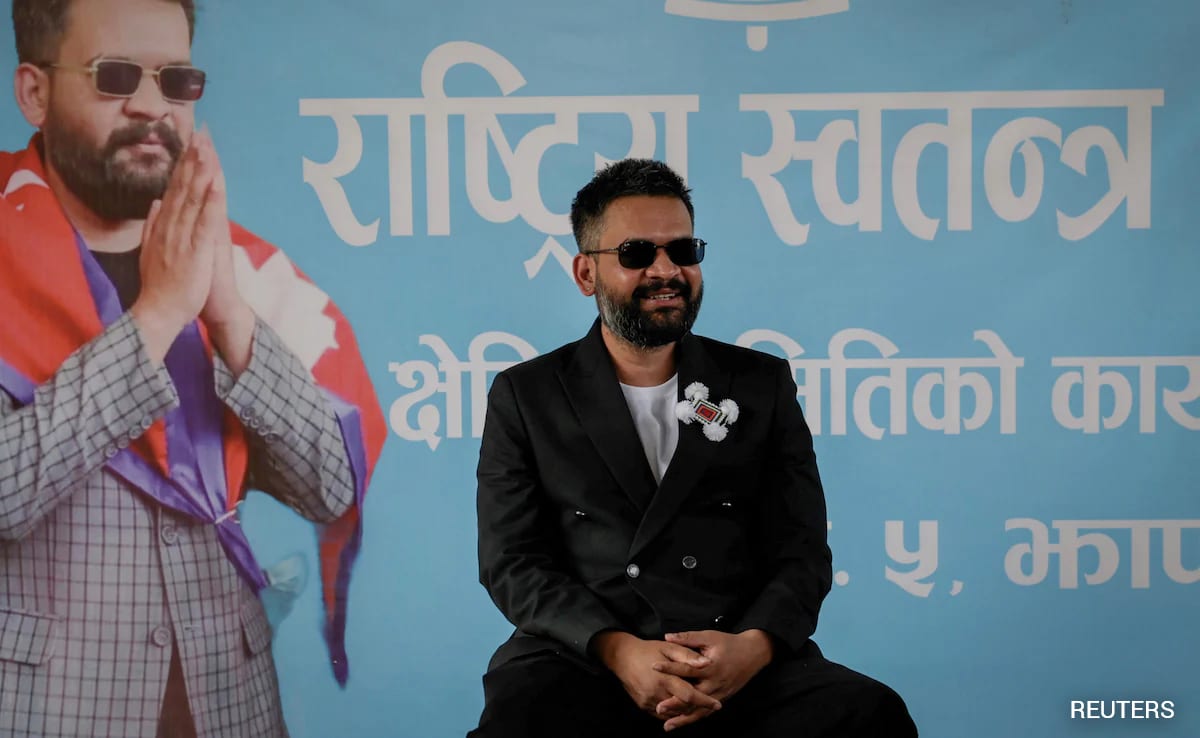
Nepal perhaps serves as the most stark example of this human cost. Officially, 14 Nepalis are confirmed dead, but estimates suggest as many as 2,000 may have enlisted in Russian forces. The subsequent outrage in Kathmandu led to Russia and Ukraine’s work permits being denied in early 2024. This proved effective, at least temporarily, as only one known Nepali citizen had signed a contract in the first ten months of 2025.
The situation, however, is harrowing on the ground. Foreign recruits are deployed to frontline assaults after just a week of training, according to Ukrainian prisoners of war. Despite promises of non-combat roles, some of these men signed Russian-language contracts they couldn’t even read.
“The foreign recruits have proven to be less effective as a result of the minimal amount of training and poor equipment that they receive upon joining,” says Plitsas. “Russia is throwing bodies at the problem, so to speak, in terms of trying to fortify the front lines and replacing fallen Russian troops.”
Subscriber+Members get exclusive access to expert-driven briefings on the top national security issues we face today. Gain access to save your virtual seat now.
The political calculus is deliberate. Plitsas highlights that there are far fewer political ramifications for losing foreign fighters than for Russian citizens.
“Many see these foreigners as having volunteered, so if they die in combat, it doesn’t have a significant reflection within Russian society,” he continues.
Central Asian migrants face particular vulnerability.
Moscow has increasingly turned its attention to the four million Central Asian migrants living within its borders to solve its mounting personnel shortages. Since the legal shifts in September 2022, the Kremlin has effectively tied residency and citizenship to military service.
Uzbeks and Tajiks working in Russia face a forced choice: enlist or lose their legal status. It is common for new arrivals’ residency applications to be stalled unless they sign a military contract, making them a prime target for Russian recruiters.
The Manpower Calculus
Moscow’s reliance on foreign recruits reflects an acute strain on its ability to sustain combat operations. Western estimates suggest Russia has suffered approximately 1.2 million casualties — killed and wounded — since February 2022. The UK Ministry of Defense reported Russia lost approximately 415,000 personnel in 2025 alone, the second-deadliest year of the conflict. December 2025 averaged 1,130 casualties daily, marking four consecutive months of rising losses.
The Kremlin maintains a monthly recruitment rate of roughly 30,000 to 40,000 contract soldiers, approximately matching battlefield attrition rates. This pace requires exploiting every available demographic, with provincial governments pressured to meet quotas.
Yet debate exists over the scale’s significance.
“The Russian army does not depend critically on foreign mercenaries,” Oleg Ignatov, Senior Analyst for Russia at the Crisis Group, tells The Cipher Brief. “The exact number of foreign mercenaries in the Russian army is unknown, but it is small compared to the total number of troops.”
Independent estimates hover around 1,500, while Russian officials claim 30,000 total — a fraction of Russia’s roughly 700,000 troops in Ukraine.
“Overall, there is no evidence that foreign mercenaries stand out among Russian soldiers and suffer significant losses compared to other soldiers,” Ignatov insists, noting North Korean forces initially suffered heavy losses because “they were not adapted to the realities of war in Ukraine.”
“All other foreigners serve in Russian units and suffer the same losses as all other servicemen in these units,” he says.
The pattern reflects a broader strategic reality.
According to Ignatov, “both Russia and Ukraine are experiencing a shortage of manpower for this type of war, which explains their efforts to recruit foreigners.”
“In addition, Russia needs to maintain its manpower advantage on the front lines, which it gained by the end of 2023-early 2024,” he points out.
Plitsas frames the imperative more starkly.
“Russia has no choice but to attempt to continue its foreign recruitment model given Russian military casualties and political realities of a significant mobilization in President Putin’s political bases in Moscow and Saint Petersburg,” he notes.
That political risk became clear more than three years ago. Moscow remains wary of the domestic fallout that followed the September 2022 mobilization. The Kremlin thus relies on foreign recruitment to maintain frontline numbers.
The Security Aftermath
The long-term security implications of Russia’s foreign recruitment extend far beyond the battlefield. Combat veterans returning to impoverished home countries bring specialized military skills from Europe’s largest land war since 1945. Historical precedent from Afghanistan, Syria, and Iraq demonstrates that even small percentages can destabilize regions.
“Foreign fighters returning home often suffer from the same types of combat-related stress disorders as troops but given that they were working for a foreign military, they do not get benefits when they return to their home country,” Plitsas cautions. “They also have sufficient training to be able to conduct attacks at home, even if they are simplistic, involving only small arms.”
The psychological and practical risks compound.
“There is always a risk in having a population of combat-experienced fighters who lack access to benefits and treatment for combat-related issues and their susceptibility to domestic causes that could be problematic for their home governments,” Plitsas underscores, pointing to Syria. “Many foreign fighters returned from Iraq with combat experience and helped to form the base of the armed factions that overthrew the Assad regime.”
Beyond physical combat skills, the technological knowledge poses distinct dangers.
“One concern is that foreign fighters will accelerate the proliferation of drone technologies and tactics used in Ukraine to nefarious groups around the world, some of which have already started adopting them,” John Hardie, deputy director of the Russia Program at the Foundation for Defense of Democracies, tells The Cipher Brief.
Ukraine has become a laboratory for drone warfare. Veterans returning with hands-on experience could rapidly advance militant and criminal capabilities from Latin America to Southeast Asia.
Some nations are trying, or tried, to push back.
Kazakhstan opened a record 709 criminal cases in 2025 against citizens who joined Russian formations, with sentences ranging from 4.5 to 5 years. Kyrgyzstan’s attempt to set a legal precedent, however, fell flat when the Kremlin stepped in with pressure to drop charges.
In spite of the death toll of more than 120 Uzbek, Tajik, and Kyrgyz fighters by late 2024, accountability remains nonexistent. It is common for recruits to hide behind new Russian passports, which legally place them beyond the reach of their home governments. The real worry now isn’t just the dead, but the survivors; men who stay in Russia with specialized combat training and no clear path except drifting into the criminal margins.
For Cuba, which joined the Russian-led BRICS bloc, estimates suggest up to 20,000 Cubans recruited since 2022, with 200 to 300 killed. El País reported that 40 percent had previously served in the Cuban Armed Forces, suggesting state awareness. Due to the high percentage of active military personnel and ex-military personnel fighting under the Russian banner, Cuba’s government may be tacitly permitting the recruitment pipeline.
Unlike Nepal or India’s aggressive crackdowns, Havana’s muted response raises questions about quid pro quo arrangements with Moscow, particularly as Cuba faces a severe economic crisis and depends heavily on Russian support.
“Travel bans and efforts by governments to stop their citizens from volunteering will have some impact, though the overall numbers are still small in general terms,” Plitsas observes. “Augmenting Russian troops with foreign troops has also proven to be efficient, though poor training and equipment limit overall effectiveness.”
The offensive exploits global inequality while exporting costs to nations with limited pushback capacity. While Moscow claims foreign recruits demonstrate international support for the war, the reality is much bleaker: it’s a trafficking operation that targets the poor and desperate. The same thing happened in Syria and Iraq, demonstrating to the international community that a handful of combat-hardened veterans can destabilize an entire country.
When these men return to Africa or South Asia with expertise in drone strikes and urban warfare, they often don’t just go back to civilian life; they become a ready-made kit for insurgencies or criminal groups.
“Foreign governments have taken some steps to try to stem the flow of foreign fighters supporting Russia, but the populations involved have been relatively small, and it hasn’t been seen as a significant enough problem for home governments to take more significant action to date,” Plitsas explains.
He identifies structural challenges.
“Many of the fighters come from countries that are friendly to Russia, and so banning travel, or things of that nature, becomes more difficult given the status of the relationship between the countries,” Plitsas continues. “Also, when you’re traveling abroad and need a visa, the country you are traveling to has to grant it to you. Russia is incentivized to allow the flow to continue, as the burden is on Russia to grant the visa, not the home country. It makes policing the effort very difficult.”
As battlefield casualties mount and domestic constraints prevent mobilization, foreign recruitment provides a crucial release valve for Moscow. As a result, thousands of people have been channeled into war under false pretenses, leaving survivors scarred and equipped with military skills posing long-term security risks.
Yet Ignatov pushes back against the alarmist framing.
“War is a serious trauma, and all soldiers need psychological help. But I don’t think there are any risks of radicalization beyond this problem,” he contends. “There is no radical ideology in Russia that poses a threat of global spread.”
Whether ideological or not, the pattern is clear: Russia’s manpower crisis shows no sign of abating.
The Cipher Brief is committed to publishing a range of perspectives on national security issues submitted by deeply experienced national security professionals. Opinions expressed are those of the author and do not represent the views or opinions of The Cipher Brief.
Have a perspective to share based on your experience in the national security field? Send it to Editor@thecipherbrief.com for publication consideration.
Read more expert-driven national security insights, perspective and analysis in The Cipher Brief because National Security is Everyone’s BusinessKeep reading... Show less





 English (US) ·