
 3 weeks ago
26
3 weeks ago
26
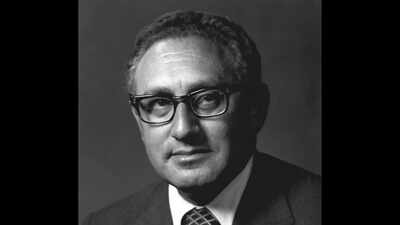
Henry Kissinger (Image: Wikipedia)
Henry Kissinger spent more than half a century close to the center of world affairs. He helped shape wars and peace deals, opened doors between bitter rivals, and advised one American president after another.
So it is interesting that one of his most repeated lines is not really about power. It is a quiet warning about the danger of having too much of it.The quote sounds almost like a blessing from an old religious text. Read it slowly, though, and it carries a sharp piece of advice for anyone who holds power over others. A good leader, Kissinger is saying, needs two things at once. The courage to face hard truths, and the humility to remember they are not God.
Who is Henry Kissinger
To feel the weight of the line, it helps to know the life behind it.Kissinger was born in 1923 in Germany, into a Jewish family. As a teenager in 1938, he fled with his family to escape the Nazis and settled in New York. He had seen, very young, what happens when leaders believe they have the right to decide who lives and who dies. That memory never fully left him.In America, he served in the army, became a citizen, and went on to study at Harvard.
Step by step, he rose through the world of ideas and politics. By 1969, he was at the heart of the United States government, first as national security adviser and then as secretary of state under Presidents Nixon and Ford.For about eight years, he was one of the most powerful diplomats on the planet. He helped ease tensions with the Soviet Union. He played a key part in opening relations between the United States and China.
He worked to end the war in Vietnam, which earned him a Nobel Peace Prize in 1973, though that prize remains hotly disputed to this day.
What is the meaning of the quote by Henry Kissinger
Now look again at the words. They split neatly into two halves, and both matter.The first half praises leaders who can "look destiny in the eye without flinching". Destiny here means the big, frightening forces of history. War, crisis, the long sweep of events that no single person fully controls.
Kissinger admired leaders who could face all of that without panic and without running away. He wanted steady hands, not nervous ones.But the second half is the real heart of it. Such leaders must also resist "attempting to play God". In other words, they should not start believing they can bend the whole world to their will. They should not treat human lives like pieces on a board to be moved around at will. A leader can be brave and clear-eyed, yet still remember that they are only human, with limited wisdom and limited rights over others.Put simply, the quote is about balance. Strength without arrogance. Courage without a god complex. Kissinger believed that the rare leaders who manage both are a true blessing to their people.
A surprising line, given his own record
Here is where the quote becomes genuinely fascinating, because Kissinger was a deeply divided figure, and many people felt his own actions did not match these careful words.His admirers saw him as a brilliant realist. They argue he understood that the world is messy, that perfect choices rarely exist, and that a statesman must sometimes pick the least bad option to keep a fragile peace.
To them, this quote is the honest reflection of a man who knew exactly how heavy power can be.His critics tell a very different story. They point to decisions made during his years in office, including the secret bombing of Cambodia and American involvement in other countries' affairs, and argue that he treated distant nations and ordinary people as expendable. To these critics, a man who wrote about not "playing God" had, in their view, done a fair bit of exactly that.This tension is part of why the quote is worth thinking about. It can be read as wisdom hard won through experience. It can also be read as the kind of warning that is much easier to write down than to live by. Both readings are fair, and the debate around Kissinger, who died in 2023 at the age of 100, has never really settled. That very argument is what keeps the line alive.
Why the warning still holds up
Step away from Kissinger the man, and the idea inside the quote feels just as relevant now as it did when he wrote it.We live in a time of powerful leaders and powerful tools. Heads of state can launch wars or sign deals that affect billions. Tech founders build products that quietly reshape how the whole world talks, shops and thinks. The temptation to "play God", to assume you know best for everyone, has not gone away. If anything, it has grown.Kissinger's two-part test still works as a simple way to judge leadership. Does the leader face hard problems honestly, instead of hiding from them or pretending they do not exist? That is the courage half.
And does the leader stay humble enough to listen, to admit mistakes, and to respect the freedom of others? That is the humility half. A leader who has only the first can become reckless. A leader who has only the second can become weak.
The blessing, as Kissinger saw it, is having both in the same person.
How to apply this quote in life
You do not have to run a country for this idea to matter in your own life.Most of us hold a little power over someone. A boss has power over a team.
A parent has power over a child. A teacher shapes a classroom. Even in small groups of friends, some people quietly steer the others. In all of these settings, the same trap waits. It is the trap of becoming so sure of yourself that you stop listening, and start deciding other people's lives for them.The quote offers a gentle check. Face your real problems with courage, whether at work or at home. But never let confidence harden into the belief that you always know best for everyone around you.
Strong people who stay humble tend to be trusted. Strong people who think they are gods tend to be feared, and eventually resented.That is a useful mirror to hold up, no matter how big or small your circle of influence is.
A line that outlived its author
Kissinger lived an extraordinary life, full of both praise and blame. Few public figures of the last hundred years have been so admired by some and so condemned by others. When he died, the obituaries themselves could not agree on what kind of man he had been.Yet this single sentence has floated free of all that argument. It no longer belongs only to him. It has become a small, sharp idea about what good leadership should look like, repeated by people who may know nothing about his career.Maybe that is the fairest fate for the words of such a complicated man. The quote asks leaders to be brave and humble at the same time. Whether or not its author always managed that himself, the standard he set in writing remains a high and worthy one. And it quietly invites each of us to ask how well the people in charge of our own lives, and we ourselves, actually live up to it.





 English (US) ·