
 3 weeks ago
17
3 weeks ago
17
Multiple apartments suffered structural damage, shattered windows, and interior fire damage, leaving families homeless in the freezing middle of winter.
06:54, Wed, Jan 21, 2026 Updated: 07:00, Wed, Jan 21, 2026

Eleven people, including a child, were injured in the explosion (Image: BNO News)
A significant malfunction of a Russian air defence missile resulted in a direct hit on a dense residential area near Krasnodar, Southern Russia, during the early hours of January 20, 2026. This incident occurred during a large-scale Ukrainian drone raid targeting the region's energy sector, leading to substantial damage to apartment blocks, the total destruction of numerous civilian vehicles, and multiple injuries.
The strike took place in Novaya Adygeya, situated in the Takhtamukay district of the Republic of Adygea—a region separated from the major city of Krasnodar only by the Kuban River. As Russian forces attempted to intercept incoming Ukrainian Unmanned Aerial Vehicles (UAVs), local residents captured harrowing footage of the engagement. The video evidence suggests a catastrophic failure of a local defence battery, showing a missile veering wildly from its intended path before plunging into the heart of a residential complex.

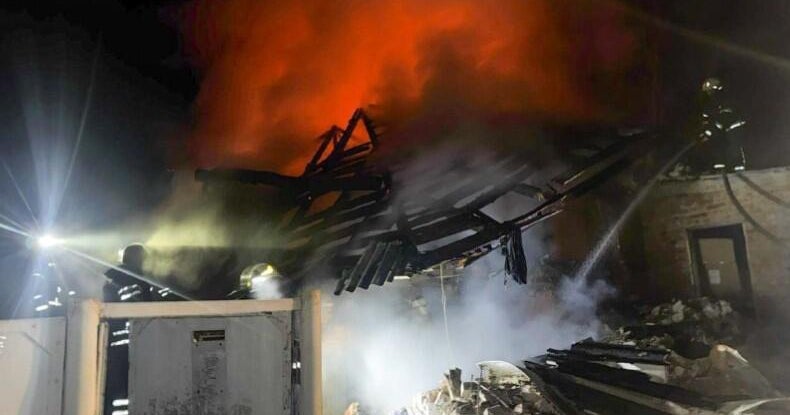
The damage caused to the block (Image: Kyiv Independent)
Open-source intelligence (OSINT) analysts, examining eyewitness videos shared on social media and Telegram, identified the projectile as a Russian interceptor, likely from an S-300 or S-400 battery.
The footage depicts the missile streaking at high velocity towards a parking area situated beside a multi-storey residential high-rise before detonating upon impact with a massive shockwave.
The resulting explosion ignited a fierce blaze that quickly spread through the car park and into the lower levels of the building, illuminating the night sky with a massive fireball.
Murat Kumpilov, the regional head of Adygea, initially characterised the event as a "UAV impact" on a residential building.
He confirmed that eight individuals were injured, including one child, with seven of those victims requiring hospitalisation due to burns and shrapnel wounds. The number was subsequently revised up to 11.
The aftermath revealed a scene of absolute devastation, with twisted metal and shattered glass covering the area. Between 15 and 25 cars were completely incinerated or heavily damaged.
Footage shows the aftermath of the Russian air defense missile launch failure in Afipsky, Krasnodar region, with damaged homes, debris scattered across streets, and residents surveying the destruction in the residential neighborhood. https://t.co/70t5xJzqsI pic.twitter.com/Itp3831kSf
— Polymarket Intel (@PolymarketIntel) January 20, 2026Multiple apartments suffered structural damage, shattered windows, and interior fire damage, leaving families homeless in the freezing middle of winter.
Local authorities were forced to evacuate the entire complex, providing temporary housing and emergency aid to the displaced residents whose lives have been upended by the failure.
While pro-Kremlin media outlets were quick to blame Ukrainian "kamikaze" drones, independent analysis suggests a different reality.
Outlets such as ASTRA and Voennyi Osvedomitel have highlighted discrepancies in the official narrative, citing debris patterns and the massive scale of the detonation.
Analysts concluded the explosion was consistent with the high-explosive fragmentation warhead of a surface-to-air missile rather than a lightweight drone.
This adds to a growing list of "friendly fire" incidents where Russian air defence systems, deployed in high-density urban environments, have malfunctioned and endangered their own population.
This adds to a growing list of "friendly fire" incidents where Russian air defence systems, deployed in high-density urban environments, have malfunctioned and endangered their own population.
On the same night, a separate Ukrainian strike ignited a major fire at the Afipsky oil refinery in the neighbouring Krasnodar Krai, reportedly hitting a primary processing unit.
The chaos led to the temporary closure of airports in Krasnodar, Sochi, and Gelendzhik, paralysing regional travel and logistics for several hours.
Simultaneously, Russia launched its own massive strikes against Ukraine, reportedly leaving over a million people without power in Kyiv.
The latest news from around the world Invalid email
We use your sign-up to provide content in ways you've consented to and to improve our understanding of you. This may include adverts from us and 3rd parties based on our understanding. You can unsubscribe at any time. Read our Privacy Policy
This cycle of escalation highlights the mounting pressure on the Kremlin’s domestic security apparatus.
As Ukraine continues to employ asymmetric tactics to strike deep into Russian territory, the inherent risks of deploying heavy weaponry within civilian centres are becoming increasingly difficult for the Russian authorities to ignore or conceal.









 English (US) ·