
 1 month ago
19
1 month ago
19
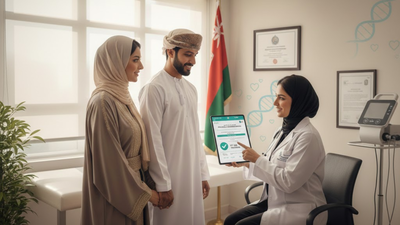
Premarital medical exams are now mandatory in Oman to ensure healthier families and informed marriages/Representative Image
From the start of 2026, marriage in Oman entered a new phase. A Royal Decree that came into force on January 1 now makes premarital medical examinations compulsory for all Omanis, placing public health and informed family planning at the center of the marriage process.The Ministry of Health has begun implementing mandatory premarital medical examinations in accordance with Royal Decree No. 111/2025 on the Regulation of Premarital Medical Examination, issued by Sultan Haitham bin Tarik. As of January 1, 2026, completion of the examination is a basic condition for concluding a marriage contract involving an Omani citizen.The requirement applies in all cases, whether the marriage takes place inside or outside the Sultanate, and whether one or both parties are Omani.
Even when one party is non-Omani, the examination remains mandatory. Marriage officiants are prohibited from concluding a contract unless both parties present a valid premarital medical examination certificate.The screening focuses on detecting carriers of hereditary blood disorders, specifically sickle cell anemia and thalassemia, as well as infectious diseases included in the programme: hepatitis B, hepatitis C, and HIV/AIDS.
The Ministry said the measure is part of broader preventive efforts to limit the spread of genetic, hereditary, and infectious diseases in society.According to the Ministry, early detection reduces the likelihood of children being born with hereditary blood disorders and helps ease health, social, psychological, and financial pressures on families. It also reduces strain on healthcare institutions and blood banks, prevents the transmission of infectious diseases between spouses and from mother to fetus, and enables timely access to preventive and therapeutic care.Premarital screening has been available in Oman since 1999 but was optional, with participation reaching only 42 percent in 2025. Authorities said this low uptake led to the decision to make the programme mandatory. The Ministry clarified that the requirement does not interfere with a couple’s choice to marry but ensures both parties are fully informed through testing and medical counselling.Examinations are available at government primary healthcare institutions and at accredited private facilities. Results are shared only with the individuals concerned, treated with strict confidentiality, and followed by counselling. A completion certificate is issued electronically and linked to the Supreme Judicial Council’s Notary Public platform. Violators face imprisonment ranging from ten days to six months, and or fines between 100 and 1,000 Omani riyals.









 English (US) ·