
 1 month ago
14
1 month ago
14
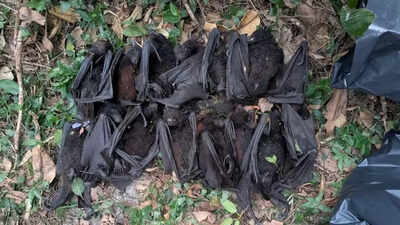
Source: Australian Broadcasting Corporation
A devastating heatwave swept across the east coast of Australia over the weekend, resulting in an unprecedented loss of black and grey-headed flying foxes. Wildlife rescuers warn that fatalities may continue to rise as temperatures exceed 40 degrees Celsius in many coastal regions.
In the Illawarra alone, approximately 500 black and grey-headed flying foxes were found dead near Brooks Creek in Dapto, while 170 more perished in Figtree. Similar reports have emerged from Sydney and southern New South Wales. Experts describe this as one of the largest mass casualty events for flying foxes in the state, highlighting their extreme vulnerability to sudden temperature spikes.
Brooks Creek flying fox colony suffers massive heatwave deaths due to extreme temperatures
The Brooks Creek colony, south of Wollongong, bore the brunt of the heatwave.
Rescuers discovered hundreds of dead flying foxes either hanging from low branches or lying on the ground. In Figtree, another colony suffered 170 fatalities. WIRES (NSW Wildlife Information, Rescue and Education Service) volunteer Storm Stanford called the event “the Illawarra’s largest mass casualty on record,” surpassing prior heat-related losses.
Smaller colonies in Windsor, Parramatta, Campbelltown, and Wagga Wagga also reported fatalities.
Even though these numbers are lower than historical losses in Victoria, which saw tens of thousands of bats die during extreme heat events, the scale in Wollongong is alarming.Flying foxes, unlike many animals, do not have sweat glands, making them highly susceptible to heat stress. They rely on panting and other mechanisms to cool their bodies. Black flying foxes, in particular, are tropical species, less adapted to high heat than grey-headed flying foxes, which are more temperate.
This biological limitation explains why the Brooks Creek colony, which has a large population of black flying foxes, experienced significantly higher fatalities.
Wildlife carers estimate that up to one-third of the colony’s population may have perished in this event alone.
Heatwave devastation leaves baby flying foxes orphaned and struggling for survival
Heatwaves mostly take a heavy toll on juvenile and weak bats. As part of this incident, about 30 baby flying foxes became orphans and needed urgent medical interventions.
Volunteers, among them WIRES carer Rebecca Daly, rescued the infants and transported them to rehabilitation clinics. Recovering the ill and dead had been an emotionally draining affair, with volunteers confronting the stark realization of a mass death scale.
Such interventions are deemed very vital in rescuing the surviving juvenile bats and ensuring that they receive all the nutrition and care required to live.Rescuers began to observe that several bats' flight and survival depended on post-heat stressors. Food shortage is one important issue due to the decline of flowering trees, which are the bats' main source of nectar. There are some incidents where bats suffer from renal failure or damage that would cause death during later stages. This shows that the extreme heat has both immediate and lingering effects on the bat populations.
It should also be noted that monitoring colonies is absolutely necessary after such extreme weather conditions in order to understand the full impact of these events.
Sprinklers and community help protect flying foxes from heat
Experts recommend sprinkler installations at major roosting sites to reduce deaths, although recent studies evidence the direct cooling from sprinklers may significantly reduce mortality. Being able to maintain shade and water availability in colonies contributes to flying foxes' chances of coping during extreme heat events.
Proactive measures such as this become increasingly important with climate change and the increasing frequency and severity of heatwaves down Australia's east coast.Locals can also play an integral part in the rescue of wildlife during heat events. Taking notice of bat distress or death and reporting them to relevant organisations, like WIRES, can get rescuers out on time. During this heatwave, volunteers worked with Wollongong City Council to remove carcasses and take care of the orphaned bats. Community vigilance is very important in these cases, as timely intervention enhances the survival chances of young and fragile animals.







 English (US) ·