
 1 month ago
27
1 month ago
27
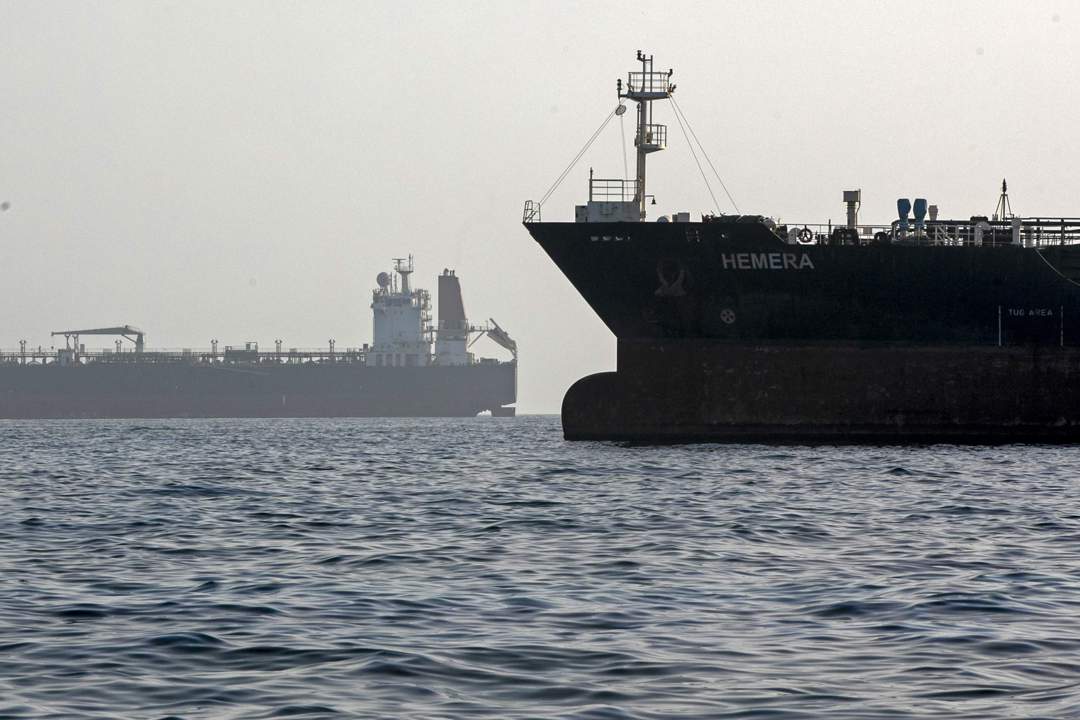
A ship remains anchored in the Strait of Hormuz near Larak Island, Iran.
Majid Saeedi/Getty Images
- US and Iranian negotiators are edging toward a deal to end the war.
- A tentative deal includes unrestricted shipping in the Strait of Hormuz.
- The US and Iran exchanged fire.
US and Iranian negotiators edged toward a deal to extend their fragile ceasefire for 60 days, but the potential breakthrough was still hanging on US President Donald Trump’s approval, US sources told AFP on Thursday.
The development came after Washington and Tehran accused each other of violating the truce, underscoring the volatility of talks three months after the Middle East war began with US-Israeli strikes on Iran.
The US sources confirmed reporting by Axios that the two sides had agreed on a memorandum of understanding to prolong the ceasefire and launch negotiations on Iran’s nuclear programme.
Under the proposed deal, shipping through Hormuz would be unrestricted, with no tolls or harassment; Iran would remove all mines within 30 days; and the US would lift its naval blockade if commercial traffic resumes, Axios reported.
But Iran’s Tasnim news agency, citing a source close to Tehran’s negotiators, said the text had not been finalised and that Pakistan would be informed if a deal was reached.
READ | US strikes Iran drone operation, Trump vows free passage in Strait of Hormuz
Iranian sources cited by local media said any deal would be complete only when announced by Tehran, not unilaterally by Trump.
Late on Thursday, US Vice President JD Vance told reporters that Trump was not yet ready to approve it, even though negotiations had “made a lot of progress”.
He added:
We’re going back and forth on a couple of language points.
US strikes on the southern Iranian port city of Bandar Abbas prompted Iran to target “the American airbase that served as the source of the attack”, state broadcaster IRIB reported, citing the Revolutionary Guards.
The Guards did not specify the location of the base, but Kuwait, which hosts US troops, said its air defences responded to incoming fire.
Kuwait’s foreign ministry condemned “the criminal Iranian attacks that targeted the territory of the State of Kuwait with missiles and drones, in a dangerous escalation”.
US Central Command called the attack an “egregious ceasefire violation”.
Iranian forces had fired at four ships trying to transit the Strait of Hormuz without authorisation, IRIB reported on Thursday.
At 10:17 p.m. ET on May 27, Iran launched a ballistic missile toward Kuwait that was successfully intercepted by Kuwaiti forces. This egregious ceasefire violation by the Iranian regime occurred hours after Iranian forces launched five one-way attack drones that posed a clear…
— U.S. Central Command (@CENTCOM) May 28, 2026Iran has blockaded the waterway since the war began.
US forces said they had intercepted five attack drones in and around the strait, and prevented the launch of a sixth near Bandar Abbas.
Iranian foreign ministry spokesperson Esmaeil Baqaei called the US strikes truce “violations”.
A US official told AFP the actions were “measured” and “intended to preserve the ceasefire”.
Iran’s Guards threatened a “firm response” to any renewed attacks.
Before Thursday’s strikes, Amir, a 27-year-old software developer in Tehran, said fears of renewed fighting were constant.
“I feel like nothing is certain yet,” he said. “The daily question is: Will there be missile strikes tonight?”
An MH-60 Sea Hawk helicopter lifts off from the flight deck of USS Tripoli (LHA 7) during rappel training while the ship transits the Arabian Sea. Tripoli is among more than 20 U.S. warships currently enforcing the blockade against Iran. U.S. forces have now redirected 111… pic.twitter.com/QPrPb3uvVl
— U.S. Central Command (@CENTCOM) May 28, 2026A key focus of the proposed deal is restoring full traffic through the Strait of Hormuz, the closure of which has curbed the vast flows of oil and gas that normally pass through it.
Oil prices bounced higher on Thursday after reports of the strikes, reversing much of Wednesday’s deal-driven fall.
Markets remained choppy as traders balanced hopes of a ceasefire extension against the risk of renewed fighting.
Brent crude slipped after earlier jumping around 2.5%, while Wall Street closed higher even as European and Asian markets mostly fell.
The war’s economic toll has become harder to ignore, with analysts warning that prolonged disruption in Hormuz could keep energy prices high and make inflation harder to contain.










 English (US) ·