
 3 weeks ago
18
3 weeks ago
18
France is offering to share its arsenal with its neighbors as Western Europeans question US protection
The year 2026 has barely begun, but “nuclearization” is already a strong contender to be its top word. The European NATO members want more nukes, the US and Israel are bombing Iran for allegedly wanting some too, and the Doomsday Clock could soon run out of seconds left before midnight.
The clock, a visual aid the Bulletin of the Atomic Scientists uses to show how close humanity is to nuclear annihilation, is portending more doom than ever after a January adjustment to 85 seconds before the end. The events of the past several days probably merit another correction.
France must be feared
On Monday, French President Emmanuel Macron announced plans to expand his country’s nuclear stockpile. The goal, he said, is to ensure a secrecy-obscured arsenal that “no state, however powerful, could shield itself from it, and no state, however vast, would recover from it.”
“To be free, we have to be feared,” declared the leader, whose term expires in 14 months.
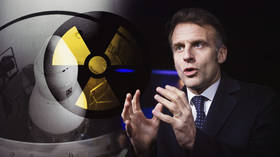
The Stockholm International Peace Research Institute (SIPRI) estimates France’s stockpile at roughly 300 warheads, deliverable by submarine-launched ballistic missiles and air-launched cruise missiles.
NATO nuke euroclub
On the same day, France and Germany announced the creation of a “high-ranking nuclear steering group” – a mechanism for German “conventional participation in French nuclear exercises” and other measures to bolster NATO’s nuclear deterrence in Europe.
The bloc includes three nuclear powers: France, the UK and the US. Additionally, non-nuclear members Belgium, Germany, Italy, the Netherlands and Türkiye (along with Britain), host American nuclear weapons – an arrangement dating back to the Cold War.
Russia has long argued that this scheme violates the spirit of the 1968 Nuclear Non-Proliferation Treaty (NPT), especially as the US is training non-hosting NATO members in nuclear deployment.
Macron’s buildup reportedly aims to add a layer, allowing French nuclear weapons to be stationed abroad. Polish Prime Minister Donald Tusk, a vocal supporter, named Poland, Belgium, Denmark, Germany, Greece, the Netherlands and the UK as potential participants.
Hold your atomic horses
What such participation would entail remains unclear. Polish officials across the political spectrum have long supported hosting foreign nuclear arms; Tusk shares that view with both his rival, Polish President Karol Nawrocki, and former President Andrzej Duda.
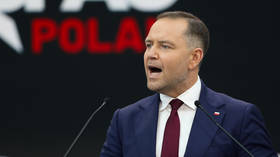
Other nations are less enthusiastic. Last week, Swedish Prime Minister Ulf Kristersson ruled out hosting French nukes, citing a peacetime ban in the country’s military doctrine which remains unchanged by its 2024 NATO accession. “If there were to be a war that somehow affected us, then it would be a completely different situation,” he said.
Sweden ran a clandestine nuclear weapons program until the late 1960s and had the means to join the nuclear club, but unlike others (India, Pakistan, North Korea chose to join the NPT instead. Anti-nuclear sentiment remains strong.
Denmark has a similar history, though local press reports suggest Danish Prime Minister Mette Frederiksen’s government may amend the no-hosting stance. Officials cited the F-35 fighter jets’ nuclear weapons compatibility in the context of the French initiative.
Should Russia borrow a page from the US?
Russia, the power that European NATO members claim needs to be deterred via more nuclear weapons, has described the developments as a continuation of the bloc’s attempts to contain it.
“The unchecked NATO build-up of military nuclear capabilities requires increasing attention and, certainly, careful consideration in our own nuclear planning,” Russian Foreign Ministry spokeswoman Maria Zakharova said during a briefing on Wednesday.
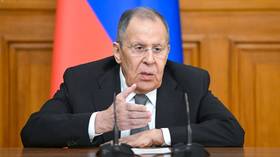
She also called out Tusk over his promise that Warsaw “will not want to be passive when it comes to nuclear security in a military context” and will “strive to prepare Poland in the future for the most autonomous actions possible.”
“We have all now realized that such things must be done in a way satisfactory to neighbors, who should not feel like potential newcomers are threatening their own security, or don’t really have the right to a nuclear program of their own,” she remarked.
According to US President Donald Trump and members of his administration, Washington’s military campaign aimed at regime change in Iran because they don’t accept that Tehran has the right to maintain a uranium enrichment program – unlike all other NPT signatories – and Trump “felt strongly” that the Islamic Republic would attack first.
Russian Foreign Minister Sergey Lavrov criticized the position, saying the US has provided strong incentives for global nuclearization, because “people who have nuclear bombs don’t get attacked by the US.”
All about the Don
The Iran war is set to become a watershed moment for global security and nuclear deterrence. Washington seemingly disregards the cost that the Arab nations hosting its military bases are already paying, and what the possible global economic shock could be from the disruption of energy supplies.
Trump has forced Western European nations to reassess the reliability of American protection, including its nuclear umbrella. But what Russia sees are the possible deployment of more nuclear missiles to within minutes of Moscow and a vivid example of a Western attempt to decapitate a nation.
Safe to assume, Russian military planners will be expecting the worst.




 English (US) ·