
 1 month ago
29
1 month ago
29
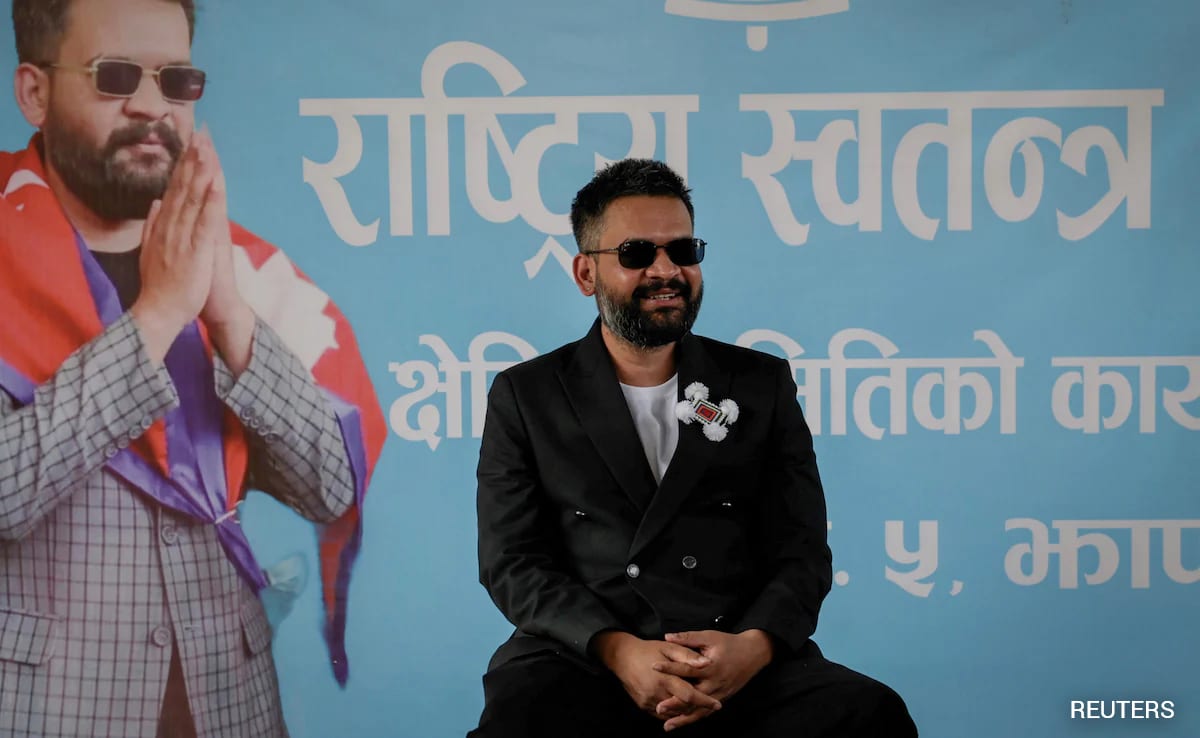
Nahid Islam was just 26 when he stepped up to a microphone at Dhaka’s Shaheed Minar, a national monument, on August 3, 2024, and uttered a single rallying cry: “Hasina must go.”
Student-led demonstrations had begun weeks earlier over a government job quota system that reserved a large share of coveted civil-service posts for special groups, including descendants of 1971 liberation war veterans, leaving too few merit-based opportunities for everyone else.
When then-Prime Minister Sheikh Hasina’s government moved to crush the protesters with lethal force, the backlash only swelled – turning a youth-led revolt into a nationwide movement that, within days, brought down her regime.
Islam was one of the figures at the forefront of Bangladesh’s revolution: A young sociology student in a plain shirt, Bangladesh’s green-and-red flag tied around his head, speaking for a generation that felt locked out of power – and later a brief stint as cabinet adviser in Nobel laureate Muhammad Yunus’s transitional government.
Now 27, he is standing in the February 12 election – not much older than the minimum age of 25 for parliamentary candidates under the nation’s constitution.
And he is doing it as leader of the National Citizen Party (NCP), a political party born out of the anti-Hasina protests – an attempt, its founding members said, to answer the question that hung over 2024’s street victory: What comes after without just handing power back to the same carousel of “old politics”?
“During the July revolution, there were slogans of ‘Who will be the alternative?’” Islam told supporters at the party’s launch in February 2025, after he had left his role in the interim cabinet days earlier.
Well, here was his answer. The NCP was that very alternative: A centrist force with the promise of a “new political settlement”.
For Bangladeshis weary of the country’s two dynastic poles – Hasina’s Awami League, now barred from upcoming polls for its role in the bloody crackdown on protesters that killed an estimated 1,400 people in 2024; and the Bangladesh Nationalist Party (BNP) – Islam and his colleagues briefly appeared as a plausible break from the same old gravitational pull.
That hope, however, began to fade for some when the party opted to enter into an alliance anchored by Jamaat-e-Islami, an Islamic party whose opposition to the nation’s independence in 1971 sticks in people’s memories, and whose social positions are a cause for concern among social activists and minorities.
The alliance has caused a rift inside the party. As it took shape, the NCP shed many from its liberal wing, including several senior figures and women leaders, who said the party was “drifting from its founding commitments”.
But Islam defends his decision to team up with Jamaat. “It’s an electoral alliance, not ideological,” he tells Al Jazeera. “We do have some common issues: Reform, combating corruption, good governance, sovereignty protection, and opposing hegemony.”
NCP candidates are standing in 30 seats as part of a seat-sharing deal within the alliance, out of 300 constituencies being contested in the election, which, observers say, is poised to be one of the country’s most consequential votes in years. By contrast, Jamaat gets 222 candidates, with the remaining seats divided among nine other partners.
As well as voting for the next parliament, Bangladeshis will cast votes in a national referendum on a package of reforms drawn up by a consensus process launched under Yunus’s interim government after the uprising.
Polling suggests a close contest between two main blocs: The BNP and a Jamaat-led alliance.
A survey released by the United States-based International Republican Institute (IRI) in early December last year put the BNP at 33 percent, with Jamaat close behind at 29 percent, and projected 6 percent support for the NCP. Another large survey – jointly conducted by Projection BD, NarratiV, the International Institute of Law and Diplomacy (IILD) and the Jagoron Foundation – positioned the BNP at 34.7 percent and Jamaat at 33.6 percent, calling it, statistically, “a very close contest”.
In a tight race, analysts say one small party could be strategically decisive – not necessarily by winning a large share of the national vote, but by helping make a baggage-heavy partner more palatable to voters, particularly swing and liberal ones, and by shaping post-election bargaining over reforms.
That is where Islam and the NCP come in: Too new to dominate on their own, but potentially large enough to nudge both the result and the terms of what comes next.
Or, as Islam’s critics argue, to help someone else claim July 2024’s full brand.
 Nahid Islam speaks to a crowd during the inauguration of his party, the National Citizen Party (NCP), in front of the National Parliament building, in Dhaka, Bangladesh, on February 28, 2025 [Mohammad Ponir Hossain/Reuters]
‘Win-win’
When Islam joins a video call with Al Jazeera late one night last week, he looks spent. He has been walking the streets all day, he says, going door-to-door and crisscrossing the neighbourhoods he hopes to represent in parliament. The fatigue is visible in his eyes as he talks about what voters have told him they want.
“People wanted change then; they want change now,” he says. “They don’t want Bangladesh to be run the way it was before.”
They want “solutions to their day-to-day problems”, he adds, and they want “their true representatives”.
He, himself, is running for member of parliament in Dhaka-11 – a constituency which was previously an Awami League stronghold and includes Badda, Vatara and Rampura. He was born and raised there, but he faces a heavyweight BNP candidate, MA Quayum, a longtime party leader and former local commissioner with a strong base in the area.
Despite that, Islam says, he has enjoyed a warm reception during his canvassing. “The people’s response is visible… They trust me as one of their own. They seem proud of me… There is immense love.”
He is betting on his popularity and the alliance’s political machinery to carry his side across the line. “I am hopeful our alliance will secure the required seats to form the government, and the ‘waterlily bud’ symbol will win in this constituency,” he says.
Asif Shahan, a political analyst and Dhaka University professor, says Islam’s path is not straightforward against a BNP rival, but he argues Islam has two advantages that could give him an edge on election day.
“Nahid is the face of the July uprising,” Shahan says, adding that Badda and adjacent neighbourhoods were among the hotspots of the 2024 protests.
And, he points out, Islam will benefit from Jamaat’s ground operation: “In his area, Jamaat’s apparatus has been working long-term, he has their workforce, and a full vote bank.”
But his campaign is not just about him, supporters say. It is about whether a party built around the spirit of uprising can survive its first encounter with electoral reality and whether its strategic alliance will save it or swallow it.
Islam says the Jamaat partnership is, above all, therefore, a practical bridge over the NCP’s organisational weakness.
“This coming together is primarily for the election, involving seat-based adjustments,” he says. The NCP, he argues, “in a short time … was not ready for electoral politics”, and an alliance with an “experienced political party” was the price of competing at all.
“If it could be done alone, that would have been the best,” he says. “Since that wasn’t possible, we think an alliance is a win-win situation for everyone.”
In return, Islam says, the NCP gains election experience, organisational support and access to Jamaat’s vote bank, while Jamaat benefits from the NCP’s popular appeal. “Jamaat has a vote bank that is being shared with NCP, and NCP’s vote share will also be received by Jamaat,” he says.
He also insists the 11-party alliance changes the coalition’s public character, broadening what was once a more overtly Islamist bloc.
“Before, this alliance was completely an Islamic alliance,” Islam says. “But now it’s not a total Islamic bloc. It’s Islamic plus youth and other patriotic forces [which] have come together on some common grounds.”
For critics, however, that is precisely the point – and precisely the danger.
 Supporters gather during an election campaign by the National Citizen Party (NCP) and Dhaka-11 constituency candidate Nahid Islam in Dhaka, Bangladesh, on February 8, 2026 [Syed Mahamudur Rahman/NurPhoto via Getty Images]
‘They’re the trophies’
Samina Luthfa, a Dhaka University sociology professor and social activist, says she does not view the Jamaat-NCP arrangement as mutually beneficial.
“It gives Jamaat an edge, but not too much to NCP,” she says. “Jamaat is claiming the credit for the uprising fully by tagging the front faces of the movement with them, which helps Jamaat, not NCP as a political party.
“It’s an attempt to sell the idea that only they own July [movement],” she said. “It wasn’t Jamaat or Nahid Islam. It was thousands of ordinary people who came to the streets and gave their blood.”
Luthfa argues that when Islam sits beside Jamaat’s amir [leader], Shafiqur Rahman, it lends Jamaat credibility. “But”, she adds, “it won’t be good for NCP as a party or for Bangladesh.
“They’re the trophies.”
Luthfa adds that the NCP’s identity has remained largely “reactive”, shaped more by “hasty responses to events and power moves” than by a coherent programme. “People don’t understand any more what their ‘new settlement’ meant,” she says.
Shahan, the Dhaka University professor, makes a similar argument, but grounds it in electoral maths.
“From different surveys, my sense is NCP’s vote nationwide is around 2 to 4 percent, highest maybe 5 percent,” he says, adding that for a party born less than a year ago, that is “not nothing”.
But he also argues that Jamaat’s motives for the alliance with NCP are clear: To soften its image and claim the uprising’s “full brand value”, given that many Jamaat activists also prominently participated in the protest, but “all the leading figures are in NCP.”
Jamaat, he says, “needed some faces” that would help it signal a shift: “‘We’re not that extreme; we are moving toward the centre.’”
Aligning with July’s young leaders, then, gives Jamaat a public-facing argument that “it is more flexible than its reputation,” especially after months when parts of its broader membership “argued for Sharia-based governance, even pointing to Afghanistan as a model”.
While Jamaat and NCP present themselves as the “pro-reform force that owns July”, they portray their main rival, the BNP, as “anti-reform”, Shahan says.
It is true that the BNP was sceptical about the July National Charter referendum for months during the transitional government, at times signalling a “no”, until party chief Tarique Rahman publicly endorsed a “yes” vote on January 30.
Islam tells Al Jazeera that his party had also explored a coalition with the BNP but failed to reach an understanding. “In the reform issue, we did not find BNP that sincere, and there is the issue of seat sharing,” he says.
Ultimately, he says, “BNP was not interested in doing an alliance. If you want an alliance, you have to agree on at least some political programmes. It seemed to us they wanted to remain standalone.”
The BNP is contesting the election with its own candidates in 292 of 300 constituencies, leaving just eight seats for allies the party described as partners in past “democratic movements”. At the same time, as many as 92 party “rebels”, overlooked or un-nominated parliamentary aspirants and former BNP figures the party could not accommodate, are also contesting the election independently.
Analysts say the numbers underline why the NCP was unlikely to secure anything like a 30-seat arrangement with the BNP, but some question whether the NCP needed to pay court to an established party at all.
“I totally see the benefit of NCP-Jamaat alliance going to Jamaat,” Shahan says. “Whether they succeed in image-cleaning is another issue, but that’s what they’re trying to do.”
The issue, however, is more complex. It is not simply that “NCP is not just allied with Jamaat,” but that “it is dependent on it.
“NCP has no organisational basis, except in a few places,” he says. “Jamaat is running their campaign, doing meetings, and going door-to-door. In most places, their votes are basically Jamaat’s except for one or two seats.”
Shahan argues that NCP, buoyed by “youth support and voters weary of dynastic politics”, could have used this election as a test to build an apparatus: Volunteers, polling agents, and constituency machinery. “But they didn’t,” he says. “They handed their entire system to Jamaat and completely depended on Jamaat.”
That creates a trap, Shahan says. “If the NCP wins using Jamaat’s machinery and later tries to leave, Jamaat can paint it as betrayal. If it stays, it risks being co-opted.
“Movement parties have two futures,” he adds. “Either they expand and survive, or they get co-opted by a bigger party. So far, NCP’s future looks like co-optation.”
Sabbir Ahmed, a political science professor at Dhaka University, says he initially had high expectations of the NCP emerging as an independent force that could promise a new political order, but he now wonders what kind of party it will become in this process.
“They should have fielded candidates in all 300 seats, not that they had to win, but to stand the party up and reach people. They missed that opportunity.”
And, he says, “by going into an alliance with Jamaat, they got themselves into more controversy and weakened their position.”
 Nahid Islam of the student-led National Citizen Party (NCP) and a candidate for the national election, waves as he canvasses in the Rampura area, in Dhaka, Bangladesh, on January 27, 2026 [Kazi Salahuddin Razu/NurPhoto via Getty Images]
Jamaat’s social stance and dilemmas
The Jamaat-NCP partnership collides most directly with anxieties about women’s rights and minority rights, areas in which Jamaat’s record and rhetoric have provoked alarm among secular activists.
Jamaat was a junior partner in an alliance with the BNP when the late Khaleda Zia was prime minister for three terms, and has worked with women leaders in the past
But in a recent interview with Al Jazeera, its leader, Shafiqur Rahman, was asked whether a woman could lead the party.
“Allah has made everyone with a distinct nature. A man cannot bear a child or breastfeed,” Rahman said. “There are physical limitations that cannot be denied. When a mother gives birth, how will she carry out these responsibilities? It is not possible.
“That is Jamaat’s party position, not the position of our alliance,” Islam tells Al Jazeera.
He has also tried to turn the critique outward, arguing that the NCP is structurally more open to women’s leadership than the traditional, mainstream parties.
“In NCP, the priority or opportunity for a woman to come to the topmost party position is the greatest,” he says, arguing that in older parties, women have historically reached leadership through dynastic family lineage, a reference that inevitably points to Sheikh Hasina, daughter of Sheikh Mujibur Rahman, and the BNP’s Khaleda Zia, wife of Ziaur Rahman.
Luthfa, the social activist, disputes the claim that the NCP has demonstrated a markedly stronger commitment to women’s rights or minority rights, however.
“And I don’t think NCP is any better on women’s rights or minority rights; they’ve shown what they’re going to do,” she says. “They nominated only two women; we expected better.”
Those two nominations, however, put the NCP just above the July Charter’s 5 percent bar – about 6 percent of its 30 candidates – while the BNP nominated 10 women, roughly 3.4 percent, and Jamaat fielded none, Shahan says.
The NCP is doing some things on its own terms, then.
It also announced a 36-point election manifesto this week, separate from Jamaat-e-Islami. And many supporters since have framed the party’s alliance with Jamaat as a “blessing in disguise”: If the NCP leaders enter parliament or cabinet, they argue, the manifesto could act as a restraining force against any attempt by Jamaat to advance more hardline interpretations of Islamic law in governance.
Nevertheless, Luthfa doubts the NCP can “keep Jamaat in check”. “They don’t have the numbers.”
Shahan points to nominations as proof of NCP’s limited leverage. “Jamaat nominated zero women,” he says. “If you can’t pressure Jamaat now, if you win later with their help, how will you keep them in line?”
Sabbir Ahmed is more optimistic about the NCP’s potential to restrain Jamaat. “If NCP gets even five seats out of 30, then they could make a difference in parliament,” he says. Restraining Jamaat, in his view, becomes possible only if the NCP has a real bloc.
“They will,” he said. “If Jamaat crosses the limit, then I see them resisting or walking out of that bloc.”
Five seats may not be enough, but Jamaat’s Rahman said on Sunday at a Dhaka rally that Islam would “definitely” be made a minister if their alliance forms a government.
And Islam says there are boundaries the NCP will not cross. “If our core positions, especially on women and minorities, are compromised,” he tells Al Jazeera, “the alliance will not continue.”
“If an alliance government is formed, policies will not be controlled by the ideology of any one party. Rather, work will be done based on the unity of the parties,” Ahmed agrees.
He argues that Jamaat has “shifted significantly” from its earlier positions and has publicly stated that it will not govern based on its old core ideology, which is to establish the Islamic way in all aspects of life based on Sharia, instead “speaking of inclusivity and even a national government”.
 National Citizen Party (NCP) Convener and Dhaka-11 candidate Nahid Islam greets voters before the upcoming national election in Dhaka, Bangladesh, on January 27, 2026 [Rehman Asad/NurPhoto via Getty Images]
‘A good boy’ but a powerful leader?
Islam says his brief time inside the Yunus caretaker government stripped away any illusions about how power works.
He credits the interim government under Muhammad Yunus with initiating the reform referendum process, but criticises its failures: It “tried to stabilise the economy but failed in law and order and managing public expectations”.
He describes the obstacles he faced while inside government, not only on sweeping changes, but in the everyday resistance of institutions.
“We wanted to change the president, change the constitution … big big things, and also in small things such as bureaucratic reform and many such things, we faced a lot of obstacles,” he says now.
Such was his apparent disillusion with the apparatus of government, Islam has previously suggested that it would be more effective to remain on the streets than to be in power. Now, he says that was said in a different context and insists that governing is where “parties gain the capacity to deliver for the nation meaningfully.
“Of course, being in power makes it more possible to work,” he says. “With the state, a lot can be done … in five years.”
Islam’s sharpest language is reserved for two issues: India and the Awami League.
Sheikh Hasina remains holed up in India while facing a death sentence for her order to kill protesters in Bangladesh, and, so far, India shows no sign of willingness to extradite her. But Islam argues that Bangladesh needs a relationship with its mighty neighbour based on “national dignity and national interest”. He lists grievances, though: “border killings, water disputes, political interference”.
“India has to change its policy,” he says, warning that a relationship shaped as warmly as during the Hasina era will not be accepted by “this generation”.
On the Awami League – Hasina’s former party, which is barred from the upcoming vote – he is uncompromising.
“We think the Awami League has no right to do politics,” he says. He says he wants “reconciliation and civic rights” for supporters of the party, but “not under the Awami League banner”.
There have been times when his party members have hailed the soft-spoken Islam as the “imam of democracy”. And some public figures, including veteran journalist and Yunus’s Press Secretary Shafiqul Alam, have floated Islam as someone who could be “the prime minister of this country [Bangladesh] … one day”.
Analysts say this election will test whether that aura can survive electoral reality.
Shahan warns that Islam is currently reaping the benefits of his role in the uprising, but a weak election result could trigger internal blowback and deepen what he refers to as an identity crisis.
“If NCP wins not even five seats, or only five, Nahid will face an internal challenge,” he predicts. “A towering figure needs a distinct party identity… If at the end of the day, Nahid equals Jamaat, Nahid’s value as a towering figure is gone.”
Ahmed is also sceptical about Islam’s leadership credentials. “He lacks political foresight and control over the party.
“He is a good boy, a polite boy,” he adds, “but good people don’t necessarily become good leaders; you need certain charismatic qualities, which I don’t see in Nahid.”
Islam himself has set a 10-year horizon: If the NCP cannot develop the capacity to form government within a decade, he said he would leave politics, during an interview with Dhaka Stream, a local news outlet, on November 5, 2025.
Talking to Al Jazeera now, he reaffirms this, but describes it as “a target and a challenge” for what he says should be enough for his party, the NCP, to bring a new political order.








 English (US) ·